Amiga 1200/600/500 PSU PCB pinout?

HonestFlames

New member
Joined
Aug 18, 2010
Posts
346
Country
England
Region
Shropshire
I dismantled the Amiga connector end of my A120's PSU the other day to quickly hack together some power from an ATX PSU.

What I forgot to do was make a note of what wire came from where on the original PSU's PCB. Durrrr.

I also can't find (spent 15 minutes now) a picture, description or otherwise of the proper pinout. The only one labeled on the PCB is Ground. I thought I'd just go ahead and test it with a meter, but the PSU doesn't seem to kick out any power at all unless there's a load connected.

Please help :roll:
 
There doesn't appear to be a diagram on the unit I have. It's marked up as an A500 PSU. It's a light-weight one.

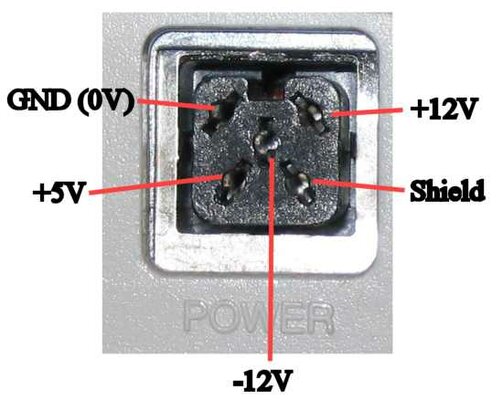
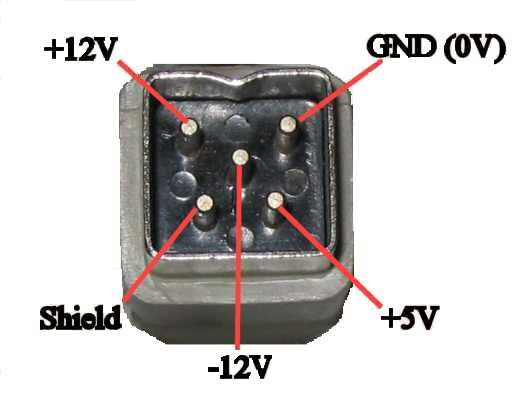
I know the pinout of the square connector (good job, or I'd have fried the poor miggy!), but its the other end of that connector I'm looking for.
 
You mean inside the brick or on the solder pads on the Amiga side?

I can provide a picture or two of both.
 
The problem here is pending the version of PSU / PlugPack it will have different colouring and layout.

I would suggest you get a Multimeter and start buzzing out.

Caution: you will be dealing with 240volts of electrickery, that can KILL so be carfull, if you are unsure, for the love of anything holy - DO NOT DO IT!!!!

That being said -

1. Select "20" on the volts selector
2. Ground should be easy to find - plug your negative probe into that
3. Go through each hole sampling the voltages

You will find +12v +5v -12v and no value (shield / earth)


I may help if you take some pics of the top and the bottom of the PSU's PCB (obviously unplugged and discharged)
 
@ Zetr0 states, the colours might vary, however, the pinouts at the plug end are these;-

1. +5v
2. Shield Ground
3. +12v
4. Signal Ground
5. -12v

The pins on the plug may be numbered, you should be able to buzz out the wires from the pins on the plug.

The pictures attached might also help you.
 

Attachments

  • Amiga-power-socket.jpg
    Amiga-power-socket.jpg
    22.4 KB · Views: 93
  • power-plug.jpg
    power-plug.jpg
    15 KB · Views: 171
It's the solder points on the PCB of the PSU I'm looking for.

I've tried with a multimeter but unless I'm missing something, there's no juice flowing at all, probably because there's no load attached. All the PSU does, when switched on, is make a faint, high-pitched 'tinktinktinktinktink' noise, which slows down very gradually when AC power is removed (which I remember my old Amiga PSU doing, plus a few ATX PSU's I've used). The 'tinktinktink' stops when the PSU is actually powering a load.

All I know is that black is ground, and ground is the only one of the 5 points on the PSU's PCB which is labeled.

**EDIT** The PSU wiring colours match perfectly to the spec on www.ianstedman.co.uk
 
@HonestFlames

hmmm PSU's really shouldn't be make the "tinktinktink" sounds... its likely poor resin fall off from the coil to be honest. - essentially the coil vibrates with power and if the anchors to the PCB are not sound or the resin the coil is coated in is dying a death then you will start hearing loud buzzing - click and ticks are normaly an anchor fault of the coil...

I suspect when hearing "tinktinktinktink" its time for a new Coil.

If you are not receiving any voltages from the PSU, check your probes against a know working source - this will prove you multimeter and probems - so iif you are still having issues from the PSU I suspect the caps are not feeding the juice to the terminals.
 
Thanks Zetr0,

The PSU worked fine the other day - I only switched to ATX because of those weird read errors I was getting with the CF<>IDE + Blizzard 1230.

The multimeter is all fine (checked it to make sure I wasn't going barmy, last night!).

I'll have another poke and prod of it tonight - but if anyone can post a pic or pinout of the PCB so that I can match colours to points, I'll be most grateful!

**EDIT**

I was going to switch back to the Amiga PSU in order to double check the voltages being fed to the Amiga when it was powered on, to compare against the voltages I'm seeing from the ATX. 5v from the ATX appears to be around 4.75-4.80 in reality. This seems a little low to me, but it's been totally stable. I was going to compare this against the 'proper' PSU and, if I saw the same 4.75-4.80, I was going to go ahead and assume it was good.

The ATX PSU I have is fairly big, and I don't want to hack the entire thing apart to do a full conversion to being an Amiga PSU. I'll perhaps grab a micro or mini ATX PSU at a later point, should I need more wattage headroom.

---------- Post added at 16:37 ---------- Previous post was at 16:31 ----------

The problem here is pending the version of PSU / PlugPack it will have different colouring and layout.

I would suggest you get a Multimeter and start buzzing out.

Caution: you will be dealing with 240volts of electrickery, that can KILL so be carfull, if you are unsure, for the love of anything holy - DO NOT DO IT!!!!

That being said -

1. Select "20" on the volts selector
2. Ground should be easy to find - plug your negative probe into that
3. Go through each hole sampling the voltages

You will find +12v +5v -12v and no value (shield / earth)


I may help if you take some pics of the top and the bottom of the PSU's PCB (obviously unplugged and discharged)

I have no camera, sadly. I know the PSU wiring does follow the apparent standard, because I checked this when I was measuring the voltages with the connector still attached.
 
@ HonestFlames

Was that 4.75 to 4.8v reading on the PSU under load or not? ATX PSU's won't regulate the voltage properly unless they are under load. Also, what wattage is the ATX PSU, as the problem might be current rather than voltage related.
 
Hi Merlin,

The voltage was whilst under load. The ATX PSU is a 350W unit which powered my very old desktop PC for a couple of years. Rated at 32A on +5V, 17A on +12V and just 1A on -12V.

I'm not hearing any complaints from the Amiga. The sound output is fine. It's routed into my laptop's mic-in, which I've set at 10% level to avoid clipping - there's no buzz, noise or distortion, so I'm taking that as a sign that -12V is good).

@ Zetr0:

I've just tried multimetering the Amiga PSU PCB again. It's 'tinktinktinktink'ing away (which is definitely coming from the coil) which is telling me 'I'm not powering any load' - I'm not measuring any voltage potential across ground to any of the attach points for the power cable. I am not going to poke the meter prongs anywhere else. I like my multimeter and it likes me. It probably doesn't want to know about 220V AC :thumbsdown:
 
Good call. We don't like crispy modders and smoking boots on here....

The reason I asked about load is due to the comment you have just made, in that some ATX PSU's don't like to run under the (comparatively) light load that an Amiga places on it. The symptoms are as you describe in that the coil 'trips'.
 
@HonestFlames

My friend, I am sad to inform you that your Amiga Power supply is pretty much dead.

I would suggest that culprit will be in the capacitors have given up the hosy by either drying out or internally rotted - you might be able to eek some more life from the unit by changing them, but alas I fear it would be what is essentially a worthless cause at this point.

=(
 
I'm really confused, Zetr0. My Amiga of years ago had a similar PSU, which made a similar noise. From new. It worked for the entire time I had my old A1200. Powering various devices, including multiple external floppies, 3.5" HD's, Surf Squirrel, sound sampler... Never a problem. It got toasty, for sure. Doubled as a foot-warmer in the colder months.

The PSU which I have now, it gave no sign of problems, other than our previous discussion as to the root cause of the read errors I was getting, which turned out instead to be a lack of grounding on the CF<>IDE adapter.

I absolutely bow down to your superior technical knowledge on these matters, but I've a Seasonic ATX PSU which is the absolute mutt's nuts for quality and even it makes a quiet 'tinktinktink' noise when it's receiving AC but not powering a load on the DC side. It also has never given me cause for concern. No unexplained BSOD's, no early HD deaths (it's in fact been powering the same HD for about 7 years).

Am I thus in possession of dodgy PSU's which I'm just very lucky to not have had a real problem with?
 
Back
Top Bottom