

Just wanted to share a recent project I finished up in December; the internal installation of a uIEC/SD.
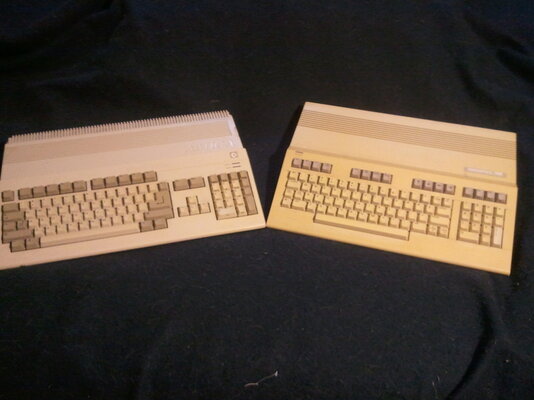
First off I visited the Toronto PET User's Group "World of Commodore 2011" on December 3rd and managed to pick up two items I'd been looking for, an Amiga 500 and a Commodore 128:

Luckily go4retro.com was in attendance and I was able to pick up a uIEC/SD and Daughterboard while there.
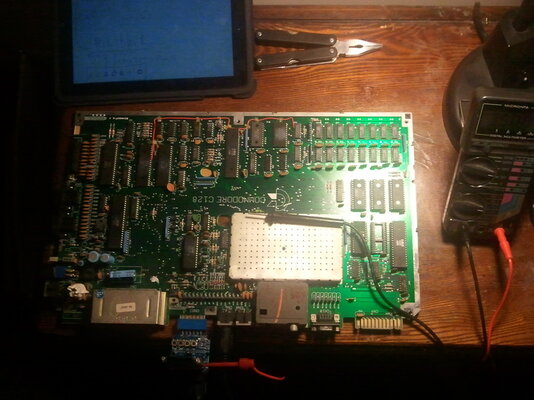
First up was to test the internal connections vs. the external uIEC/SD and map everything out:

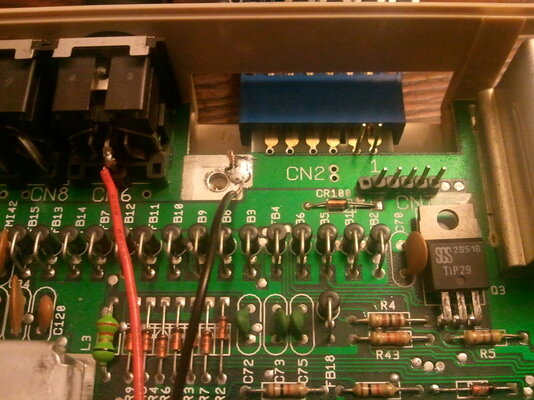
Near the back I found a nice spot where most of the serial lines connected except for the reset pin which I wired directly to the back of the serial connector. Using a few pins donated from an old PC motherboard I went to work soldering them into place:

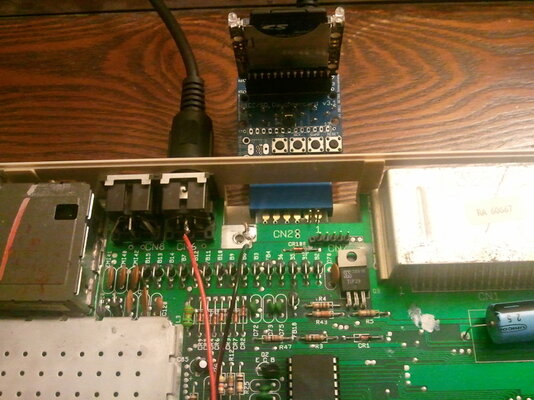
Here you can see the original uIEC/SD external daughterboard attachment used to validate the connections:

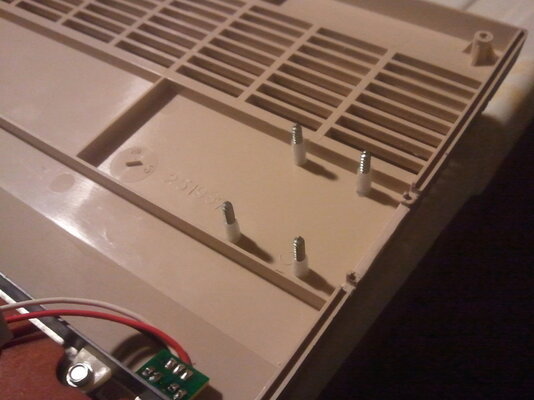
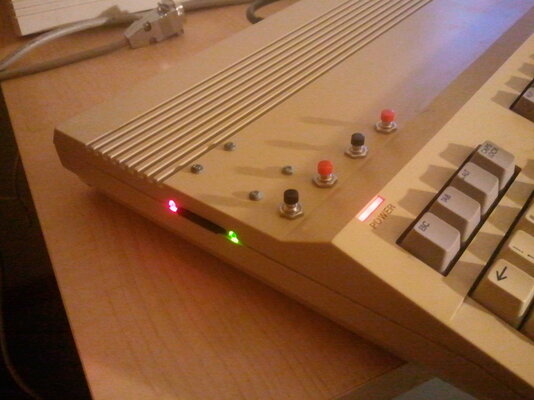
Then I found a nice spot on the upper portion of the case on the left side that the uIEC/SD fit nicely into and made a few stand-offs out of screws and plastic pipe to space it appropriately. Notches were carefully carved out for the SD slot and lights:

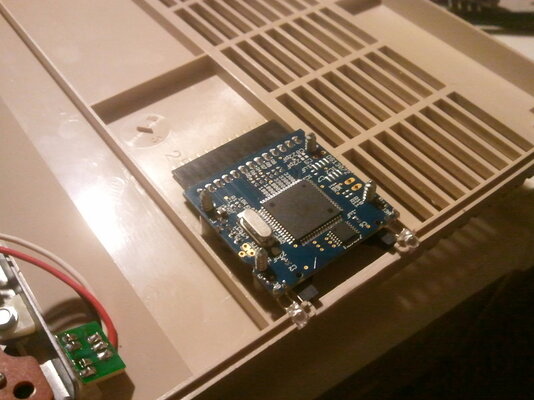
Testing to see how it all fits:

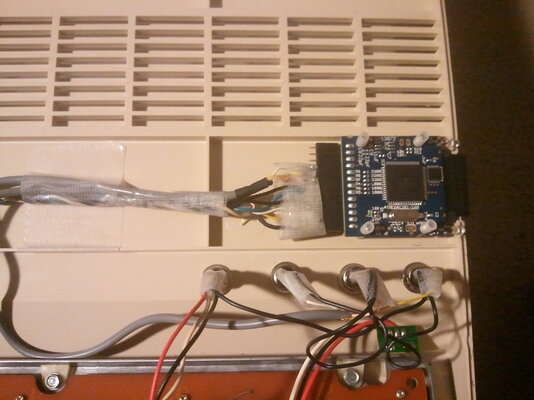
Next I soldered up the pin header to some old CD-ROM audio cables (which fit the spacing of the pin blocks created earlier nicely) and carefully taped up any exposed solder joints and between leads. Also I created holes for the 4 push-button switches that were also wired up to the pin header:

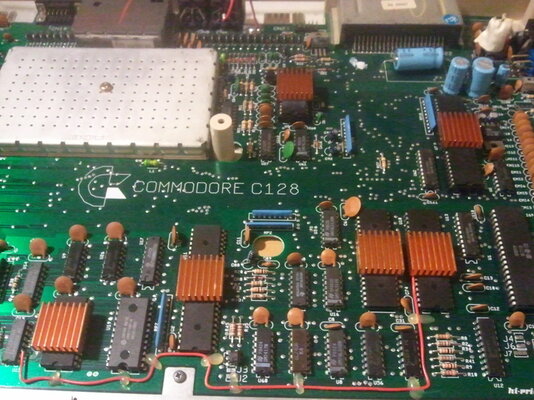
And then before putting it all back together, getting rid of the useless "heat shield" and it's contact fins which cause more problems than they solve and replacing with a more modern heat-sink solution to the areas it was intended to assist with (using the excellent 3M double-sided thermal stickies):

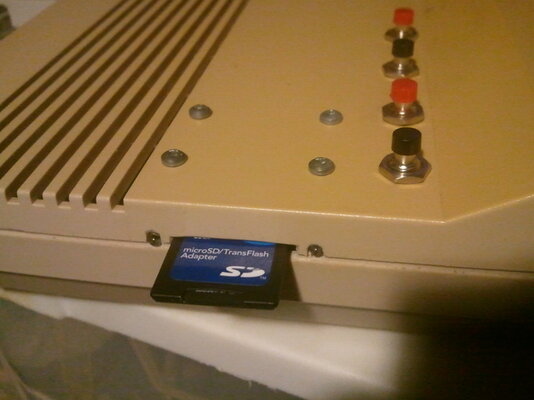
Finally it was time to connect up the headers and close up the case to see how well the SD cut-outs worked. It came out just the right depth for popping in and out easily and is extremely solid:

And then the final test, booting it up and loading a program from the uIEC/SD:

All is working great, only thing that's left to do is install something like a JiffyDOS chip to improve transfer speed and eliminate the need to load the 'DOS Wedge' each time it's booted up.
Thanks for taking a look, hope you enjoyed my little C128 project
First off I visited the Toronto PET User's Group "World of Commodore 2011" on December 3rd and managed to pick up two items I'd been looking for, an Amiga 500 and a Commodore 128:
Luckily go4retro.com was in attendance and I was able to pick up a uIEC/SD and Daughterboard while there.
First up was to test the internal connections vs. the external uIEC/SD and map everything out:
Near the back I found a nice spot where most of the serial lines connected except for the reset pin which I wired directly to the back of the serial connector. Using a few pins donated from an old PC motherboard I went to work soldering them into place:
Here you can see the original uIEC/SD external daughterboard attachment used to validate the connections:
Then I found a nice spot on the upper portion of the case on the left side that the uIEC/SD fit nicely into and made a few stand-offs out of screws and plastic pipe to space it appropriately. Notches were carefully carved out for the SD slot and lights:
Testing to see how it all fits:
Next I soldered up the pin header to some old CD-ROM audio cables (which fit the spacing of the pin blocks created earlier nicely) and carefully taped up any exposed solder joints and between leads. Also I created holes for the 4 push-button switches that were also wired up to the pin header:
And then before putting it all back together, getting rid of the useless "heat shield" and it's contact fins which cause more problems than they solve and replacing with a more modern heat-sink solution to the areas it was intended to assist with (using the excellent 3M double-sided thermal stickies):
Finally it was time to connect up the headers and close up the case to see how well the SD cut-outs worked. It came out just the right depth for popping in and out easily and is extremely solid:
And then the final test, booting it up and loading a program from the uIEC/SD:
All is working great, only thing that's left to do is install something like a JiffyDOS chip to improve transfer speed and eliminate the need to load the 'DOS Wedge' each time it's booted up.
Thanks for taking a look, hope you enjoyed my little C128 project
Attachments
-
 2011-12-05 09.24.34.jpg51 KB · Views: 4
 -
 2011-12-13 21.10.31.jpg79.2 KB · Views: 3
 -
 2011-12-14 01.20.35.jpg87.2 KB · Views: 6
 -
 2011-12-14 01.21.28.jpg84.3 KB · Views: 6
 -
 2011-12-18 00.42.14.jpg44.1 KB · Views: 3
 -
 2011-12-18 00.43.35.jpg68.7 KB · Views: 5
 -
 2011-12-18 01.07.54.jpg101 KB · Views: 3
 -
 2011-12-18 06.38.36.jpg64.7 KB · Views: 6
 -
 2011-12-18 06.57.50.jpg38.8 KB · Views: 5
 -
 2011-12-18 07.16.27.jpg56.4 KB · Views: 6


 -- I also have a C64 but would probably keep it external too as it's the original breadbin my parents bought as a kid and is in great shape and color; Luckily I still have the daughterboard so I can just grab another uIEC/SD unit (DB actually handles up to 3 of them at once) and it's ready to go.