
Hey guys,
anyone out there know anything about converting a Revision A Amiga 1000 from NTSC to PAL?
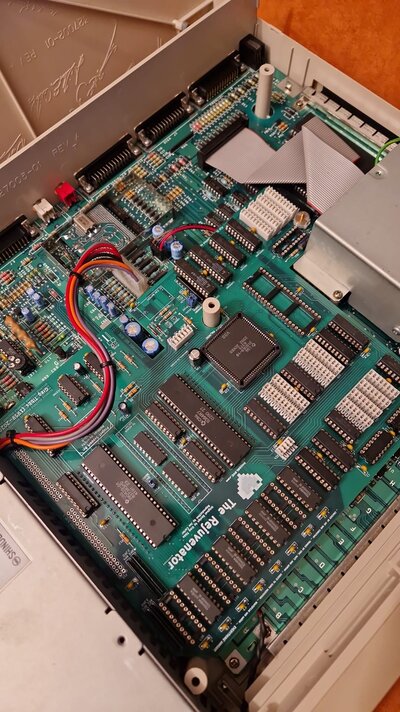
I recently acquired yet another Amiga 1000, this one is really in mint condition - absolutely no yellowing at all, everything included (except original box) and working perfectly.
So far I have recapped the motherboard, daughterboard, PSU and floppy drive. I have cleaned, serviced and lubricated the floppy drive (which reads perfectly) and done the low pass filter mod. I have one of the new Parceiro II+ with 28mhz CPU module installed and everything is working perfectly...... except composite out. Composite is in monochrome and simply awful, very poor quality etc.
The reason for this is, this is one of the early "PAL" Amiga 1000's Commodore sold in PAL regions.... which is simply an NTSC machine with the PSU swapped out to a 220v unit and a PAL Agnus installed. Commodore did not even bother to change the clock crystal.
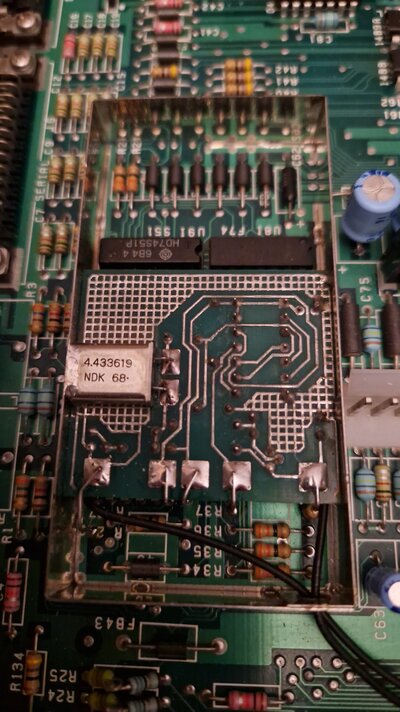
Anywho, even though I will be using a combination of RGB2HDMI and the 23pin RGB out, I would still like to rectify the dodgy composite output. To that end I have already installed a socket to the clock crystal and installed a PAL freq unit. Now apparently there are a few resistors that need to be removed and installed to complete the NTSC to PAL conversion.... however apparently on Revision A motherboards some of the points at which these components go are not present.... but surely the signal can be picked up elsewhere, so I am hoping some knowledgeable fellow out there in the Amigaverse might be able to help get this wonderful machine outputting a useable composite.
Thx.
anyone out there know anything about converting a Revision A Amiga 1000 from NTSC to PAL?
I recently acquired yet another Amiga 1000, this one is really in mint condition - absolutely no yellowing at all, everything included (except original box) and working perfectly.
So far I have recapped the motherboard, daughterboard, PSU and floppy drive. I have cleaned, serviced and lubricated the floppy drive (which reads perfectly) and done the low pass filter mod. I have one of the new Parceiro II+ with 28mhz CPU module installed and everything is working perfectly...... except composite out. Composite is in monochrome and simply awful, very poor quality etc.
The reason for this is, this is one of the early "PAL" Amiga 1000's Commodore sold in PAL regions.... which is simply an NTSC machine with the PSU swapped out to a 220v unit and a PAL Agnus installed. Commodore did not even bother to change the clock crystal.
Anywho, even though I will be using a combination of RGB2HDMI and the 23pin RGB out, I would still like to rectify the dodgy composite output. To that end I have already installed a socket to the clock crystal and installed a PAL freq unit. Now apparently there are a few resistors that need to be removed and installed to complete the NTSC to PAL conversion.... however apparently on Revision A motherboards some of the points at which these components go are not present.... but surely the signal can be picked up elsewhere, so I am hoping some knowledgeable fellow out there in the Amigaverse might be able to help get this wonderful machine outputting a useable composite.
Thx.