johntayloruk
Member
Long post here, but hopefully someone will find it useful
Background
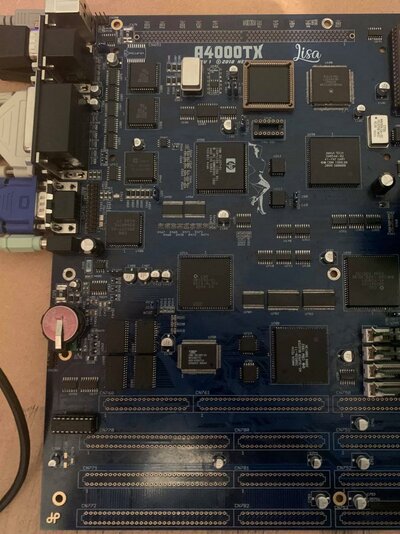
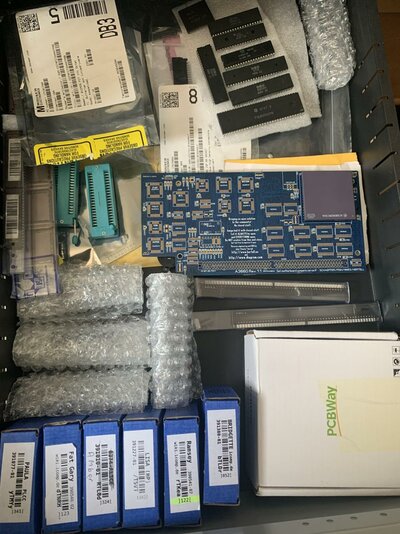
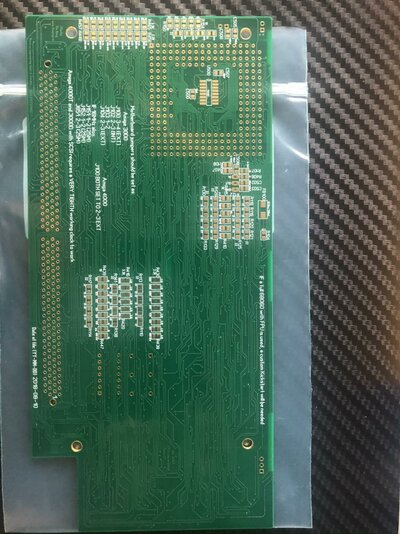
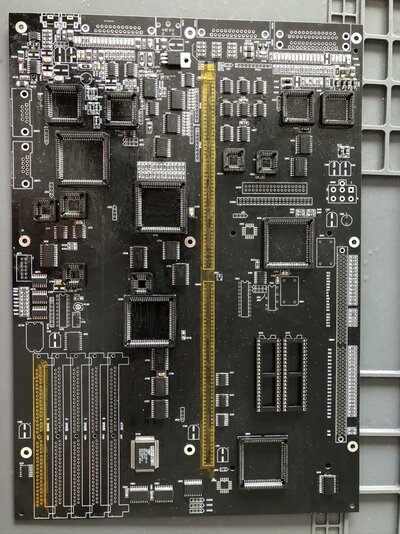
So I've been looking for a while to do something like this, but found getting a PCB and then working through the BoM quite daunting. The lockdown gave me plenty of time to go through things in more detail, research, refer to my original A4000, research more and then eventually get confident enough to start and ultimately finish.
I'd got the bug from watching a couple of YouTubers:
- "Building the Worlds Newest Amiga" series for the 500++ by RetroManCave
- "Commodore Amiga A4000 Repairs" by GadgetUK164
- "Building my own Amiga 4000" by TechJump
My own original A4000 had died on me and I'd exhausted my troubleshooting skills, so while it was off with someone to take a look at I bought a new PCB and got going.
BoM
I used the A4000 BOM list from Acill (https://github.com/Acill/A4000RevB) and Tbtorro and built my own list of items to buy from Digikey, AmigaKit, UTSource, Analogic and ebay. This isn't to say their list was wrong in anyway, I just found it easier for me to add some additional information. This included:
- Categorising the parts into something that made more sense to me
- Flagging where an item could be bought from
- Specifying the Digikey part number
- Specifying the Manufacturer part number (to see if other sites sell it)
- Flagging if an item has been substituted
- Flagging if an item can be socketed (optional to do this in most cases)
I've uploaded the BoM sheet I put together - please share, change, amend and use - I hope it helps others!
MASSIVE THANKS TO Acill and extended thanks to tbtorro and of course Chucky, just because
My Approach
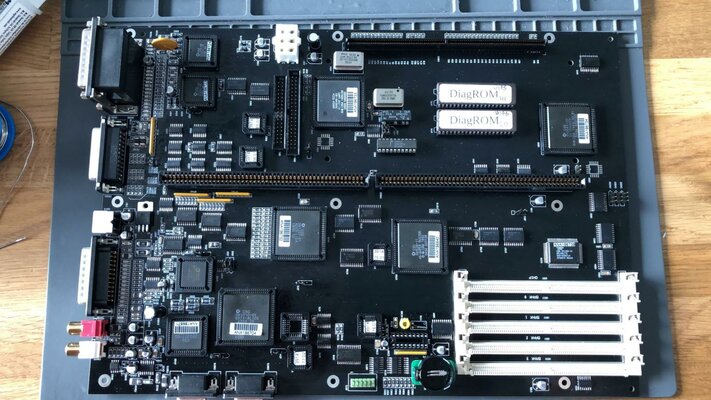
I started with the smaller things then worked up. There are over 600 capacitors and resistors to do, so I just worked down the BOM doing one component group at a time, marking off each as I went. I only had the components I was working on out. I was checking traces as I went along and really focused on the pins around my IC's.
I decided to socket as much as possible. Mainly because I didn't want to go through the hassle of it not working and then trying to unsolder IC's and made a mess. Soldering the sockets was actually a lot easier than I expected, given the space and size of pins.
I didn't record how long I was spending on this, but It must have been over 40 hours give or take. My thoughts were that if I took my time and checked traces/continuity as I went it would be a lot easier than having to troubleshoot at the end.
Tricky Bits and the Final Hurdle
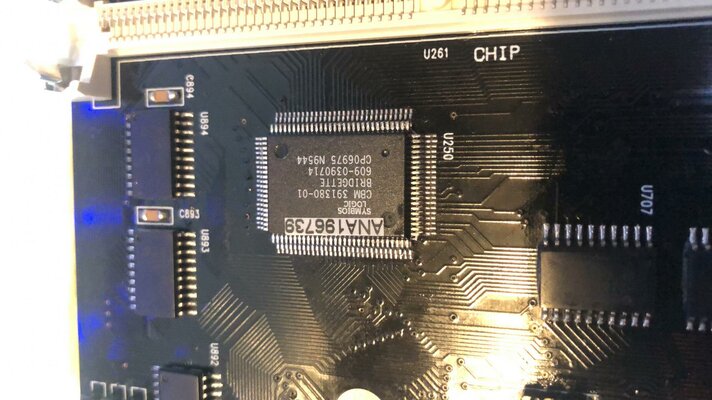
So after many hours and it being completed it was time to boot up. I put in the Diagrom chips, hooked it up to Power and my 1085S and....nothing. Fan was on, but the screen was grey. I checked socketed IC's, changed Ram, voltage from the PSU and all seemed ok. I played around with the brightness and noticed that I could see some text, but it was very faint and hardly visible. A bit more research and I came across an Issue raised for the build whereby the ADV7120 IC was not getting 5V's as there was an issue with a trace to L500.
The BoM I picked up from Acill said to put a fixed inductor in L500 and a 10k resistor at R465. In order to fix this, I removed the 10k resistor at R465 and replaced it with a 1 ohm resistor. More info can be found here (https://github.com/Acill/A4000RevB/issues/2)
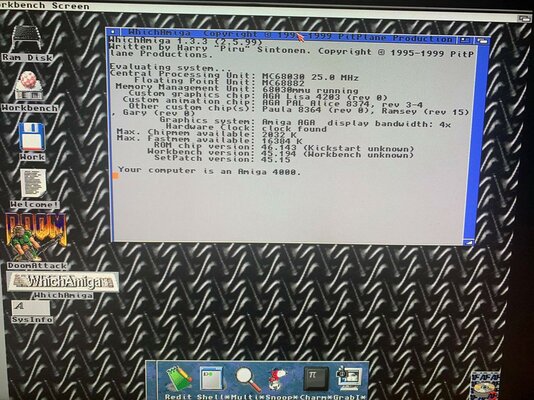
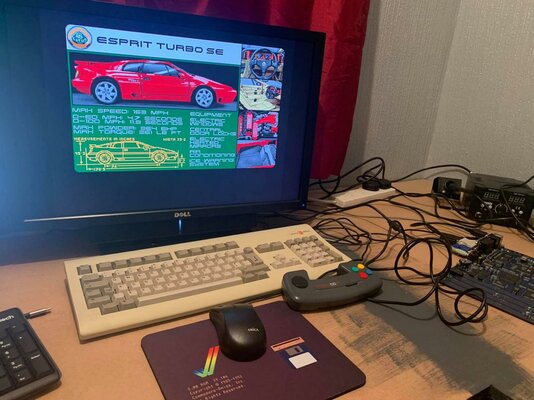
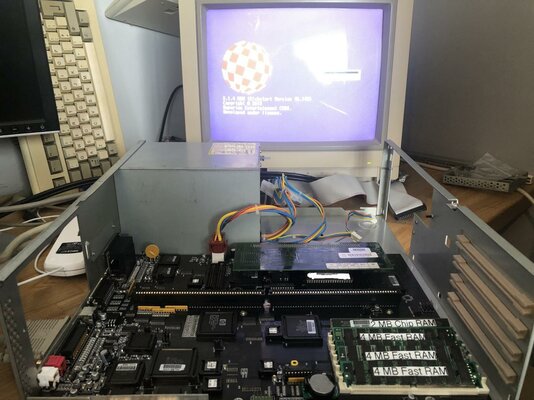
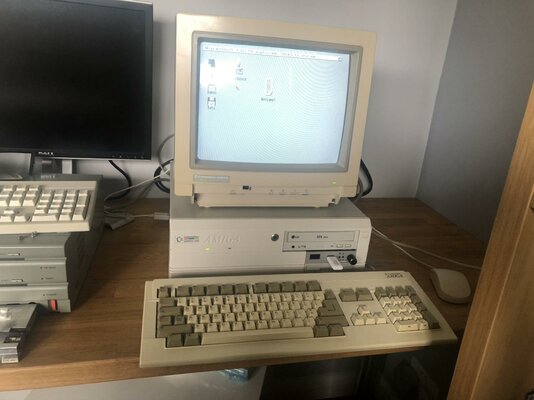
When I made this change, the lights came on and it worked! It really worked and I'm happy
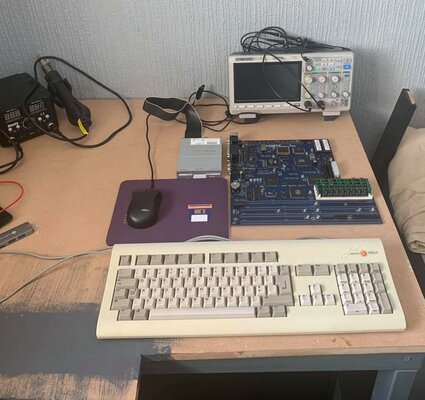
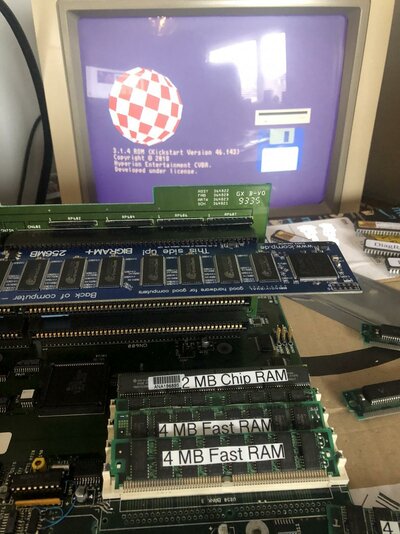
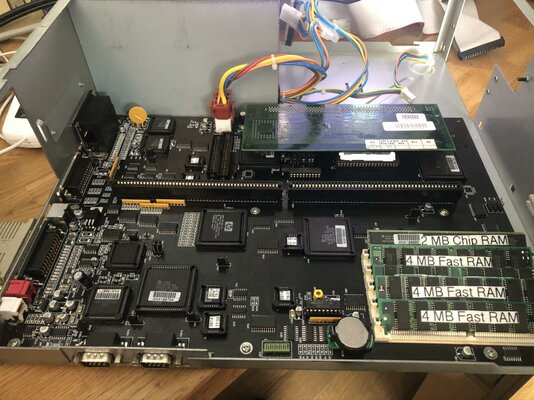
So I added a gotek drive, an Amiga 4000D case and have it setup running WB 3.1.4.
My Experience Going Into This
I've some soldering experience and have repaired the odd PSU and replaced capacitors on my other retro systems, like my A600, A1200, CD32, SNES, Nes, Saturn, Master System, Megadrive, 32X, MegaCD, N64, Jaguar and my X68000. I'd never done anything like this before though and I've got average equipment.
My Secret Weapons
Amiga PCB Explorer
http://amigapcb.org/ - it's amazing. Truly brilliant and helped me a lot with the checking and validation.
Flux!!
I used MG Chemicals 8341 No Clean Flux Paste and just Fluxed the Fluxing Flux out of it! Seriously, crappy solder point, just add flux and reflow. Too blobby, just add flux and wick off the excess.
I'm fortunate to have an ultrasonic bath, so after I'd done a lot of the major soldering (and before adding the IC's and ALU Caps) I cleaned it off in there.
My Thoughts on This Build
It's amazing that people are spending the time creating and sharing new hardware in 2020 for a machine that was released in 1992. Keeping the Amiga scene alive is important and we're all lucky there are some talented people out there making this happen, so big thanks to anyone who has been involved in this.
From my perspective, this was a big learning experience. It also wasn't cheap. If you want to know how much, then work it out yourself because I daren't check
My soldering could be better, particularly on the smaller resistors and capacitors (maybe should have used thinner solder), but other than that I'm really happy with what's been done and if anyone has any questions or comments please feel free to post.
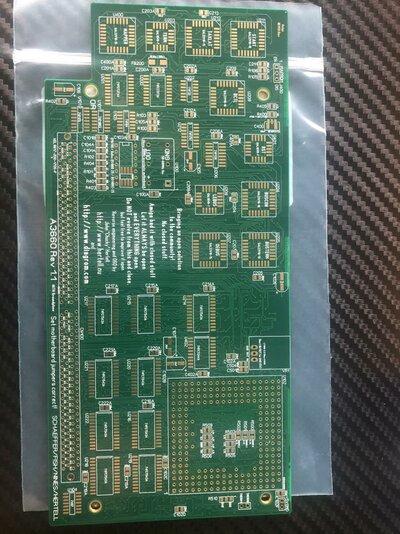
My next project is to work on a batch of A3660 PCB's I've had made up so I'm sourcing the parts and will get building when I can. If that works I'll add another post.
If you are thinking of doing this yourself, my advice is GO FOR IT! You can't beat the sense of achievement when it's done. Just remember to take your time, have plenty of breaks (and beer ready) and stick to it. Oh, and For Flux Sake, Flux!
Background
So I've been looking for a while to do something like this, but found getting a PCB and then working through the BoM quite daunting. The lockdown gave me plenty of time to go through things in more detail, research, refer to my original A4000, research more and then eventually get confident enough to start and ultimately finish.
I'd got the bug from watching a couple of YouTubers:
- "Building the Worlds Newest Amiga" series for the 500++ by RetroManCave
- "Commodore Amiga A4000 Repairs" by GadgetUK164
- "Building my own Amiga 4000" by TechJump
My own original A4000 had died on me and I'd exhausted my troubleshooting skills, so while it was off with someone to take a look at I bought a new PCB and got going.
BoM
I used the A4000 BOM list from Acill (https://github.com/Acill/A4000RevB) and Tbtorro and built my own list of items to buy from Digikey, AmigaKit, UTSource, Analogic and ebay. This isn't to say their list was wrong in anyway, I just found it easier for me to add some additional information. This included:
- Categorising the parts into something that made more sense to me
- Flagging where an item could be bought from
- Specifying the Digikey part number
- Specifying the Manufacturer part number (to see if other sites sell it)
- Flagging if an item has been substituted
- Flagging if an item can be socketed (optional to do this in most cases)
I've uploaded the BoM sheet I put together - please share, change, amend and use - I hope it helps others!
MASSIVE THANKS TO Acill and extended thanks to tbtorro and of course Chucky, just because
My Approach
I started with the smaller things then worked up. There are over 600 capacitors and resistors to do, so I just worked down the BOM doing one component group at a time, marking off each as I went. I only had the components I was working on out. I was checking traces as I went along and really focused on the pins around my IC's.
I decided to socket as much as possible. Mainly because I didn't want to go through the hassle of it not working and then trying to unsolder IC's and made a mess. Soldering the sockets was actually a lot easier than I expected, given the space and size of pins.
I didn't record how long I was spending on this, but It must have been over 40 hours give or take. My thoughts were that if I took my time and checked traces/continuity as I went it would be a lot easier than having to troubleshoot at the end.
Tricky Bits and the Final Hurdle
So after many hours and it being completed it was time to boot up. I put in the Diagrom chips, hooked it up to Power and my 1085S and....nothing. Fan was on, but the screen was grey. I checked socketed IC's, changed Ram, voltage from the PSU and all seemed ok. I played around with the brightness and noticed that I could see some text, but it was very faint and hardly visible. A bit more research and I came across an Issue raised for the build whereby the ADV7120 IC was not getting 5V's as there was an issue with a trace to L500.
The BoM I picked up from Acill said to put a fixed inductor in L500 and a 10k resistor at R465. In order to fix this, I removed the 10k resistor at R465 and replaced it with a 1 ohm resistor. More info can be found here (https://github.com/Acill/A4000RevB/issues/2)
When I made this change, the lights came on and it worked! It really worked and I'm happy
So I added a gotek drive, an Amiga 4000D case and have it setup running WB 3.1.4.
My Experience Going Into This
I've some soldering experience and have repaired the odd PSU and replaced capacitors on my other retro systems, like my A600, A1200, CD32, SNES, Nes, Saturn, Master System, Megadrive, 32X, MegaCD, N64, Jaguar and my X68000. I'd never done anything like this before though and I've got average equipment.
My Secret Weapons
Amiga PCB Explorer
http://amigapcb.org/ - it's amazing. Truly brilliant and helped me a lot with the checking and validation.
Flux!!
I used MG Chemicals 8341 No Clean Flux Paste and just Fluxed the Fluxing Flux out of it! Seriously, crappy solder point, just add flux and reflow. Too blobby, just add flux and wick off the excess.
I'm fortunate to have an ultrasonic bath, so after I'd done a lot of the major soldering (and before adding the IC's and ALU Caps) I cleaned it off in there.
My Thoughts on This Build
It's amazing that people are spending the time creating and sharing new hardware in 2020 for a machine that was released in 1992. Keeping the Amiga scene alive is important and we're all lucky there are some talented people out there making this happen, so big thanks to anyone who has been involved in this.
From my perspective, this was a big learning experience. It also wasn't cheap. If you want to know how much, then work it out yourself because I daren't check
My soldering could be better, particularly on the smaller resistors and capacitors (maybe should have used thinner solder), but other than that I'm really happy with what's been done and if anyone has any questions or comments please feel free to post.
My next project is to work on a batch of A3660 PCB's I've had made up so I'm sourcing the parts and will get building when I can. If that works I'll add another post.
If you are thinking of doing this yourself, my advice is GO FOR IT! You can't beat the sense of achievement when it's done. Just remember to take your time, have plenty of breaks (and beer ready) and stick to it. Oh, and For Flux Sake, Flux!
Attachments
-
 09.jpg194.9 KB · Views: 43
 -
 IMG_5528.jpg202.6 KB · Views: 45
 -
Amiga 4000 BOM_JTv1.1.zip31.3 KB · Views: 24
-
 03.jpg211.9 KB · Views: 62
 -
 041.jpg217.3 KB · Views: 60
 -
 05.jpg201 KB · Views: 52
 -
 12.jpg203.1 KB · Views: 56
 -
 13.jpg192.1 KB · Views: 51
 -
 IMG_5527.jpg208 KB · Views: 42
 -
 17.jpg183.6 KB · Views: 59