Blockout day

  • Thread starter Thread starter morcar
  • Start date Start date
  • Replies Replies 53
  • Views Views 1030
@JA

Please understand I have the upmost respect for you position - but calling it Piracy or stealing implies a criminal matter - this is a civil matter - it is copying work without permission.

not stealing

If you had produced a phyiscal product - and I stole the truck and its container and then sold its contents - then you could call it Piracy and Stealing - so I would like it if we could keep terms correct in this discourse

copying and selling an item is copyright infringement
copying and not selling an item is file sharing (copy right infringement).

The above is a civil matter, as such one would have to prove in civil court loss associated to the copying sharing / selling of ones work (copyright)

copying an item to pass off as an official license article is conterfeiting

The above is infact a form a fraud, as such this is a criminal matter persued and prosecuted by the state, enforecd by the police.


Now, while you may argue that every copy made outside of copyright is a lost sale - There is not any real way to proove that some one would purchase it - infact its more proof that they wouldn't.

I do not condone selling anyones elses work without their permission - however at what loss can I associate my product if some one is sharing my work with some one else?

can anyone else see the conflict of ethic here

Sharing; something that communites are essentially based up on are being prosectued for doing that very same thing.

Even something as simple as lending a DVD to a chum is infact illegal.

How do you tell a 9 year old child that sharing is wrong?

I dont suggest that I might have the answer to the problems inherrent with Intellectual Properties but what I do know, is that unless an evolution is undertaken the acts designed to protect the creator / owner will do nothing more than tie the hands of new development.
 
JumpingAnaconda: if the MPAA or the RIAA wants to go after pirates using the existing legal channels that allow them to prosecute pirates, if they feel it's worth their time and effort to do so, I have no problem with that. What I'm not okay with is when companies (big or small, I don't care) try to buy writ-to-order legislation that will give them the keys to the kingdom on the Internet so that they can kill websites at their discretion, without due process or chance of appeal. You think it's okay for private parties to worm themselves into law enforcement? You think that power isn't going to be abused?
 
I love the way that the MPAA and RIAA continually get the grief, yet the Industry Trust, who are right on our own doorstop and who take a very mature approach towards the problem. I should know, because they asked yours truly as one of the people right on the bottom of the pile to become an ambassador for them.

Zetr0's problem with it being stealing is down a lack of a grasp on the concept of intellectual property. He thinks it can not be stealing because nobody is selling anything. But if you take an apple from the supermarket and eat it, it is stealing. The artist, the label, the distributors, the composers own rights in the music which when you illegally copy the music is breached. It is as simple as that.

The argument about each pirated copy not equating to a lost sale is invalid. Our capitalist economy depends on value being attached on goods, on supply and demand. Yes, people may have more music in their collections now, and yes they may not have bought it otherwise. But also, many of the Summer rioters have 50 inch tv sets and £200 trainers they would not have had otherwise. The value of the music means that you have to make a cost based decision when you buy a music product, just like when you buy any other product. That is a basic part of consumerism, and the collapse of that is why the music industry and the film industry is utterly doomed.

commodorejohn, if you go onto Google sites such as their search engine or Youtube and do a search, you will find copyright infringing material in seconds. Google is making a vast amount of money from this. The existing legislation is clearly not protecting copyright owners. I will say again, I do not think there is any way it can be turned around, but I do not see why companies such a Google should be able to make a fortune out of stealing the rights in other people's properties.

Again, I will ask, why are people not jumping up and down about the patents and copyrights held by pharmaceutical companies?

Every single one of you should be concerned about this, because I have seen the future, and it is 3D printing. If you are in manufacturing, you are about to watch your industry disappear. Because it is now getting to the point where someone can buy anything, take a picture of it with a camera with a projector on it, and then copy it. Then people will realise the value of intellectual property in other things, and suddenly they will realise, actually this stuff is important. When some far flung company basically photocopies the newest car designs and ever plant in the UK shuts down.

I mean I already have several companies who straight ripped off the copy I had wrote on my own company website. People have to get this, IP is one of the most valuable things in any economy. If you do not protect it then you are destroying pioneering companies, research becomes pointless and the economy is destroyed.
 
commodorejohn, if you go onto Google sites such as their search engine or Youtube and do a search, you will find copyright infringing material in seconds. Google is making a vast amount of money from this. The existing legislation is clearly not protecting copyright owners. I will say again, I do not think there is any way it can be turned around, but I do not see why companies such a Google should be able to make a fortune out of stealing the rights in other people's properties.
The infringing parties are the sites that are hosting copyrighted content without authorization. There are already valid and workable legal channels for holding them accountable. If the content industry doesn't feel it's worth their time to prosecute these people under the existing laws, why should they get to infringe on site owners' rights (again, I remind you, without due process or chance of appeal) in order to make it less work for them? They shouldn't get a special go-ahead to police the Internet at their whim just because they think the existing, legitimate legal system is too much work.

Again, I will ask, why are people not jumping up and down about the patents and copyrights held by pharmaceutical companies?
I haven't been talking about it because it's not what we were discussing here. Yes, if you really want to know, I do think patent law is broken as hell. But that's another topic for another thread.

Every single one of you should be concerned about this, because I have seen the future, and it is 3D printing. If you are in manufacturing, you are about to watch your industry disappear. Because it is now getting to the point where someone can buy anything, take a picture of it with a camera with a projector on it, and then copy it. Then people will realise the value of intellectual property in other things, and suddenly they will realise, actually this stuff is important. When some far flung company basically photocopies the newest car designs and ever plant in the UK shuts down.
That's a crock. Even if 3D printers could make production-quality car parts (they can't, yet,) you can't just take a photo of a car and thereby determine the entire structure of the thing. You can't even determine more than half the body shape! Nor can you work out the engine timing, procure the code for the onboard computers, or do any of the countless other steps involved in designing and manufacturing a car. By the time you go into enough detail to be able to manufacture a copy, you might as well have just designed a car from scratch. Same goes for any other complex mechanism. (In fact, once you get out of the realm of electromechanical devices and into electronics, you're really wasting time trying to copy an existing product by reverse engineering.)

And anyway, even if that weren't true? There are still legitimate legal channels for putting a stop to it! So they can (hypothetically) copy your whole design, so what? Take them to court and shut them down! You've got the original design documents and ample proof that you invented and they copied, right? You can't lose that case! Maybe it's from some chintzy factory in Upper West Crapistan, where the government doesn't care about your woes, but if that's the case it's going to be such cheap crap that nobody is even going to buy it! Did the quadzillion Hong Kong Famicom clones put Nintendo out of business? No!
 
Popcorn_nommer.gif
...
 
for the car thing i can tell you as a fact ALL car manufacturers buy their competitors cars, dismantle them and see how they work, if they find something interesting they develop it and introduce it on their own cars, but without physically having the car in front of them this wouldn't be possible.
 
Maybe it's from some chintzy factory in Upper West Crapistan, where the government doesn't care about your woes, but if that's the case it's going to be such cheap crap that nobody is even going to buy it! Did the quadzillion Hong Kong Famicom clones put Nintendo out of business? No!

True, but that didn't stop Nintendo going after Lik-Sang, did it?

The fundamental flaw in the RIAA's and MPAA's arguments (and SOPA for that matter) is that the largest nation of pirates on this rock (China) basically don't give a flying fork about copyright. The recent cloned Apple stores is a really good example of the relaxed attitude to copyright displayed out there. How many iPhone and iPad clones are there now, considering that Samsung and Foxconn have their factories out in China, so have left themselves wide open to reverse-engineering activity?

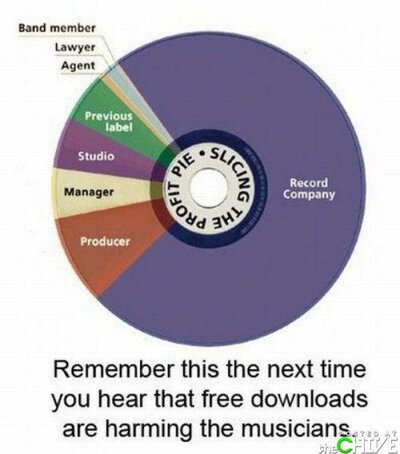
The big problem the music and film industries have are the Simon Cowell types, that add no intrinsic value to a musician's work, other than providing promotion and a channel to market and taking a huge slice of the royalties pie for the privilege. Basically, a lot of these middle-men are parasites that have already sucked the corpse of the industries dry, so they are looking for new prey.

Some musicians have been looking to social media to launch their latest albums and works; however, they aren't viewed as the way forward by the dinosaurs of the industries. You have to remember that a lot of these people in the music and film industries don't use the Internet for much more than e-mail, so they really don't have a clue how to handle the beast, so they want to club it out of existence and send us all back to the 1950s.
 
@JA

Zetr0's problem with it being stealing is down a lack of a grasp on the concept of intellectual property. He thinks it can not be stealing because nobody is selling anything. But if you take an apple from the supermarket and eat it, it is stealing. The artist, the label, the distributors, the composers own rights in the music which when you illegally copy the music is breached. It is as simple as that.

The argument about each pirated copy not equating to a lost sale is invalid. Our capitalist economy depends on value being attached on goods, on supply and demand. Yes, people may have more music in their collections now, and yes they may not have bought it otherwise. But also, many of the Summer rioters have 50 inch tv sets and £200 trainers they would not have had otherwise. The value of the music means that you have to make a cost based decision when you buy a music product, just like when you buy any other product. That is a basic part of consumerism, and the collapse of that is why the music industry and the film industry is utterly doomed.
I am sorry to say that you will need to read up on copyright law in the United Kingdom - my lack of total grasp of the concept not withstanding, you will discover that it is an infringement NOT stealing ;)

It is important to get the terms right or you will lose ground in your argument. I would perfer everyone to be informed about what rights we have and are aforded to us in the UK, this is not always the case - it is also very important to ensure that when arguing / debating intelectualy property - to not confuse this with physical property... there is a distinction in law - it is very apporpriate (and in our field I believe mandatory) to know the difference.
 
Hmm...

I dunno if the correct proportion is right, but it is close enough.
 

Attachments

  • Slices.jpg
    Slices.jpg
    32.6 KB · Views: 0
Anyone checked out the newspapers recently? Looks like SOPA is taking grip even before it's happened with the fall of MegaUpload. Which to me is odd since they arrested the guy on the grounds of promoting piracy. But being an Upload site isn't the responsibility mostly with the uploader and rather then the upload comapany?

Something tells me that they are going to crack down on this hard regardless if SOPA passes or not (personally I think it will, just look what it could do for the currently poor US economy).
 
Again, I will ask, why are people not jumping up and down about the patents and copyrights held by pharmaceutical companies?

A lot of people are, just not in this thread. And it's kind of apples and oranges anyway. The cost in bringing a new drug to market is multiple tens of millions, if not of hundreds of millions, of dollars. Years and often decades of research by thousands of scientists, which produces life saving/quality of life improving new drugs. If that cost couldn't be recouped then those life saving drugs wouldn't get made. THAT SAID... pharmaceutical companies are, in my view, almost inherently evil in the way that they enforce astronomical prices for their drugs. I shan't go off on a political rant, but they're scum (or at least the sales and marketing divisions, the scientists do good work).

And to swing back on topic... I've downloaded tonnes of music over the last decade. The majority of that has been from word of mouth reccomendations, mostly from fans on band messageboards. I'd download a record, check it out, and buy it if it was any good. I'd often also buy everything else they've released, as well as catch concerts whenever whatever band played in London. If I hadn't done that initial download, none of that income would have happened. So yeah, a wrong doesn't eventually make a right, but there is a use to people downloading a lot of music, bands get exposure that they otherwise wouldn't have had and a proportion of the people downloading will eventually give them some money. This example probably isn't as relevant in the youtube age when any and all music can be sampled in browser instantly, negating the need for the exploratory download, but that's how it was a few years ago when I did download a bunch of stuff often.

I think it was Bill Gates who said about Microsoft Office being pirated, "We'd rather they pirate us than the competition because they'll get hooked on our system and some of them will eventually give us money" (paraphrased). If Bill Gates, he of the infamous letter to hobbyists, can adopt this tone, then it's got to be worth adopting.

And in terms of value being attached to goods, what does second hand reselling do to this value? Why buy a full priced physical release when you can go on ebay and buy the same for a quid? Hell, a lot of places on ebay aren't even selling second hand, they're selling new at massive discount. Again, surely it's the market that dictates the worth rather than the people selling it?

---------- Post added at 11:52 ---------- Previous post was at 11:05 ----------

This is particularly frustrating in a forum that revolves around a computer platform that was completely and utterly obliterated by piracy.

Just remembered this note from your earlier response. I've got to ask, is this the accepted consensus view? Was the Commodore platform brung low by piracy? I was always under the impression that it was a fundamentally sound and healthy platform/business that was killed by corporate ineptness.

I certainly did my fair share of school playground swapping of copied disks back in the 90s, but I also did my fair share of dropping stacks of pocket money on new games in John Menzies (happy memories stalking the Amiga aisle!), as did everybody else I knew with an Amiga. We pirated between each other but also didn't think twice about buying new from the shops. Maybe my experience is sheltered from the overall reality, but I don't remember piracy being a huge problem for the platform as a whole, and there were certainly a great many software houses that made good money and went on to bigger things.
 
This is particularly frustrating in a forum that revolves around a computer platform that was completely and utterly obliterated by piracy.

Just remembered this note from your earlier response. I've got to ask, is this the accepted consensus view? Was the Commodore platform brung low by piracy? I was always under the impression that it was a fundamentally sound and healthy platform/business that was killed by corporate ineptness.

It's not the first discussion about that, and will probably not be the last either, but no. I would say the general consensus is that C= where the main culprit, not piracy.

It IS fairly common to use it as an example to prove a point though - valid or not:shhh:

Making absurd laws will not change people's perception of downloading software/movies/music/whatever, and never will. Changing their views on supporting developers and artists (not publishers) will!
 
Last edited:
Commodore was not killed by piracy, as evidenced by the fact (not opinion) that software was still being made for an obsolete and shrinking market share platform after Commodore went belly up!

Right, I'm expecting TL;DR from now on :D

The companies that would really struggle if piracy was killing markets would be those that subsidise their hardware: Sony, Nintendo, Microsoft and others. Yet they're still around...

There's a balance needed.

Yes, there is a freeloader mentality in some: I'd say they are a minority. I'll gladly pay for something if I like it, and I think every one I know would do the same. Ask me to pay more than once for something (eg buy a CD and buy the same music from iTunes) and I will politely tell you to go away. Point out that copyright laws don't allow format shifting and, technically, what I've done is illegal and I'll politely tell you that copyright needs a radical overhaul and needs to regain its balance as it was never a tool to oppress consumers with.

My music tastes are slightly eclectic: I like electronica/IDM. Stuff like Access to Arasaka, Ayria, ESA, Keef Baker, stuff that is on independent labels. I buy music from those labels directly (eg Tympanik). I know the artist gets a small cut, but it's fundamentally a changed model to big media industry.

However, I'm a 'thief' in the eyes of the big media recording industry already: I rip my DVDs to my media server. That, I am reminded on the very first picture that appears on the DVD I bought last week, is circumventing technical measures and IS ILLEGAL.

Honestly, how am I supposed to advocate for a bunch of people that instantly brand me a criminal for doing something that makes my life easier, and my enjoyment of their stuff better?

How am I supposed to advocate for a bunch of people that ensure a dearth of public domain material from the 20th century by paying for ever indefensible protectionism that takes the original purpose of copyright (a short term monopoly) and turns it into a perpetual money machine? The original writer, the original creator, hardly ever owns copyright anymore... And what would happen to poor Sir Cliff if the early part of his back catalogue became public domain and no-one had to pay him for performing it?

Why should restaurants worry about people singing (or publicly performing) Happy Birthday to you?

Why should my local tea room have to pay 300 quid to play a radio in the background? Oh, that's right, they don't and they've turned the radio off with an explanation on their windows, on the menu, on the tables, saying why the PRS is not welcome at their establishment and why they're not paying their fee, or playing the radio either.

How can the record labels have the cheek to say they're finding new and exciting talent when we get covers of Nine Inch Nails 'hurt' - an agonisingly beautiful, melancholy and ultimately personal introspection - by Leona Lewis? Same song covered by Johnny Cash? It could have been written for him...

With the internet, social media, self publication, etc, the model of the large record labels is flawed and there is absolute desperation to find someone to blame for this, so that the old ways may be preserved. So let's demonise the copyright infringers...

That hasn't really worked, has it?

All that's needed is open access to buy stuff direct from artists, a supporting infrastructure for artists and, optionally, a curator model.

Apple have disrupted the app world, and they're trying to do it with textbooks. Note how they're not yet going balls out for self publishing onto iTunes.

Yet.

SOPA/PIPA are terrible laws, and the power they grant along with the unintended (or intended?) consequences are totalitarian by very definition.

So they need to change.

MegaUpload makes (or made) a fortune by allegedly providing a service used by billions - so I read - to allow mass scale copyright infringement where Megaupload makes money through advertising on top of the infringement.

So they need to change, too.

There needs to be a balance. We need to get rid of the culture of extending copyright from 10 years to 50+ years after death, and remember what copyright's purpose is: encourage progress in science and useful arts by allowing people to make money from their inventions, discoveries, creations or performances... (paraphrasing the US constitution).

You want paying for the music you've made that I like? I'm happy to do so, providing you let me give you an agreed amount of money and then don't want me to buy it again when Format X comes out. I don't care about licensing restrictions or rights, I've bought the music and I'll listen to it when I want, how I want.

You want paying because someone used a riff from a traditional tune in a song? Go away, right now, and find something better to do.

Balance. And, preferably, passing the "you've got to be kidding me" test from both sides.
 
Back
Top Bottom