

Jazzmarazz
New member
Two of my C64s do not work, both of which are Assembly number 250425 from 1984. After hours and days of analyzing them for faults and cold joints, etc, I have noticed several seemingly large variations that these boards may have. (These 2 are not mine, but I will post pics soon):
Here is a normal C64 mobo with nothing noticeable different. There is one electrolytic capacitor that has replaced a ceramic one in the center, but I don't think it changes anything.:

And Here we have several diodes that are not present in either of my C64s. Diodes visible are located on the left-most side and also to the left of the serial port. Another thing is the capasitor that you can see above the fuse. It is not there in any other board I have seen.
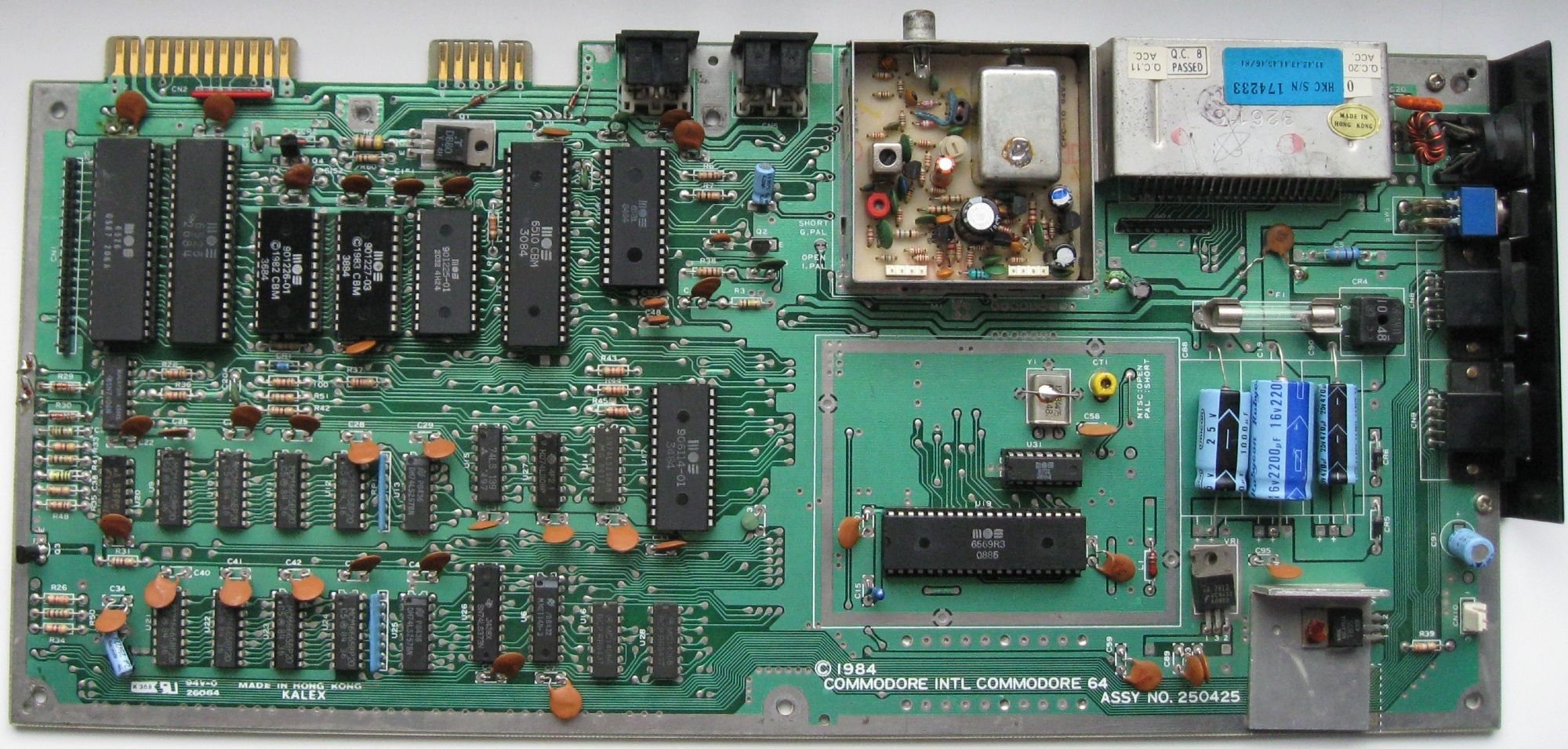
One of my mobos (to be pictured shortly) has a resistor in place of C204, a green cap located above the ram. I plan on replacing this with the appropriate cap (151J) which I think should be there instead, but I don't know why any of these changes have been made.
Does anyone think that I should replace the resistor labeled C204?
Does anyone know what these differences do or why they were made?
Also, while we are on the topic, I found 4 or 6 diodes that have replaced 2 Ferrite beads in my non-working C16. If anyone wants to see this, just ask and I will take a photo.
I received all of these computers well after prior owners had them and have no clue if they have been modified. I would really like to fix them but want insight from all of you because I am running out of options.
Here is a normal C64 mobo with nothing noticeable different. There is one electrolytic capacitor that has replaced a ceramic one in the center, but I don't think it changes anything.:
And Here we have several diodes that are not present in either of my C64s. Diodes visible are located on the left-most side and also to the left of the serial port. Another thing is the capasitor that you can see above the fuse. It is not there in any other board I have seen.
One of my mobos (to be pictured shortly) has a resistor in place of C204, a green cap located above the ram. I plan on replacing this with the appropriate cap (151J) which I think should be there instead, but I don't know why any of these changes have been made.
Does anyone think that I should replace the resistor labeled C204?
Does anyone know what these differences do or why they were made?
Also, while we are on the topic, I found 4 or 6 diodes that have replaced 2 Ferrite beads in my non-working C16. If anyone wants to see this, just ask and I will take a photo.
I received all of these computers well after prior owners had them and have no clue if they have been modified. I would really like to fix them but want insight from all of you because I am running out of options.
Last edited:


