

Hi All,
I saw this board for sale the other day and had to have it (The components looked so similar to an older Amiga accelerator that I was intrigued). The owner didn't know anything about it (Except that it's copped a knock at some stage on the traces).
Whatever it is, it's been now been saved from becoming someones wedding ring anyway.
From what I can tell:
A) ISA?
B) Pretty epic for it's time!
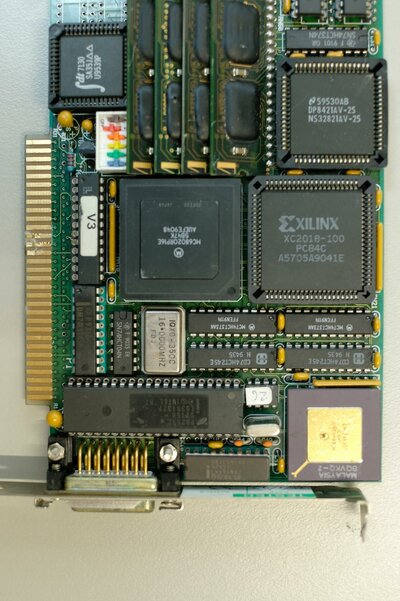
C) Motorola MC68020RP16E CPU & MC68440R10 MMU
D) 4x “Topless Germany” (Soldered) Ram sticks.
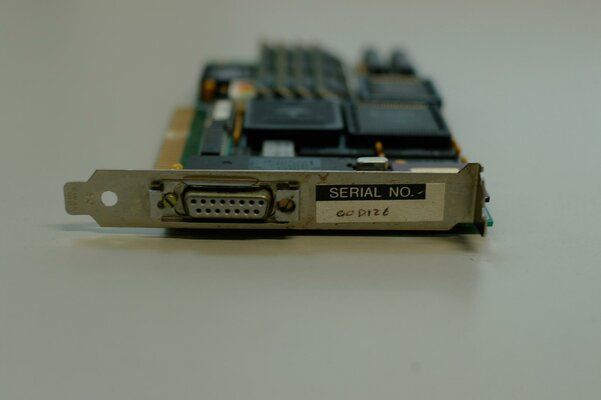
E) 15Pin DSUB
F) The long IC (which you can’t read in photo) is Intel P82592 / SZ158 / L0381327 (’87) (Might be programmable IC)
It could be one of a million custom boards for industrial use and perhaps impossible to identify. I’m more interested in what the card does, rather than it’s exact designation. Whatever it is, it would have cost a fortune in the 80's.
It has a 15 pin DSUB which I thought might have something to do with an Apple display? But after hours of Googling, I kind of got the picture that the older 8-bit ISA (IF that is what it is) could mean it was meant as some kind of CPU accelerator board for AT/XT Machines? Surely 16Mhz is too way fast for both of those machines? Is it a bridge board perhaps?
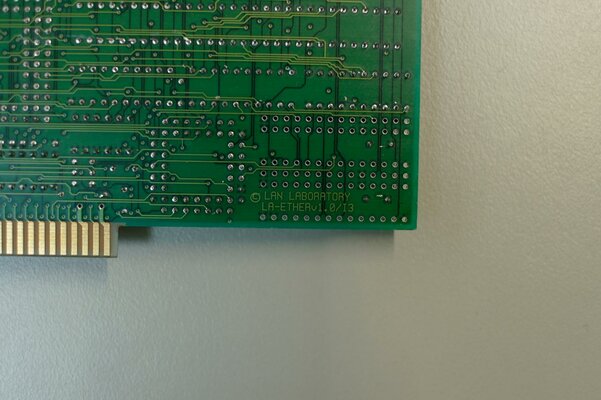
It says "LAN LABORATORY - LA-ETHERv1.0/I3 on the reverse side, but Google slammed the door in my face when I asked what that was.
I’m attempting to attach readable high-res images, not sure if they will still be clear after the upload process optimises the photos.
Has anyone seen anything like this before? Very interested in any theories. Thanks.
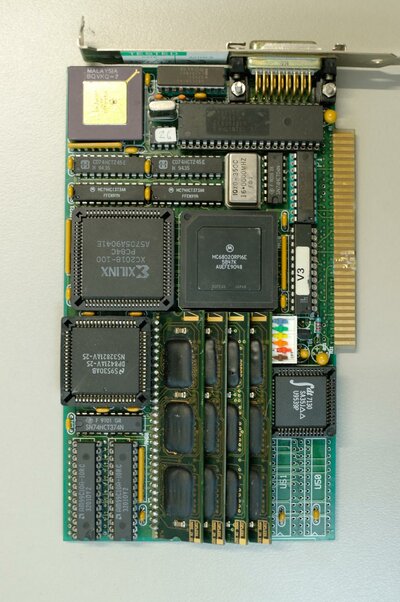
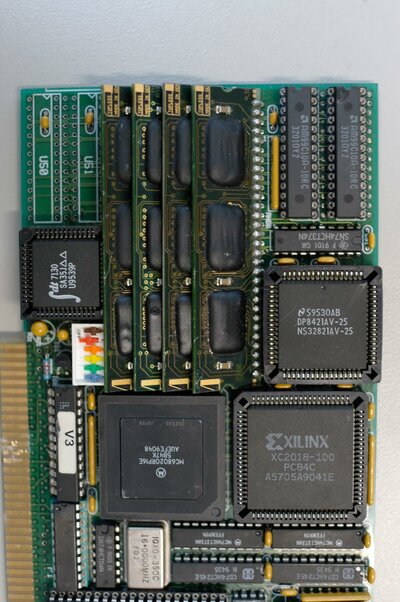
I saw this board for sale the other day and had to have it (The components looked so similar to an older Amiga accelerator that I was intrigued). The owner didn't know anything about it (Except that it's copped a knock at some stage on the traces).
Whatever it is, it's been now been saved from becoming someones wedding ring anyway.
From what I can tell:
A) ISA?
B) Pretty epic for it's time!
C) Motorola MC68020RP16E CPU & MC68440R10 MMU
D) 4x “Topless Germany” (Soldered) Ram sticks.
E) 15Pin DSUB
F) The long IC (which you can’t read in photo) is Intel P82592 / SZ158 / L0381327 (’87) (Might be programmable IC)
It could be one of a million custom boards for industrial use and perhaps impossible to identify. I’m more interested in what the card does, rather than it’s exact designation. Whatever it is, it would have cost a fortune in the 80's.
It has a 15 pin DSUB which I thought might have something to do with an Apple display? But after hours of Googling, I kind of got the picture that the older 8-bit ISA (IF that is what it is) could mean it was meant as some kind of CPU accelerator board for AT/XT Machines? Surely 16Mhz is too way fast for both of those machines? Is it a bridge board perhaps?
It says "LAN LABORATORY - LA-ETHERv1.0/I3 on the reverse side, but Google slammed the door in my face when I asked what that was.
I’m attempting to attach readable high-res images, not sure if they will still be clear after the upload process optimises the photos.
Has anyone seen anything like this before? Very interested in any theories. Thanks.


 , though that'd be kind of cool, Network server on a card, an XT capable of handling 255 network connections, tho the MFM/RLL drives would probably grind to dust...)


