Retr0bright on it's own is not a permanent solution - here's why...

  • Thread starter Thread starter Merlin
  • Start date Start date
  • Replies Replies 78
  • Views Views 101399
From experience, if an Amiga or anything else for that matter is susceptible to yellowing it will do so even if it is in its original box and stored in a cupboard. Obviously sunlight does not help at all and only speeds up the process.

I think the worst hit with regards to yellowing are the Nintendo SNES consoles especially the USA models which can even crack. My (currently non-working) USA SNES thankfully was spared and has absolutely no yellowing whatsoever.
 
Yeah... there are so many variations in the composition of the plastic that all kinds of things are possible. My C64 had half of its keys yellow, the other half not at all (and no, they have not been swapped over from another keyboard, it's been like this always). So anything that has stayed white this far is probably a better mix of plastic in this regard :)

c64_whitening.jpg
 
I know this is an old thread but I've been thinking about Retr0briting my 1200 but didn't want to splash out a bunch of wonga just to do one case...!

So, if we are going to have to lacquer the case after its been retr0brighted surely it would be easier just to paint the case white again with a self-etching colour matched satin paint wouldn't it (keyboard aside obviously)???


Don't get me wrong, I wouldn't be doing this with a 4" paint brush and Dulux ... I've got an Air brush and compressor and it can spray so thin I can paint a sheet of white paper blue and still see the texture!

How comes I've not seen painting in discussions anywhere. I love what you guys have done with the retr0bright, it just seems like such a complex process when a coat of paid will do the same (especially if you're gonna lacquer the thing afterward)??!
 
There are purists that don't want to paint the cases, that's why we came up with Retr0bright as a restoring technique.
 
One quick question: does this treatment include the keyboard keys? they also get yellow after retrobright action.


Sent from my iPad using Tapatalk HD
 
I applied the varnish to my A4000 keyboard keys (as well as the case), it worked well.

One minor niggle is that due to the type of varnish I used (off-the-shelf stuff I could find in a local shop), it added a bit of texture (not visible, but you can feel it when you type).
 
Hi!

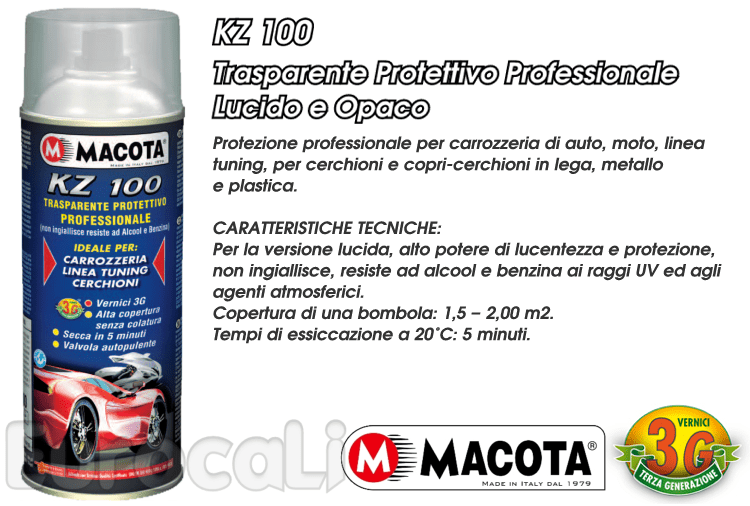
After retrobright, to avoid the yellowish, Can I use this?:

MacotaKZ100trasparente.png


It's not available in satin, only gloss or mate :huh:
 
I've just found an interesting post on another forum that seems to discredit the 'sealing' method:

http://atariage.com/forums/topic/138244-how-to-remove-yellowing-from-an-old-atari-case/?p=2804240

It does worry me that absolutely nobody seems to be able to prove that this theory is true, despite myself and many other people asking. Surely SOMEBODY must have tried it over the last couple of years to warrant 5+ pages of posts?! I have just bought some plastikote and want to give it a go, but really want to see some evidence that it actually works before I potentially ruin my A4000 :?
 
I've just found an interesting post on another forum that seems to discredit the 'sealing' method:

http://atariage.com/forums/topic/138244-how-to-remove-yellowing-from-an-old-atari-case/?p=2804240

It does worry me that absolutely nobody seems to be able to prove that this theory is true, despite myself and many other people asking. Surely SOMEBODY must have tried it over the last couple of years to warrant 5+ pages of posts?! I have just bought some plastikote and want to give it a go, but really want to see some evidence that it actually works before I potentially ruin my A4000 :?
Could you try it on a less expensive case first? Some other piece of kit lying around?

ravard
 
Maybe not. Leave the coated piece outside to bright sun light. Coat only half of it for comparison.

I'm not convinced that UV light is the culprit. My A4000 has been in a closed, dark cupboard since I retrobrited it a year ago, and the yellowing has returned. Many other people have also reported this.
 
I'm not convinced that UV light is the culprit. My A4000 has been in a closed, dark cupboard since I retrobrited it a year ago, and the yellowing has returned. Many other people have also reported this.
But the cupboard has oxygen which is the main culprit for yellowing. UV light accelerates it though, which is why a laquer blocking both oxygen and UV should also halt any yellowing. But there could be a difference between the original yellowing process and the reyellowing that takes place after a retrobright, and I am not convinced a layer of laquer will stop reyellowing if it comes from within. It might slow it down, but it is only a viable treatment if it stops it 100% since it will cut off the possibility of doing new retrobright treatments.
 
It's a tricky one. I have also noticed that oxygen is also not the sole culprit, because the back of my case has not yellowed at all, neither had the back of any of the keyboard keys when I removed them.
 
True - I have seen the same thing. The back sides or other parts not exposed to UV rarely has any yellowing at all. Question is if original yellowing needs UV to get started, but reyellowing can take place without UV? Perhaps even without oxygen, since the original yellowing extends much deeper into the plastic than a quick retrobright treatment can.
 
I think the truth is there are no certainties with this. Some batches don't yellow, some do, UV seems to accelerate it but is not essential, there's no evidence cutting off oxygen from the front will prevent yellowing coming through from behind, and it's even possible for one side of something yo go yellow and the other not! Painting is starting to look more appealing :)
 
Back
Top Bottom