Tapuino, the $20 C64 Tape Emulator

  • Thread starter Thread starter sweetlilmre
  • Start date Start date
  • Replies Replies 1059
  • Views Views 299319
Hi all!
I have the first revsion of Tapuino and it works great, the one you can see here :


I wonder which is the latest firmware suitable for this hardware revision.Besides, was the counter feature ever added?
 
Hi all!
I have the first revsion of Tapuino and it works great, the one you can see here :


I wonder which is the latest firmware suitable for this hardware revision.Besides, was the counter feature ever added?
Latest firmware should be fine, I'm not sure what version you are on but the releases have all been bug fixes / performance improvements or enhancements.

You may need to check the config for pull-up / pull-down buttons if you have implemented the very first rev as this was the only significant hw change IIRC.

The counter was not implemented in this hardware rev due to limitations, but is in the TapuinoNext.

 
Thanks for reply.I took the chance to convert the Eagle project to KiCad, I added a GROUND power plane and exchanged the two pins 'SDA' and SCL' as most of I2C display have this pinout.All the rest of the original design is untouched.I attach the GERBERs to send to your prefereite PCB manufacturer (I use JLCPCB).

TapuinoNext-Mini.jpg
 

Attachments

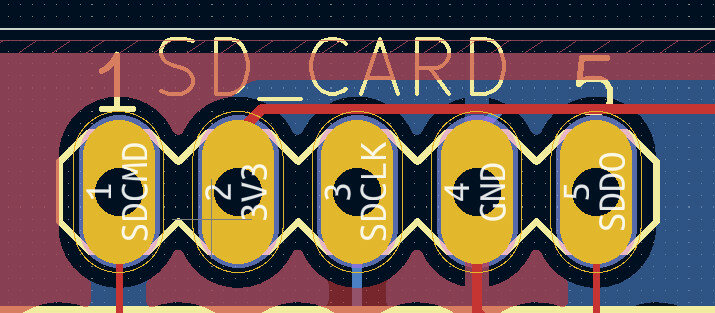
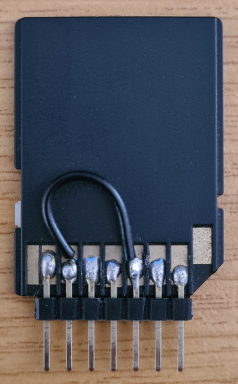
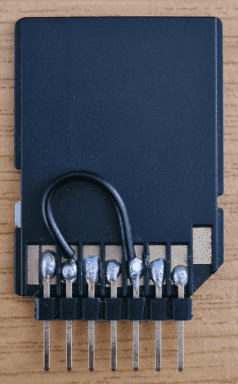
A question.The TapuinoNext-Mini board has a 5 pins header for SD socket whie the SD adapter has 7 pins.How to handle this?
 

Attachments

  • Snap7.jpg
    Snap7.jpg
    57 KB · Views: 34
  • SD_Adapter.png
    SD_Adapter.png
    35 KB · Views: 34
A question.The TapuinoNext-Mini board has a 5 pins header for SD socket whie the SD adapter has 7 pins.How to handle this?
I'm overseas at the moment so can't check in detail, however only 5 pins are required IIRC:
PWR (3.3v) and GND, CLK, CMD and DO. I use dupont connectors to connect header pins on the board and the SD Card.
Check out this page for the SD Card pins:
 
Thanks for reply.I took the chance to convert the Eagle project to KiCad, I added a GROUND power plane and exchanged the two pins 'SDA' and SCL' as most of I2C display have this pinout.All the rest of the original design is untouched.I attach the GERBERs to send to your prefereite PCB manufacturer (I use JLCPCB).

View attachment 2450357
Nicely done! I've been wanting to learn kicad and move over from eagle. Would you be willing to share your kicad files?

Thanks
-(e)
 
Nicely done! I've been wanting to learn kicad and move over from eagle. Would you be willing to share your kicad files?

Thanks
-(e)
In my previous post I shared the GERBER files for PCB fabrication.Do you need also the whole project?

As for SD card connection your SD to MicroSD adapter has 7 pins (picture attached) while the TapuinoNext-Mini PCB has 5 pins header, that's was my doubt.
 

Attachments

  • SD_Adapter.png
    SD_Adapter.png
    29.9 KB · Views: 28
In my previous post I shared the GERBER files for PCB fabrication.Do you need also the whole project?

As for SD card connection your SD to MicroSD adapter has 7 pins (picture attached) while the TapuinoNext-Mini PCB has 5 pins header, that's was my doubt.

The whole kicad project would be awesome, it will help me to start playing around with kicad.

1676377138560.png


SDCARD -> TapuinoNext

SS -> Not connected
GND -> both pins joined and connected to GND (see jumper wire on SD adapter)
VCC-> 3V3
SCK -> CLK
MISO -> DO
MOSI -> CMD

-(e)
 
Attached is the whole KiCad project converted from Eagle (files are in the 'TapuinoNext-Mini' sub-folder)
Wonderful! Thank you :)
Are you happy for these files to be shared as part of the project, with appropriate attribution to you?
If so, DM me what you'd like your attribution to be e.g. name or handle, email or any other details and the licence you'd like applied if different to the project licence.

Thanks
-(e)
 
Wonderful! Thank you :)
Are you happy for these files to be shared as part of the project, with appropriate attribution to you?
If so, DM me what you'd like your attribution to be e.g. name or handle, email or any other details and the licence you'd like applied if different to the project licence.

Thanks
-(e)

DM sent.
 
One quiestion. My first Tapuino has the cassette port pass-through. Can I connect a regular 1530 to it and save to tape while the Tapuino plays the file?
 
I tried it. While i.e. the motor control and such were in synch, the 1530 didn’t actually seem to record anything on the tape while it was being played back from the Tapuino. I verified this with a normal recorder and there wasn’t anything audible on the tape.
 
Hi,

I'm highly interesting in this project.

I've read that the TapuinoNext implements a new feature, a counter seek making multi-load TAP files usable. That's awesome. Could you please share a video showing this feature?

I think it's the first step to add a new feature, read .idx files. Do you believe it's possible?"

Thanks and Best Regards,
R.
 
Hi there,

Thanks for you interest. Reading .idx files should be fairly easy to implement, based on what I've seen (byte counter offset seek per index).
Life has been rather busy, which has put TapuinoNext development on the back burner for a while. I hope to get back to it soon.
As for the video, if I get some time I'll dust off the equipment and see if I can record something. I think I was testing with Turrican last I looked into this.

Thanks
-(e)
 
I tried it. While i.e. the motor control and such were in synch, the 1530 didn’t actually seem to record anything on the tape while it was being played back from the Tapuino. I verified this with a normal recorder and there wasn’t anything audible on the tape.
It's been a very long time since I've even thought about this. Originally I built an extension which used a digital muxing circuit to switch signals for digital to tape mastering.
Also required was inverting the signal so that it could be recorded correctly by the datasette. I'm not sure what hardware your original Tapuino implements.

You could try setting the invert signal option and just playing the file on the Tapuino with the connected datasette recording and see if that works?
(the C64 is effectively out of the loop here and just supplying power and the motor / sense signal, I imagine you'd have to manually stop the recording when the file reaches 100%)

The code seems to support this idea:
C:
  if (g_invert_signal) {
    TAPE_READ_LOW();                     // set the signal low
  } else {
    TAPE_READ_HIGH();                   // set the signal high
  }
 
Hi,

Thanks a lot for your replies. And you are right, it's a byte counter offset seek per index starting at 0x14 position.

It would be nice to add a pass-through datassette port too!!. ;-P (like the old Tapuino).

I'll wait for future improvements.

Best Regards,
R.
 
It's been a very long time since I've even thought about this. Originally I built an extension which used a digital muxing circuit to switch signals for digital to tape mastering.
Also required was inverting the signal so that it could be recorded correctly by the datasette. I'm not sure what hardware your original Tapuino implements.

You could try setting the invert signal option and just playing the file on the Tapuino with the connected datasette recording and see if that works?
(the C64 is effectively out of the loop here and just supplying power and the motor / sense signal, I imagine you'd have to manually stop the recording when the file reaches 100%)

The code seems to support this idea:
C:
  if (g_invert_signal) {
    TAPE_READ_LOW();                     // set the signal low
  } else {
    TAPE_READ_HIGH();                   // set the signal high
  }
Thanks! I’ll give that a try and report back.
 
Hello, on the Tapuino, what are these settings in the Options for?

Key speed - 300
ticker speed -250
ticker hold - 1250


Thanks
Rand
 
Last edited:
Back
Top Bottom