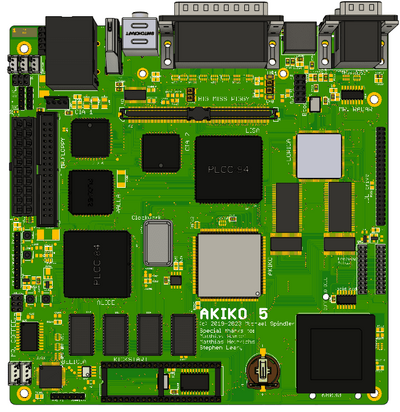
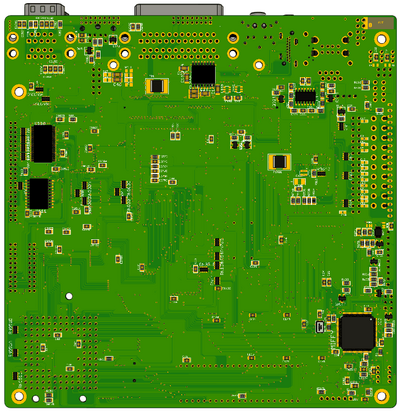
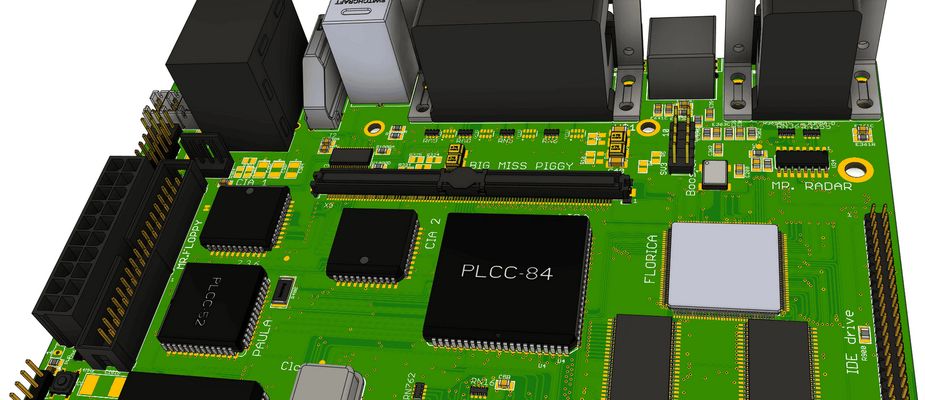
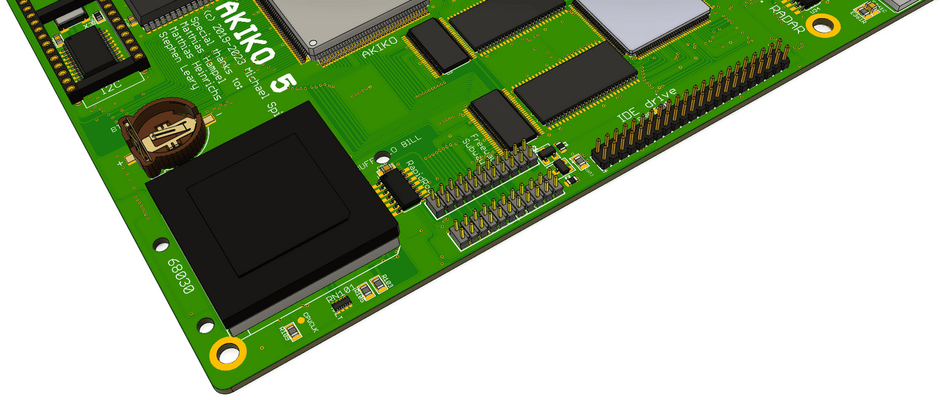
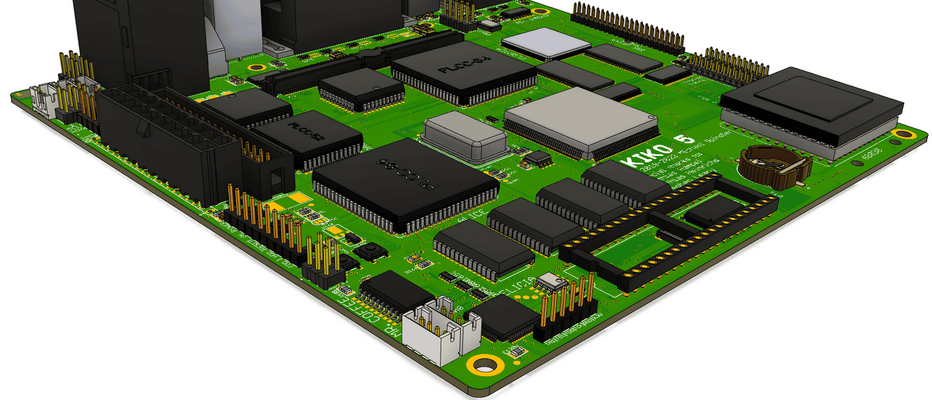
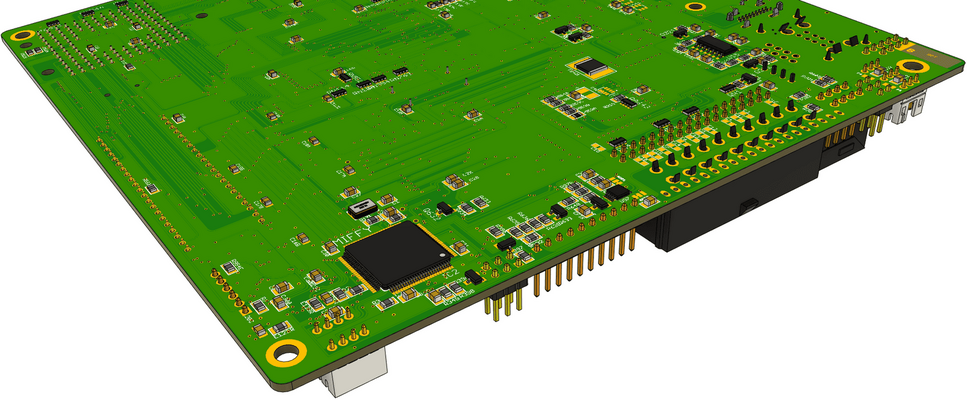
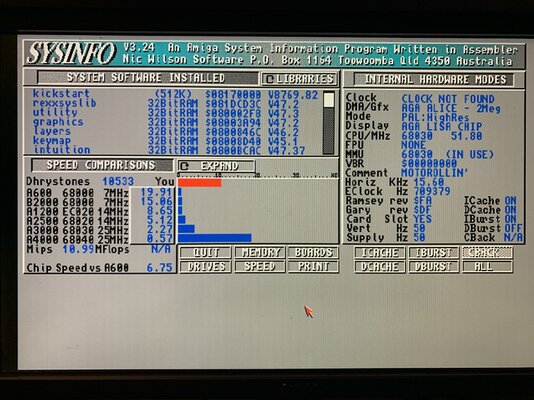
Since I now had some vacation, I thought, this is the right time to get the next board revision ready. It is not completely finished yet, there are still some small things to do, so it will take some more time to complete.
I'm done with the layout so far, but I have to check everything again and optimize the traces.
That fits also to the name, because Akiko means autumn child

Then I will order 5 test boards.
Because of the extensions, there are changes in the CPLD code and also new CPLD code has to be written.
Furthermore I have to develop a video board, so that we have a picture at all. The new revision has no DAC anymore, but HDMI onboard, which is activated by the video board.
I just wanted to give a preliminary info, after all this should have been finished a long time ago.
First the project name changes from the somewhat bulky "Akiko32 Revision 5" to Akiko5. Or Akiko/5. Or Akiko\5. Or Akiko|5. Well, in any case something with Akiko and 5
Okay, what has been changed in detail?
Chipset socketless
Alice, Lisa and Paula are now directly solderable. Unfortunately I made bad experiences with the IC heat dissipation in the current version. Even Dave Haynie at Amiga37 confirmed that the chips dissipate most of the heat through the board. Alice gets really hot in a socket depending on the chip.
Fasteners
The mounting holes have been slightly adjusted and now correspond to the miniITX dimension drawing.
Losses
The complete video DAC section has been omitted and is now realized via an additional plug-in card. The VGA connector is also omitted
Changes and new features
- The board is now 8-layer instead of 6-layer
- All traces are now at least 10mil wide, clocks 12mil. Previously the trace width went down to 6mil.
- 2 CIAs were added
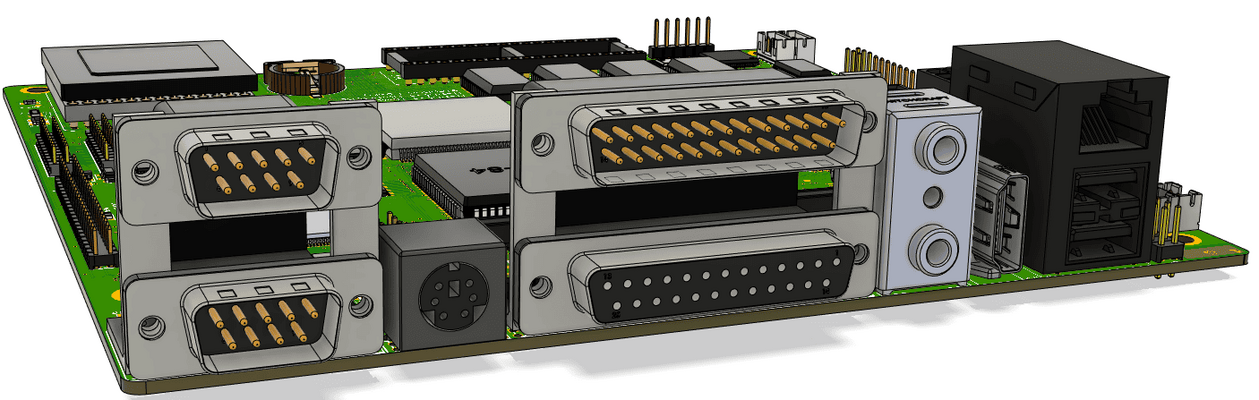
- Serial and parallel port were added (the serial port is a somewhat stripped down version, but ist has RxD, TxD, RTS, CTS, DSR and DTR and it uses a modern MAX232)
- The BONG connector has been omitted, instead the KARL board has been integrated
- A floppy connector was added
- A power connector for a floppy was added
- A 2nd CPLD was added
- A passive HDMI port was added (active via expansion slot). The port has an IC, so the port is theoretically hotpluggable....
- The 2 expansion slots became a single expansion slot (Big Miss Piggy). It was extended by the RGB signals of Lisa and sync signals, so that a video card can be realized here. Basically the 2 slots are now a Zorro slot in combination with a video slot and traces to the board for network, HDMI and audio.
- I also changed the headers for power led, on/off, reset and harddisk. These are now all combined on one 10-pin header. I also added a connector for a floppy activity LED
- A button can now be soldered to switch the board on and off
- The 10-pin I2C header was removed and replaced by 2 4-pin headers with Sparkfun pinout
- The power supply for the 2 I2C headers is switchable between 3.3V and 5V (for both ports independently)
- The IDE connector has been moved 2mm
- A second clockport header was added
- The first clockport (board outside) is a dual clockport, i.e. it has a 2nd select signal (pin 23, CP2_SEL). I need this also for the upcoming AkikoBook
- The second clockport has only the 2nd select signal CP2_SEL
- The first clockport was shifted 2mm to the outside of the board.
- The Line In/Out connector of the AmiBlaster CP has been integrated and the card can now be plugged directly on the board
- The audio jack was exchanged for a dual jack for line out (Amiga or Amiblaster) and line in (Amiblaster)
- The 2 JTAG connectors were combined to a chain, so that now both CPLDs are on the same connector
What else?
- The clock now has a proper battery holder for a button cell size 1220
- The fuse at the I2C header has been replaced by a self-resetting fuse
- The IDE connector is now completely buffered incl. resistors
- Position clockport was changed by 5mm towards CPU to get more space to the IDE port
- A second clockport select was added (pin 23, CP2_SEL)
- The clockports got a self-resetting fuse as reverse polarity protection (who wants to test it?

)
- A lot of resistors and capacitors have been combined to networks.
- Additionally, there are three completely useless headers for mouse/joystick/keyboard/serial/parallel/voltages, but I need them for the AkikoBook...
I still have to add a small expansion port ("OttiPort")...
We are getting very close to the final version, I think.
Realistically, if everything works out, I think I can order the test boards in early to mid October. I will then update everything here in the thread.
A few words about the KARL board:
There is now an ATMega 2560 onboard. With this you can control an Oled via the ATMega-I2C, but also RGB-Leds of the type WS2812. I used this in my front panel before. The board can do this by itself now. There are also headers for power, harddisk and floppy LEDs, to which you can also attach a WS2812 each. Additionally the ATMega is connected to the onboard I2C via Soft-I2C. Here I still have to write software for the ATMega, but I think it should be possible to control the ATMega from the Amiga (maybe to control the oled and LEDs). By the way, the ATMega has more computing power at 16MHz than the 68030 at 50MHz.
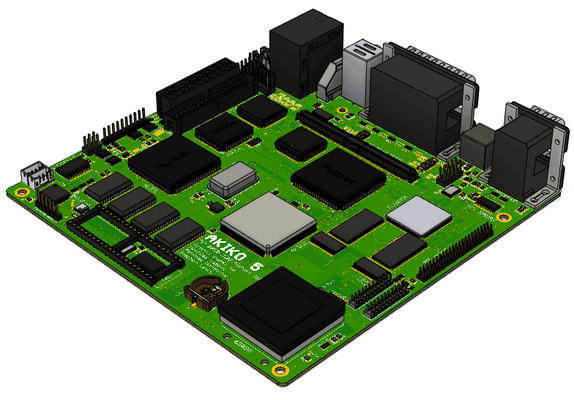
Current state of the board: