
You are using an out of date browser. It may not display this or other websites correctly.
You should upgrade or use an alternative browser.
You should upgrade or use an alternative browser.
Help! cant find a Component in Uk.. a crystal!
- Thread starter iainjh
- Start date
- Replies 38
- Views 8658

Maybe I'm missing something, but wouldn't it be easier to just use any Crystal and add the capacitors?
Bryce.
Gesendet von meinem Motorola DynaTEC 8000X mit Tapatalk 2.
Mmmmmm
D
Deleted member 14264
Guest
You are missing something. A lot, I might add.Maybe I'm missing something, but wouldn't it be easier to just use any Crystal and add the capacitors?
https://en.wikipedia.org/wiki/Crystal_oscillator#Resonance_modes
Crystals below 30MHz used at series resonance mode have very exacting specifications which must be respected minutely so...
(about the relevance of indicating ESR)
That's false.it's also not something that's really needed for most situations (including this one)
That's also false.Bringing ESR into it is complicating things more than you need to.
And that's because...
wikipedia said:The series resonance is a few kilohertz lower than the parallel one. ... Any small additional capacitance in parallel with the crystal pulls the frequency lower. Moreover, the effective inductive reactance of the crystal can be reduced by adding a capacitor in series with the crystal. This latter technique can provide a useful method of trimming the oscillatory frequency within a narrow range; in this case inserting a capacitor in series with the crystal raises the frequency of oscillation. For a crystal to operate at its specified frequency, the electronic circuit has to be exactly that specified by the crystal manufacturer.
A crystal resonator is a component in a 2nd order system. Converting from series resonance to parallel resonance normally requires calculating the value of surrounding components using a Laplace transform. I cannot help but wonder what values you would come up with especially in light of the fact you consider as irrelevant the value of the main component affecting the damping factor (the ESR).
Last edited by a moderator:

Firstly, I am well aware of the details of Crystal based clock design. I have over 20 years experience designing commercial electronics, usually requiring a clock. You may even own some products I've designed.
What I meant was: The circuit requires a clock and has been designed to use a series Crystal which is difficult to source, so ignore/remove the entire original clock circuitry and replace it with a new circuit that uses a Crystal that's easier to source. Then inject the output of the new circuit at the point where the clock signal is required.
Bryce.
Gesendet von meinem Motorola DynaTEC 8000X mit Tapatalk 2.
What I meant was: The circuit requires a clock and has been designed to use a series Crystal which is difficult to source, so ignore/remove the entire original clock circuitry and replace it with a new circuit that uses a Crystal that's easier to source. Then inject the output of the new circuit at the point where the clock signal is required.
Bryce.
Gesendet von meinem Motorola DynaTEC 8000X mit Tapatalk 2.
D
Deleted member 14264
Guest
@Bryce
You said
Simple answer: no
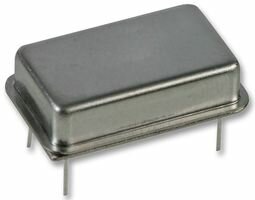
My suggestion: either use a component that has the same exact properties - YES, the ESR is extremely important and you should know it if you have 20 years of experience - or remove the entire clock circuitry and replace it with a crystal OSCILLATOR of the same frequency. For little extra cost it will generate a nice clean square wave with absolutely no need to create a new circuit. Plug it and use it.
You said
wouldn't it be easier to just use any Crystal and add the capacitors
Simple answer: no
Possible, quite complicated, highly likely to fail.What I meant was: The circuit requires a clock and has been designed to use a series Crystal which is difficult to source, so ignore/remove the entire original clock circuitry and replace it with a new circuit
My suggestion: either use a component that has the same exact properties - YES, the ESR is extremely important and you should know it if you have 20 years of experience - or remove the entire clock circuitry and replace it with a crystal OSCILLATOR of the same frequency. For little extra cost it will generate a nice clean square wave with absolutely no need to create a new circuit. Plug it and use it.
Last edited by a moderator:
Why would it fail?? I need a Crystal and a few caps and resistors and a something to resonate - either the transistors that are used in the original circuit or (more reliable) something like a 74HCU04 to create a clock that will definitely work. Easier and cheaper than trying to find a series Crystal and the ESR of the Crystal is completely irrelevant. I have used similar circuits thousands of times without an issue, what's so special about the Apple that this wouldn't work?
Bryce.
Gesendet von meinem Motorola DynaTEC 8000X mit Tapatalk 2.
Edit: Here's a simple example now that I'm not posting from my phone:
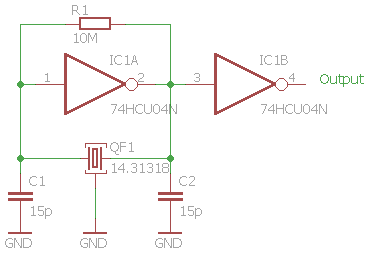
The following circuit is a simple clock source for 14.31318Mhz. It uses just 2 caps, a resistor and a 74HCU04 inverter. This will work with almost any crystal you can find. The other values aren't particularly critical either, you could probably get away with R1 being anywhere between 8M2 and 12M, the capacitor values should ideally match what the datasheet of the crystal suggests, however again +/- 20% of that value would most likely work too. As far as the Crystals ESR is concerned, it's completely irrelevant, the ESR of any crystal you can find could not be so far out that this circuit wouldn't work, so it can be ignored. It small, easy to build, gives a very stable clean clock signal and you don't need to worry about special crystal types. It should be noted however, that this circuit will only work with a 74HCU04 and possibly with a HCT, but definitely won't work with LS/AS and other versions of the 04.
Bryce.
Gesendet von meinem Motorola DynaTEC 8000X mit Tapatalk 2.
Edit: Here's a simple example now that I'm not posting from my phone:
The following circuit is a simple clock source for 14.31318Mhz. It uses just 2 caps, a resistor and a 74HCU04 inverter. This will work with almost any crystal you can find. The other values aren't particularly critical either, you could probably get away with R1 being anywhere between 8M2 and 12M, the capacitor values should ideally match what the datasheet of the crystal suggests, however again +/- 20% of that value would most likely work too. As far as the Crystals ESR is concerned, it's completely irrelevant, the ESR of any crystal you can find could not be so far out that this circuit wouldn't work, so it can be ignored. It small, easy to build, gives a very stable clean clock signal and you don't need to worry about special crystal types. It should be noted however, that this circuit will only work with a 74HCU04 and possibly with a HCT, but definitely won't work with LS/AS and other versions of the 04.
Last edited:
D
Deleted member 14264
Guest
@Bryce
The circuit shown in the picture you uploaded is equivalent to the integrated oscillator in my previous post but it is more sensitive to noise, is more difficult to build and potentially costs more. Its also a standard circuit for use with parallel resonant crystals and in THAT SPECIFIC case ESR doesn't matter.
If you look on the internet for the schematic of the VIC-20 rev E, the capacitor is in series with the crystal and it is adjustable (10-90pF). It has to be accurately adjusted with an oscilloscope and in that case, the ESR has to be respected within 10% tolerance. The circuit used on the VIC-20 rev E uses a 74S04 and the resistors are 330 Ohms.
If you do as you suggested earlier and just take the crystal used on this type of VIC-20's circuit and just place it on yours it will likely fail. It's not the same type.
See:
http://www.mainbyte.com/vic20/e_schematic.pdf
The circuit shown in the picture you uploaded is equivalent to the integrated oscillator in my previous post but it is more sensitive to noise, is more difficult to build and potentially costs more. Its also a standard circuit for use with parallel resonant crystals and in THAT SPECIFIC case ESR doesn't matter.
If you look on the internet for the schematic of the VIC-20 rev E, the capacitor is in series with the crystal and it is adjustable (10-90pF). It has to be accurately adjusted with an oscilloscope and in that case, the ESR has to be respected within 10% tolerance. The circuit used on the VIC-20 rev E uses a 74S04 and the resistors are 330 Ohms.
If you do as you suggested earlier and just take the crystal used on this type of VIC-20's circuit and just place it on yours it will likely fail. It's not the same type.
See:
http://www.mainbyte.com/vic20/e_schematic.pdf
Last edited by a moderator:
I understand that, but we are not in 1980 anymore. Crystals have moved on, methods have also moved on. If I want to fix the clock on a system today I would either use a modern equivalent like you suggested, or at least go for a more modern method such as the one I posted. The two levels below this would be - Parallel using (if possible) the transistors on the original clock circuitry or spend lots of time looking for a compatible series Crystal.
I just didn't see the point in trying to get the specific Crystal when there are easier alternatives.
Bryce.
P.s: The circuit I suggested would cost less than €2 to build.
Gesendet von meinem Motorola DynaTEC 8000X mit Tapatalk 2.
I just didn't see the point in trying to get the specific Crystal when there are easier alternatives.
Bryce.
P.s: The circuit I suggested would cost less than €2 to build.
Gesendet von meinem Motorola DynaTEC 8000X mit Tapatalk 2.
D
Deleted member 14264
Guest
P.s: The circuit I suggested would cost less than €2 to build.
Exactly the same price as this : http://www.digikey.ca/product-detail/en/cts-frequency-controls/MXO45HS-3C-14M31818/CTX752-ND/1801867
But a lot more trouble to build.
Yes, that's what I meant when I said "your solution". That's of course the most stable and cheapest solution. I was just offering alternatives. As I sometimes repair very old stuff for collectors, there seems to be different levels of acceptance for Originality:
1 It just has to work = Any modern parts / circuit methods are acceptable.
2 It can use non original parts but they shouldn't look out of place.
3 The original circuit is a must, but the parts can be modern looking.
4 Only original circuit and parts, even the new capacitors have to be hidden inside the original capacitors casing.
The part you suggested comes under 1. My suggestions lean towards 2 or 3. Finding a compatible series Crystal comes under 4.
I suppose it all comes down to what the owner prefers.
Bryce.
Gesendet von meinem Motorola DynaTEC 8000X mit Tapatalk 2.
1 It just has to work = Any modern parts / circuit methods are acceptable.
2 It can use non original parts but they shouldn't look out of place.
3 The original circuit is a must, but the parts can be modern looking.
4 Only original circuit and parts, even the new capacitors have to be hidden inside the original capacitors casing.
The part you suggested comes under 1. My suggestions lean towards 2 or 3. Finding a compatible series Crystal comes under 4.
I suppose it all comes down to what the owner prefers.
Bryce.
Gesendet von meinem Motorola DynaTEC 8000X mit Tapatalk 2.
Last edited:
D
Deleted member 14264
Guest
Your suggestions seem problematic to me because "look" or "looking" seem very important in most of them while my opinion is that should be the absolute least of your concern when fixing antiquated computer systems.Yes, that's what I meant when I said "your solution". That's of course the most stable and cheapest solution. I was just offering alternatives. As I sometimes repair very old stuff for collectors, there seems to be different levels of acceptance for Originality:
1 It just has to work = Any modern parts / circuit methods are acceptable.
2 It can use non original parts but they shouldn't look out of place.
3 The original circuit is a must, but the parts can be modern looking.
4 Only original circuit and parts, even the new capacitors have to be hidden inside the original capacitors casing.
The part you suggested comes under 1. My suggestions lean towards 2 or 3. Finding a compatible series Crystal comes under 4.
I suppose it all comes down to what the owner prefers.
Option 1 usually results in insufficiently knowledgeable people causing a mess.
Option 2 results in the usage of inadequate components and damage in the medium to long term.
Option 3 can also result in the wrong parts being used and subtle problems arising
Option 4 - well that sounds just purely ridiculous to me
IMHO, none of these are good. In fact, what you suggest is exactly what you shouldn't do.
Personally, I try to think like the engineers who created the original device and many times you realize they didn't use some components because they were just too expensive back in the 1980s.
This leaves 2 options, no matter what it may look like:
1. Find new components that work exactly like the original ones and try to minimize the intervention at all costs to prevent further accidental damage
2. Build a completely new circuit that provides exactly the same result from an electrical point of view
3. A mixture of both
Looks doesn't matter AT ALL, manufacturer's specifications are PARAMOUNT because what we're dealing with here is electronic systems of historical value and they must be repaired in a way that will last a very long time.
It boils down to... DOING IT RIGHT.
Last edited by a moderator:
Actually, my examples were taken from Antique radio repair, not computers. I also consider Option 4 (which suprisingly many owners have insisted on) to be over the top. This usually involves the 3 pole capacitors, which aren't produced any more and are a relatively large, obvious part in valve radios. Some enthusiasts want these old capacitors to be drilled out, two modern capacitors put inside with the original solder tabs soldered on and then re-potted. The really extreme enthusiasts do this for ALL capacitors!!
In some ways I can understand them, I don't like replacing and old linear supply with some tiny SMPS. But it's not usually up to me, I'll do it what ever way the owner prefers.
As to "Doing it right" - What's right for one person might not be for someone else.
Bryce.
In some ways I can understand them, I don't like replacing and old linear supply with some tiny SMPS. But it's not usually up to me, I'll do it what ever way the owner prefers.
As to "Doing it right" - What's right for one person might not be for someone else.
Bryce.
Last edited:

Actually, my examples were taken from Antique radio repair, not computers. I also consider Option 4 (which suprisingly many owners have insisted on) to be over the top. This usually involves the 3 pole capacitors, which aren't produced any more and are a relatively large, obvious part in valve radios. Some enthusiasts want these old capacitors to be drilled out, two modern capacitors put inside with the original solder tabs soldered on and then re-potted. The really extreme enthusiasts do this for ALL capacitors!!
Yup. For those who want to show off the backside of the radio this is really important. If all you are interested in is to catch a passing radio wave, not so much...
D
Deleted member 14264
Guest
@Bryce:
Well, the C64, Amiga and VIC-20 aren't antique radios. Right now nobody makes equivalents of the 6560/6561 VIC-I, 6567/6569 VIC-II, CIAs and 6510 CPUs. If you bust them then its over.
I strongly prefer using a small modern SMPS which has a bunch of safeties built-in than original old bricks which tend to destroy everything they power when they fail.
My oldest VIC-20 is just about to turn 35 years old and my youngest C64 is 30 years old. Keeping them in good working order is far more important than maintaining the looks.
If somebody couldn't care less for looks, I am quite sure you could find modern equivalents for just about all parts inside antique radios and TVs. Not so with Commodore computers.
Right now, just for the C64, the SID, PLA and the logic chips are just about the only thing you can replace with a modern equivalent. In the C128, there is the SID and just about nothing else.
Think about it.
Well, the C64, Amiga and VIC-20 aren't antique radios. Right now nobody makes equivalents of the 6560/6561 VIC-I, 6567/6569 VIC-II, CIAs and 6510 CPUs. If you bust them then its over.
I strongly prefer using a small modern SMPS which has a bunch of safeties built-in than original old bricks which tend to destroy everything they power when they fail.
My oldest VIC-20 is just about to turn 35 years old and my youngest C64 is 30 years old. Keeping them in good working order is far more important than maintaining the looks.
If somebody couldn't care less for looks, I am quite sure you could find modern equivalents for just about all parts inside antique radios and TVs. Not so with Commodore computers.
Right now, just for the C64, the SID, PLA and the logic chips are just about the only thing you can replace with a modern equivalent. In the C128, there is the SID and just about nothing else.
Think about it.
Well, for the record, I'm a "Catch the wave" sort of guy. I'm good with whatever works. But I can see it for antique radios (not that it is how I restore old radios, but I do appreciate craftsmanship). And if that's how someone wants to restore their old iron, who am I to criticize?
As for spare parts, I've got enough 64's and 128's to keep me stocked for quite a while.
As for spare parts, I've got enough 64's and 128's to keep me stocked for quite a while.
D
Deleted member 14264
Guest
To each his own way.
I know what matters to me first is what I see on my instruments (scope, logic analyser, multimeter), then I look for the least time consuming and/or risky way to fix the problem and after that is what I see on the bill of material. Cosmetic details are the absolute least of my concerns.
Concerns for cosmetic details usually results in repairs that don't last or that can be damaging to the equipment involved.
I know what matters to me first is what I see on my instruments (scope, logic analyser, multimeter), then I look for the least time consuming and/or risky way to fix the problem and after that is what I see on the bill of material. Cosmetic details are the absolute least of my concerns.
Concerns for cosmetic details usually results in repairs that don't last or that can be damaging to the equipment involved.
When it comes to my own gear, then function is the main priority, but when I'm fixing things for other people, I try to achieve the visual or originality goals they request, but nothing that would compromise or possibly damage the equipment.
Bryce.
Gesendet von meinem Motorola DynaTEC 8000X mit Tapatalk 2.
Bryce.
Gesendet von meinem Motorola DynaTEC 8000X mit Tapatalk 2.
I know this is an old thread but I am on the same quest as the original OP. I don't mind replacing the crystal with a oscillator. What would be involved to do this?
As the original crystal has 2 legs where would you feed the signal from the oscillator to?
As the original crystal has 2 legs where would you feed the signal from the oscillator to?
Similar threads
- Replies
- 0
- Views
- 54
- Replies
- 3
- Views
- 167