Retr0bright Support Thread

  • Thread starter Thread starter gazcbm
  • Start date Start date
  • Replies Replies 1053
  • Views Views 419001
Retr0bright Support

Retr0bright Support

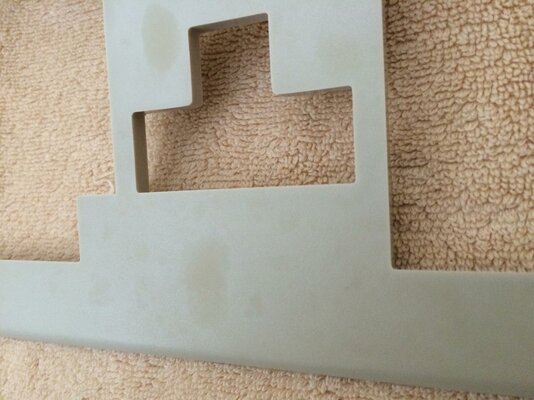
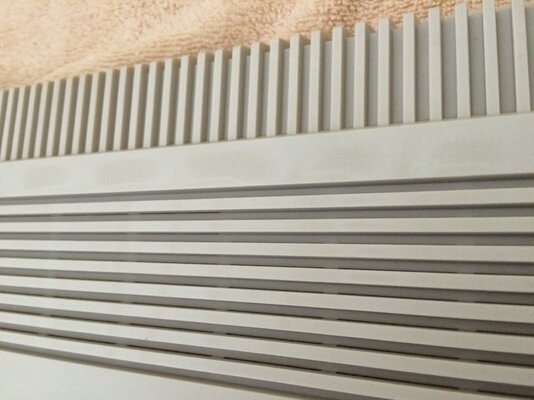
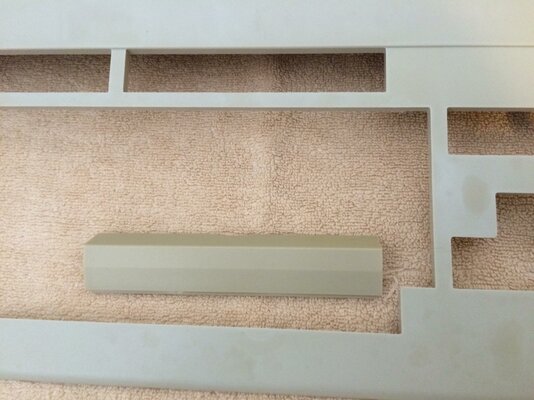
Now it's better described as skip material. What a bummer. This is my second 500 which I repaired for a battery leak so no one would want it anyway (it works, but it'd be an offput), but still, feels like a waste. It gave its life for science, I suppose?
P1060325.JPG

You must still watch to paste does not dry.
This is "the most secret ingredient" of the entire whitening recipes :)

How I do it?

1. Thoroughly wash bleached item.
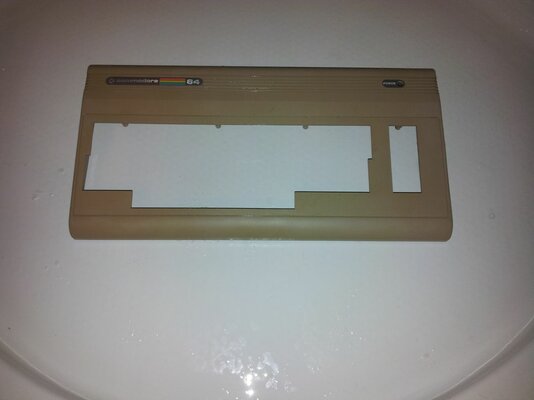
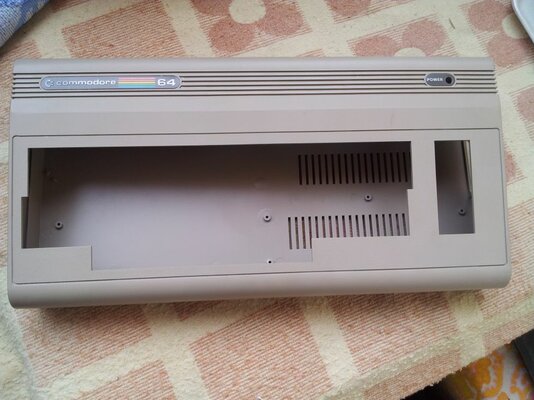
20130416_233513.jpg

2. Lubricates hair bleach - 12%, post to the sun and whitens up. :)
If at some point hair bleach dries and stains will come out as in you, the housing A500plus, coated paste this place again.

Do not let dry hair bleach!!!
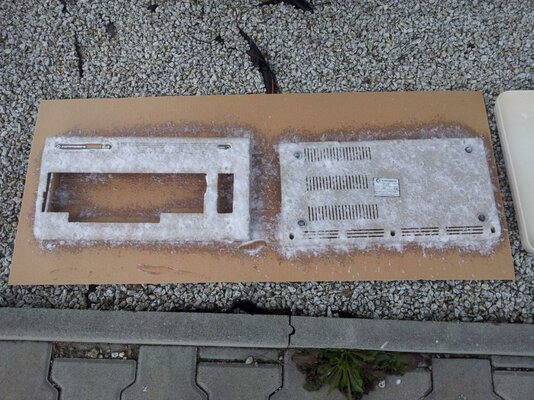
20130417_112424.jpg


3. Result :)

2013-05-03 15.44.45.jpg
 
Last edited:
Do you have to watch "real" retr0bright doesn't dry up too, or just the hair bleach type? From what I was reading in various threads, the marks are caused by some additions to the hair bleach that aren't in "pure" retr0bright mixes. So you're sort of doing your best to fight against that.

Did the cling film actually touch the case/ do you think that's what's caused the wave marks? Or are the lighter parts of the 'wave marks' where it's actually burnt the plastic?

btw I put my keys on a bit of card, and definitely do all outside. I don't bother with cling film but do top up every 30 mins or so

hope it's recoverable!

Part was touching, part wasn't - cling film is a PITA at the best of times, try wrapping it around an oddly shaped case coated in goo, while wearing rubber gloves and trying not to get anything on your clothes. :)
I have a feeling it's where there might have been air pockets in the cling film coating, allowing it to dry up / evaporate.

In hindsight I think I'd not bother with the clingfilm at all. Surely all it does is get in the way of checking whether it's drying up, and re-coating it. If I were to try again, I'd maybe just keep a close eye on it instead.

From what I've heard of the "bloom", it's unfortunately not recoverable. Good thing A500s are ten a penny - it'd take balls to try it on an A1000 :p
 
Wondering if mixing B-blonde with water so they can go in a jar, would be any good for the keys? Individual pasting was a nightmare.
 
Well, after finding a guide online saying "hey, this B-Blonde stuff works!" I thought I'd give that a try, as it sounds much easier than trying to find peroxide and xanthan gum and whatnot.

The results are a mix of "partial" and "disasteriffic". I think the lesson I've taken away from this is "make some real retr0bright, don't try to mess with the hair stuff" - however I did ignore one bit of advice and did it outside, as I didn't have a clear windowsill.

Despite coating it in cling film, the results are quite literally a blooming mess.

That 500 plus looks patchy rather than irreversibly bloomed. Just keep slapping on a few more coats of BBlonde and it will even out.

My first coats on an Amiga 1200 and some mice looked just the same, and I didn't use cling film, just kept topping it up every so often.

Don't be so quick to dismiss BBlonde just because the results weren't satisfactory first time - I and many others have found it excellent, and I was hardly careful or diligent when doing it :-)

I agree about keys though. I was considering leaving then attached to the keyboard assembly (with membrane removed!) and just pasting all over them, but I think that might discolour the plastic layer underneath.
 
Last edited:
Wondering if mixing B-blonde with water so they can go in a jar, would be any good for the keys? Individual pasting was a nightmare.

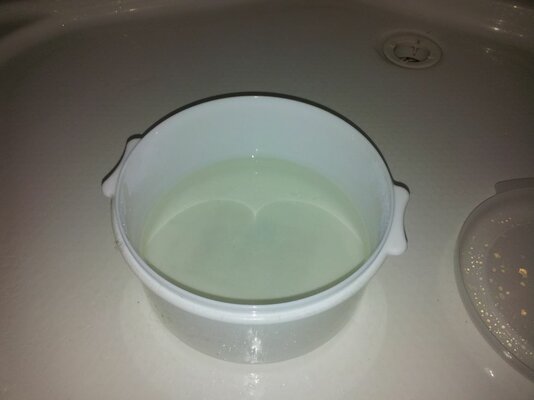
Whitening keys is best Perchlorate 30% - did I use (sold in DIY stores or hunting - used to bleach the bones of hunted animals). It looks like water.

2014-06-15 18.21.22.jpg

This is the same formulation as bleach hair (12%) but that has a higher concentration (30%).

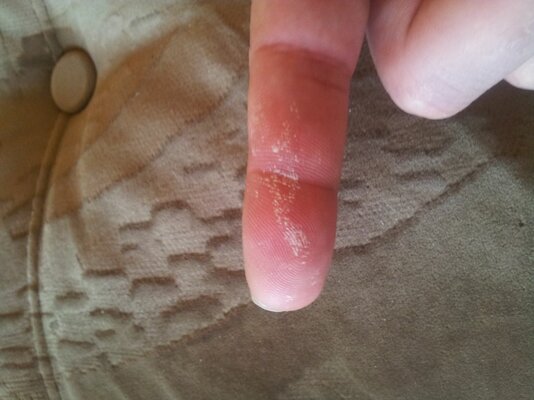
We must be careful with its use, as irritating to skin: (

2014-06-15 17.29.30.jpg

You can get burned - firmly and painfully tweaks: (
Best to use rubber gloves protective.

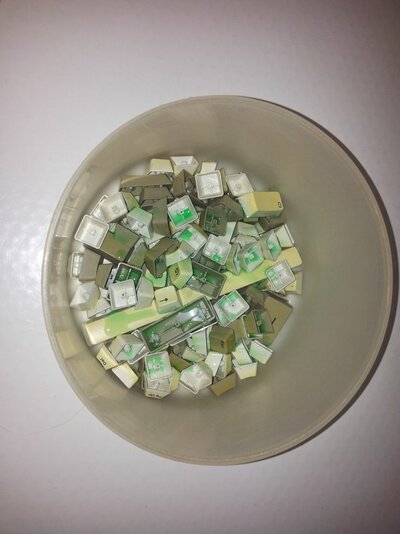
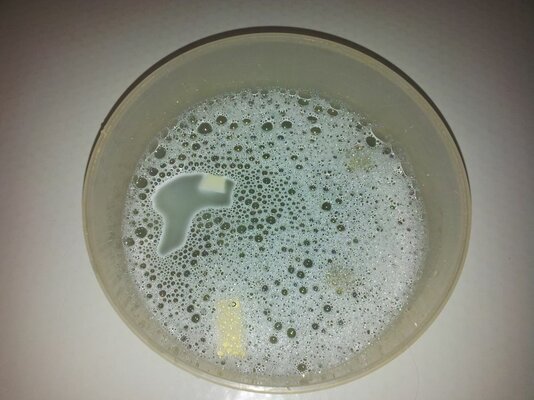
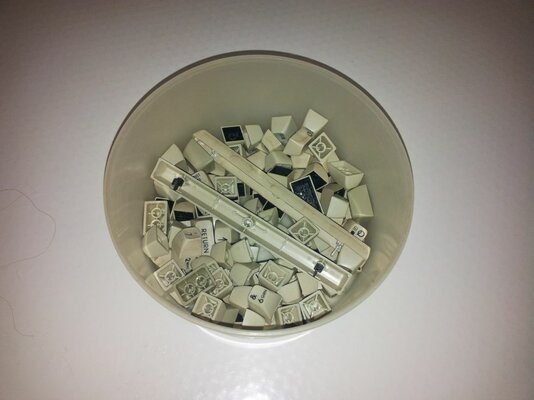
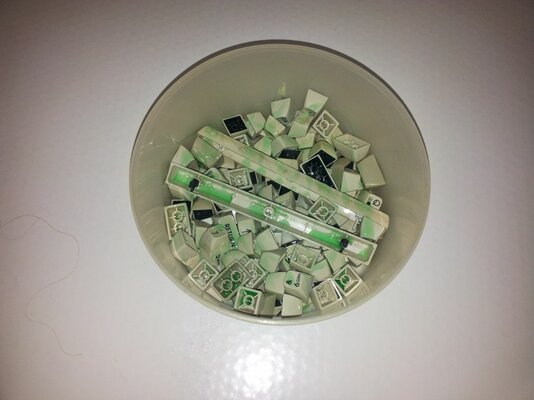
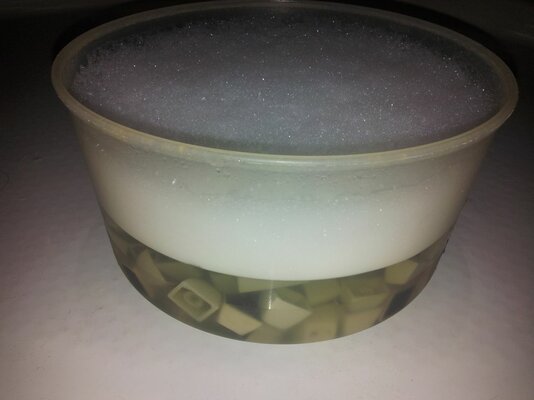
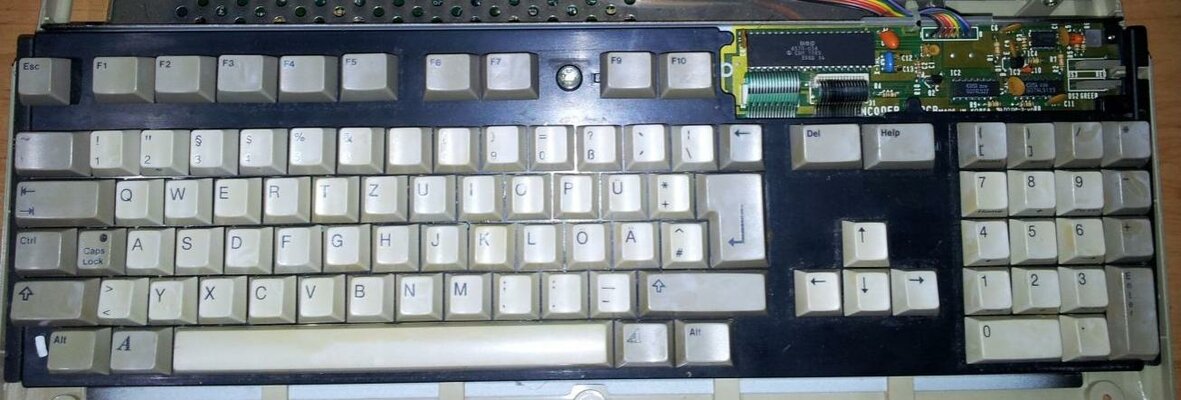
1. I wash thoroughly keys in the water with dishwashing liquid ... the wife yells at me that wearing out a lot of dishwashing liquid;)

2013-11-26 20.34.53-1.jpg 2013-11-26 20.35.31-1.jpg 2013-11-26 20.36.29.jpg

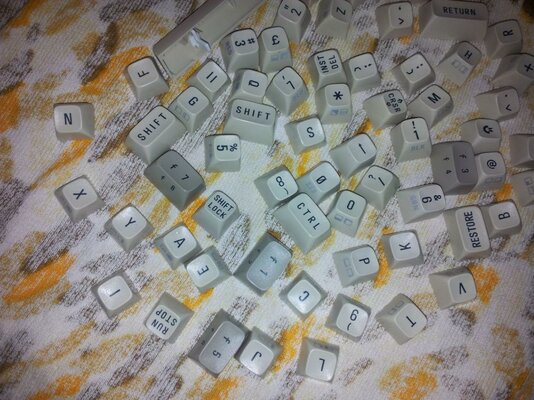
2. Carefully wipe them with a towel.

2014-04-18 22.12.36.jpg

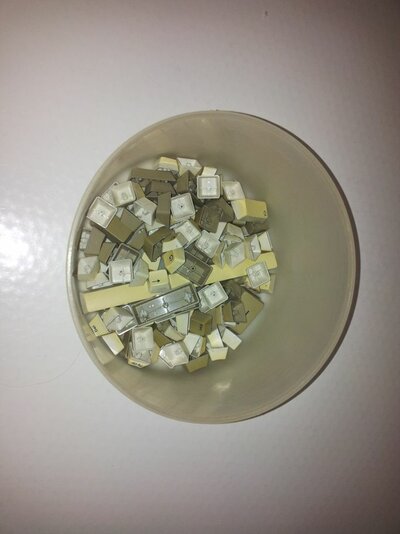
3. I throw for 3-4 days depending on the yellowness

2014-06-15 18.21.22.jpg

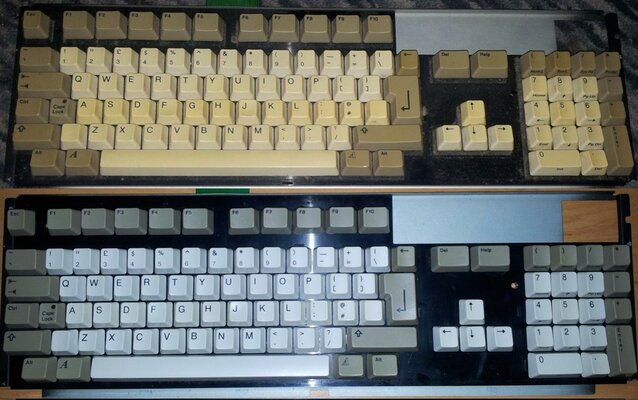
4. Up picture of keys before whitening, the bottom image after bleaching.

52a062a8225f9.jpg

And most importantly - do not use hydrogen peroxide 30% glassware vessel - only plastic vessel.
 

Attachments

  • 2014-04-18 19.52.22.jpg
    2014-04-18 19.52.22.jpg
    62 KB · Views: 1
  • 2014-04-18 19.53.19.jpg
    2014-04-18 19.53.19.jpg
    106.8 KB · Views: 3
  • 2014-04-18 19.55.17.jpg
    2014-04-18 19.55.17.jpg
    87.2 KB · Views: 2
Last edited:
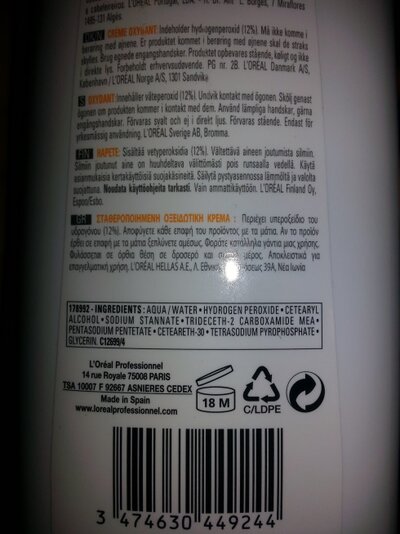
Whats the reason for NOT using glass dish? :unsure:

Glass chemically reacts with hydrogen peroxide 30% - off gases and can damage bleached item - spots remain :(

2013-05-02 18.09.10.jpg

In addition, it is not recommended to leave the container of hydrogen peroxide 30% in the sun or a warm place - the same result.
 
Is it possible that a mix similar to retrobrite (without the bleaching agent obviously) could reverse the effects of where the sun fades colour? I understand that dye that gets removed through errosion is going to be completely gone, but is it possible that colour can return when (as I understand) the carbon molecule is replaced with a hydrogen molecule?
 
Last edited by a moderator:
Is it possible that a mix similar to retrobrite (without the bleaching agent obviously) could reverse the effects of where the sun fades colour? I understand that dye that gets removed through errosion is going to be completely gone, but is it possible that colour can return when (as I understand) the carbon molecule is replaced with a hydrogen molecule?

You mean the case when you go out bright spots and you can return to the previous state?
 
Hi!

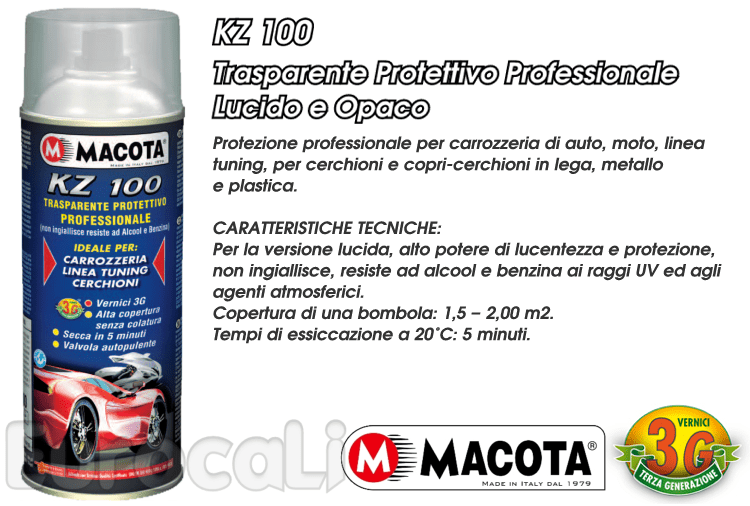
After retrobright, to avoid the yellowish, Can I use this?:

MacotaKZ100trasparente.png


It's not available in satin, only gloss or mate :huh:
 
So after three nights of sunshine, meticulous dismantling and re-assembly and about five gallons of peroxide I have done half the machines I picked up in a bundle a week or so ago.

I thought the 600 was a lost cause to be honest

$_57.jpg

The A1200's were pretty nasty too... the C64 and VICs looked (and smelt) to have had a bit of a tobacco attack as well as the usual yellowing.. could not believe the colour of the water when I rinsed the C64's!

$_12.jpg $_57 (2).jpg

But the Daz doorstep challenge rose to the occasion and they are now all better than the day they rolled off the production line... the A600 and vics took three sessions but we got there in the end :)

aq.jpg aqq.jpg aqqq.jpg aqqqqq.jpg

Now the VICs are all pretty and white it seemed a shame to stick them back in the garage so I have managed to squeeze another four shelves in... much to the wife's delight/dismay :)

a.jpg
 
Last edited:
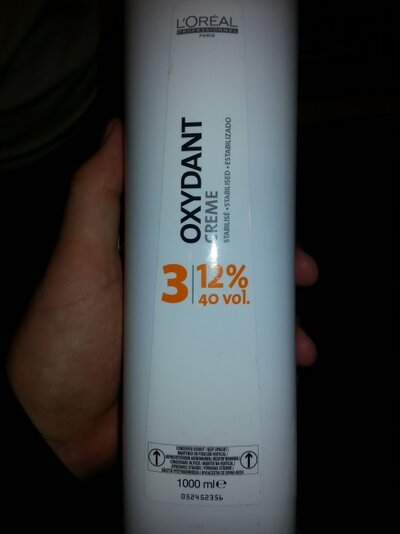
Hi Aysel, when you came round I should have got you to put some shelves up :) Looks good!

Back onto recent topics: I had read somewhere it might be beneficial to coat a retrobrited item with "UV-blocking Dashboard protector". Its a spray. Makes the item look nice at least! Seems like a good idea to seal but really, ultimately I think it'll always go back yellow, its just a matter of time. If it does delay, good, and it'll dishwasher off no problem before another blast if I care in a year or two... I've got a few BBC's and computers etc I retrobrited a few years ago and some go yellow quickly, some dont. Nothing we can do really.
 
So what does everyone use for keys? I've been placing all the keys onto a tray and then smearing the retr0bright goop over the top. It's a bit fiddley, considering it seems I have to do this about 4 times (4 sessions of 5 hours per session) to get them white. I've seen people putting the keys in a jar filled with just with the hydrogen peroxide - does this work? if so, How long should this be done for?
 
Ok, I have now searched this thread and learned that when it comes to light, it does matter what I buy.
I understand that sunlight is the best, but I can forget that this time of year in Bergen, Norway (probaply the most rainy part of norway any time of year). I understand that it is also better to leave it out in sulinght on a foggy/rainy day under glass than light.

How ever, I am looking for a uv bulb / lamp that will do the job. Which is the best lamp? "gro lux" (I will check a animal store on monday), This (which got bad reviews), or something like this? I really got no clue about lamps and bulbs. And I don't want to ask anyone to find a cheap lamp and bulb on ebay for me Which would be GREAT).

What am I asking? Where can I buy the "right" bulb?

Edit:

So I visited my local hairdresser. I asked for bblonde, which turned out a no go. But I ordered 3 bottles of an auctionsite, so lets se what the postal service and government has to say about that after july 22..

But after som initial chit chat with this beautiful hairdresser, she said she could sell me a bottle of another stuff from Loreal..

I searched for ingredients in this massive thread, and it does not look like it contains diglycol or Liquid Paraffin.
So my second question is:

Can I use this stuff instead of bblonde, or do I have to mix it into retr0bright with other chemicals?

20150105_133403.jpg 20150105_133423.jpg 20150105_133426.jpg

 
Last edited:
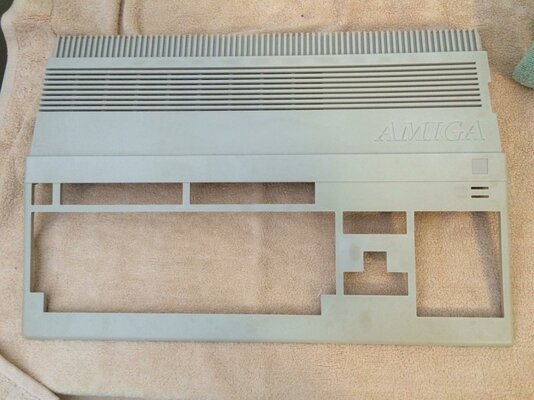
Can someone tell me where I went wrong? I did 3 sessions using a UV lamp - 5 hours each session. It de-yellowed a tiny bit. On the 3rd session I couldn't see any change and it was still quite yellow. So I then did a fourth session, but this time I put it out in the sun (wrapped in cling-wrap) for 5 hours. The result was blotchy-ness. Is there anything I can do to at least mitigate the blotchyness? Also, how do I know when enough de-yellowing is enough, ie. should the Amiga 500 be white?

IMG_0267.jpgIMG_0268.jpgIMG_0269.jpgIMG_0270.jpg
 
Can someone tell me where I went wrong? I did 3 sessions using a UV lamp - 5 hours each session. It de-yellowed a tiny bit. On the 3rd session I couldn't see any change and it was still quite yellow. So I then did a fourth session, but this time I put it out in the sun (wrapped in cling-wrap) for 5 hours. The result was blotchy-ness. Is there anything I can do to at least mitigate the blotchyness? Also, how do I know when enough de-yellowing is enough, ie. should the Amiga 500 be white?

In my experience, you get those patches if the layer was uneven (it needs to be redistributed regularly) or it has been sitting too long (you do not want the peroxide to start bleaching the plastic). As a color reference, you can compare the color with the backside color, since it will usually not be yellowed. And no, the 500 was never white like the 1200, but rather light grey.
I got patches on one of my 500 covers due to bleaching as I left it for too long, and I was not able to get rid of them again. I can see that the light part of the patch is actually lighter than the non-yellowed inside, so it has been bleached rather then just deyellowed.
 
most efficient flourescent uv bulb/wavelength for optimal retrobright results

most efficient flourescent uv bulb/wavelength for optimal retrobright results

hello everyone,
ive done quite a bit of research on whats the most effective uv bulb to use for retrobright results. ive narrowed it down to lights in the 300-400 nm wavelength. blacklight bulbs 365nm, exo terra 10.0, and regular uv bulb. which one is best given the same conditions.
 
Last edited:
Back
Top Bottom