Tapuino, the $20 C64 Tape Emulator

  • Thread starter Thread starter sweetlilmre
  • Start date Start date
  • Replies Replies 1059
  • Views Views 299319
I have understood where the problem is.
the games turbo that cannot be transferred.
the games no turbo tauino transfers them.
I hope to be useful.
you excuse me I use translator on line :D
 
Maybe you could write a detailed pm in Italian to me and I'll get a friend to translate as I'm not sure exactly what you are getting at (I have loaded many turbo games with success).

-(e)
 
in this tape you see the tapuino load a game vic 20 16k.
bogo.prg converted in tap with wave-prg to 160.
bongo tap without compression is loaded in 6,38 minutes.
bongo tap converted to 160 is loaded in 42 seconds.
under the 160/170 the result is not good - to 150 some times the error tapuino in loading.
to 140 tapuinos he/she doesn't succeed in loading.
I hope that these information are useful.
I cannot try with commodore 16 because I don't have this pc :(

thanks
 
Last edited:
Thank you for this great project!

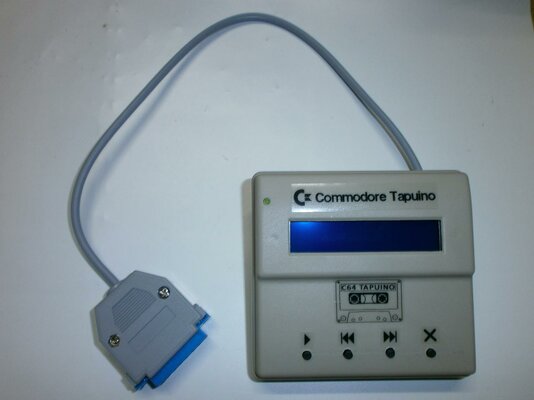
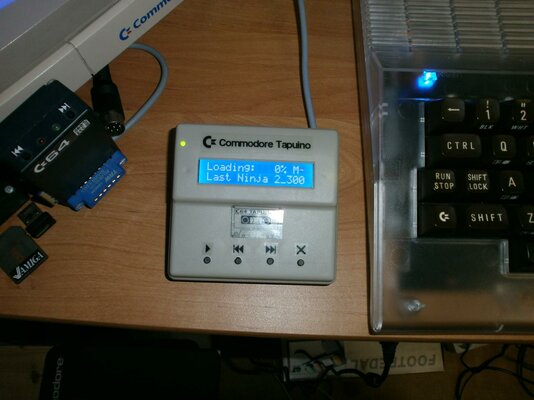
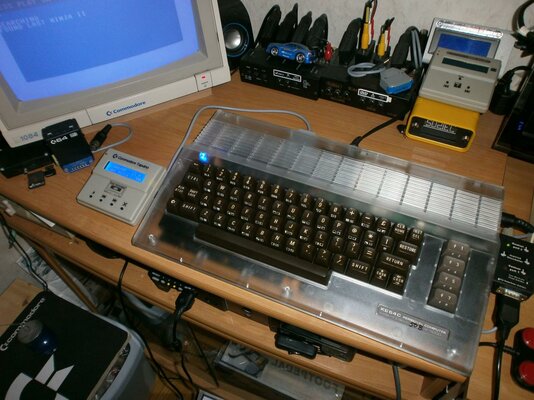
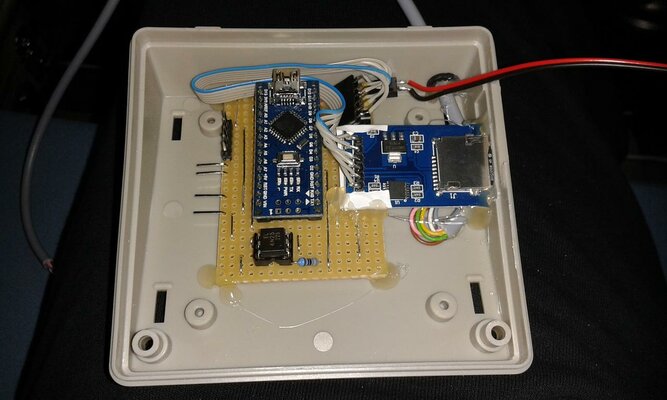
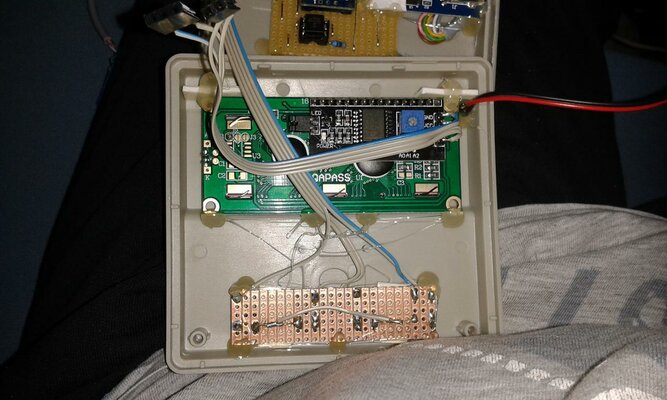
I have build a tapuino a few weeks ago and it is great! Here are some pics:
P2050989.JPG P2050990.JPG P2050991.JPG

20160205_175254.jpg 20160205_175309.jpg
 
Is there an up-to-date bill of materials and building instructions available for a strip board version of the Tapuino, including support for capturing data from a Datassette recorder straight to a micro SD card?

Also (I probably should RTFM), where does the Tapuino get power when a) being used as a standalone tape dumping device, b) when connected to the tape connector of a C64?
 
So e.g. hooking up a 5-6VDC (the amount of current drawn would probably be quite modest?) 'wall wart' to the Tapuino's female Datassette connector would turn the Tapuino into a standalone tape dumping device?

However, that's assuming that the build includes a MUX board and a male Datassette connector. This part of the build doesn't seem to have been covered on the blog...?
 
Hi,

The input voltage from the C64 (6VDC) is used to drive the motor so draw would be modest to fair unless there was a motor stall.
I wouldn't use a wall wart (ever :)) unless it was a modern switching one (the old ones bleed AC :().

You could possibly make a stand alone dumper by providing both the 5VDC logic power and the 6VDC motor power, setting the INVERT option and recording on the Tapuino.
(reason I would have 6VDC as well as this will effect the speed of the tape motor and so the length of the signal pulses).

I'd need to think about this some more (sorry quick reply)
-(e)
 
So e.g. hooking up a 5-6VDC (the amount of current drawn would probably be quite modest?) 'wall wart' to the Tapuino's female Datassette connector would turn the Tapuino into a standalone tape dumping device?

I have used a 9VDC wall supply and then converting it to 6V through a 7806 and a couple of capacitors. It will provide an accurate and relatively noise-free 6V.
 
Sounds good. What about this, though:
nc513 said:
However, that's assuming that the build includes a MUX board and a male Datassette connector. This part of the build doesn't seem to have been covered on the blog...?
Should it be possible to make a strip board version of the MUX board, etc, or do I need a professional PCB?
 
Although is not a perfect solution technically, you can use 5VDC for powering both the logic and the motor, this is what C64S tape adapter cable does, and I have tested and it works: http://markus.brenner.de/adapter/

Regardind the PCB I will have some kits for sale soon (4th batch IIRC), including the PCB and most of the components, have a look at the last batch: https://www.amibay.com/showthread.php?73082-Tapuino-C64-Tape-Emulator-PCBs-1-7-kit-3rd-batch

- - - Updated - - -

Thank you for this great project!

I have build a tapuino a few weeks ago and it is great! Here are some pics:
View attachment 102165 View attachment 102166 View attachment 102167

View attachment 102168 View attachment 102169

Very nice build ;-)
Can you tell me the box you've used? I'm looking for a box with the LCD hole done and your's is very nice.
Do you need welding the arduino directly to PCB, without socket, due to height?
 
Last edited:
Can you tell me the box you've used? I'm looking for a box with the LCD hole done and your's is very nice.
Do you need welding the arduino directly to PCB, without socket, due to height?

The box is called KEMO G104 and it's from a german eBay-seller but you have to cut the hole for the display, too.
The arduino is in a 32 pin ic socket, but i have cut the pins from the arduino. Now it fits perfectly.
 
Tapuino, the $20 C64 Tape Emulator

I, as per my posts in this thread (well over a year ago) also use the 5v line from the C64 to power my Tapuino and the daisy chained Datasette for dumping to and from tape. Never had any issues, and as mentioned before, I also used the C64S adapter schematic as a basis for trying this. Never had any problems with it!

Good luck!
 
Last edited:
Are you referring to post #140? (Including a link seems to make the post require a moderator's approval???).

Yes, in 1999, I also made a C64S-adapter like that and have had great success with it.

Still, I haven't been able to find a complete diagram illustrating how to make a strip board Tapuino including the main board, the button board and the mux board with the 74HC4052 chip.
 
Last edited:
I don't think I ever documented the mux board, everything else was in the R2 instructions IIRC. I'll see if I can find the stripboard diagrams and post them up

-(e)
 
I don't think I ever documented the mux board, everything else was in the R2 instructions IIRC. I'll see if I can find the stripboard diagrams and post them up

-(e)

Look at posts #240-243 on pages 24-25 ;-)

This is a very long thread.....
 
Have any changes been made to the mux board pictured in post #240, or is that the final version? What would be a good way of connecting it to the main board?
 
Have any changes been made to the mux board pictured in post #240, or is that the final version? What would be a good way of connecting it to the main board?
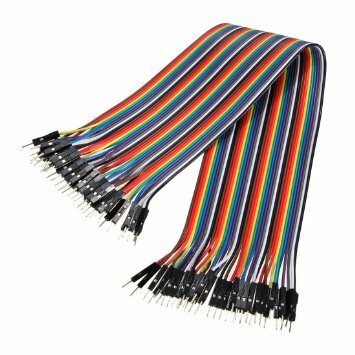
You can also use dupont male-male cable
71DNRONQ1dL._SY355_.jpg
 
Back
Top Bottom