What is your worst Amiga hardware experience?

  • Thread starter Thread starter Jameson
  • Start date Start date
  • Replies Replies 61
  • Views Views 4938
The 508i was released very shortly after the 500i and essentially replaced it, apparently fixing most of the issues - seems even the designers of the 500i acknowledged that the card was a steaming pile of monkey turd. :)

From what I have read, the 508i is fine though.
 
Last edited:
I thought this might be fun, and revealing, to throw out there.

What is your worse, hair-pulling-out-est experience you have had with Amiga hardware.

I have had more than my fair share, but the worst experience I have had of late, by far, is the notorious Furia accelerator for the Amiga 600 - what a total POS that card is. EDIT - As of 2025 the Furia is no longer the biggest POS Amiga hardware accelerator I have experienced. That crown is now taken by the Wicher 500i, truly the worse designed piece of festering monkey anus I have EVER had the misfortune of crossing paths with.

95% of CF and SD cards that USUALLY work well as classic Amiga HDD's will not work with it. It is ULTRA picky about the card you can use as a HDD.

Then the fact that until fairly recent firmware updates it would not even boot with Kickstart 3.1.4 or 3.2. It does not play nice with several other utilities and even when up and running seems about as stable as an elephant balancing on a three legged chair.... always only a single mouse click away from a system destroying crash of epic proportions.

It's memory addressing conflicts with the PCMCIA, so you have to lose half the RAM in order to access the slot. Some clever fellow released a new card.device for the PCMCIA slot that could be installed via a LoadModule command in your startup sequence to fix this..... then a newer Furia firmware revision was released which stopped this from working.... doh!

The irony is, I purchased several of these for several of my A600 as a cheap basic upgrade to make them more useable (my daily drivers have Vampire cards), but after everything I have gone through getting one up and running, and I mean that loosely, I don't think I will bother installing the others.

Okay, rant mode complete. :)

What are your most loathsome hardware experiences?
One of my worst experiences:

- The time it takes to build a nice image, all the installs and getting the lib versions, then switching to a 68040... libs again... Oh and should I use 3.9 or 3.2?

- building a tick adapter and trying to get the Hz to 60Hz

- trying to figure out why my PCB board oven won't SMD solder correctly, and then trying to fix the PCB. Which chip failed again? Which pin isn't connecting? Do I dare plug this thing in?
 
Hacking an A1200 back in the day to have a second IDE hard drive shoved into the original case (it fit!) but not understanding the issues I kept having. Looking back, it was surely using the featherweight PSU and not having a buffered IDE interface, because the problems went away when I abandoned that approach, got a Dataflyer SCSI, and used a SyQuest EZ135 for storage. Then my M-TEC accelerator had major stability issues, those went away when I finally got a Blizzard 1230. In retrospect maybe I needed a timing fix.. still have that Amiga to this day. :)
 
Oh my god ... it currently is with a Vortex Golden Gate 486SLC ...
This card is either a diva or a b***h ... both in the worst meaning.
I bought it as dead, but optically it looked quite well. I put in one of my Amiga 2000 test setups and ... of course it did not work. But I saw that it activated the Zorro/FPGA part.
So I first tried to fix the "common" problems with this card: Cap between pin 12 and 14 of the MC68000 and I replaced the memory with a working one (tested in an other platform) and .. of course it did not work. But I heard repeated noises from the built in PC speaker, which I interpreted as the card trying to initialize the PC side. But the Amiga always froze so I always reset it ... which turned out to be a mistake:
One time I did not reset the Amiga but had to do something else in the meanwhile and I saw that with a delay of about one minute the mouse pointer was still moving. Then freezing again. Moving the mouse led to a delayed movement of the pointer on the screen ... After about seven minutes: The miracle: The PC speaker beeped and I saw the BIOS setup screen the first time! And ... of course the whole thing was frozen again ...
But each time I did a warm boot an started with "digger min set" again, I made a little progress and was able to configure and save more and more parameters in the setup. The more parameters (e.g. floppy disk config and hard disk auto detection) were configured the faster the card did "boot" until finally I could run digger after cold and warm starts of the Amiga without delay. The Golden Gate always did boot up and I was able to install DOS 6.22 and run all checkit tests without problems.

I was "high" and extremely happy, as a had paid quite a lot for the bridge board! 🍾:D
It could have been such a happy ending ...
But I wanted the card in my "one and for all" Amiga setup, so I transferred it from the Amiga it was working in into another Amiga. And (of course ...) I split up the original Amiga 2000 test setup again ...

In the new platform: The card did not like to start up. Mostly I got those cannot coldboot errors ...
I really tried for weeks - but no success. I tried to reproduce the original test setup ... no success. I tired in other setups - no success.
Most of the time starting digger or gg lead to one or several of these crackling noises (which in my opinion are "dysfunctional" initialization beeps of the PC side) and then does nothing. The next start of digger or gg (except for the parameter info) gives the coldboot error ...
:eek::eek::eek:

So what is the status of the card now?

I have a suspicion: When grabbing the card and pulling it from and then pushing it into a slot again, I mechanically do change something on the card. This suspicion stems from the fact, that each time I move the card, it behaves slightly different: Only on crackle ... no coldboot, up to twelve crackles ... no coldboot, and sometimes I can reach the setup again!

So I know the card can work! I know that it has worked (for about two weeks, when I first made it work and did not touch it except for connecting a floppy disk drive and a CF Drive as harddisk). It worked then even with an ISA Tseng ET4000 VGA card.
But I was not able to identify the problem after I moved the card into other setups. I did e.g. check all solder joints with a magnifying glass ...
The next I will try is to exchange some parts, which are likely to habe been "moved to much or too often" when grabbing the card. Like a transitor and the silver clock quarz (at least I think it is one as it does not look like a capacitor ...).

So in the mean time I am tossed back and forth between deep frustration and high hope ...

Such a bitch!

And why, why whyyyyyyyy ...... did I not upgrade the test setup at first? :picard:Whyyyyy did I rip it out of a working system? :picard::picard:Whyyyhyyyhyyy :cry::cry::cry:
 
Last edited by a moderator:
Oh my god ... it currently is with a Vortex Golden Gate 486SLC ...
This card is either a diva or a b***h ... both in the worst meaning.
I bought it as dead, but optically it looked quite well. I put in one of my Amiga 2000 test setups and ... of course it did not work. But I saw that it activated the Zorro/FPGA part.
So I first tried to fix the "common" problems with this card: Cap between pin 12 and 14 of the MC68000 and I replaced the memory with a working one (tested in an other platform) and .. of course it did not work. But I heard repeated noises from the built in PC speaker, which I interpreted as the card trying to initialize the PC side. But the Amiga always froze so I always reset it ... which turned out to be a mistake:
One time I did not reset the Amiga but had to do something else in the meanwhile and I saw that with a delay of about one minute the mouse pointer was still moving. Then freezing again. Moving the mouse led to a delayed movement of the pointer on the screen ... After about seven minutes: The miracle: The PC speaker beeped and I saw the BIOS setup screen the first time! And ... of course the whole thing was frozen again ...
But each time I did a warm boot an started with "digger min set" again, I made a little progress and was able to configure and save more and more parameters in the setup. The more parameters (e.g. floppy disk config and hard disk auto detection) were configured the faster the card did "boot" until finally I could run digger after cold and warm starts of the Amiga without delay. The Golden Gate always did boot up and I was able to install DOS 6.22 and run all checkit tests without problems.

I was "high" and extremely happy, as a had paid quite a lot for the bridge board! 🍾:D
It could have been such a happy ending ...
But I wanted the card in my "one and for all" Amiga setup, so I transferred it from the Amiga it was working in into another Amiga. And (of course ...) I split up the original Amiga 2000 test setup again ...

In the new platform: The card did not like to start up. Mostly I got those cannot coldboot errors ...
I really tried for weeks - but no success. I tried to reproduce the original test setup ... no success. I tired in other setups - no success.
Most of the time starting digger or gg lead to one or several of these crackling noises (which in my opinion are "dysfunctional" initialization beeps of the PC side) and then does nothing. The next start of digger or gg (except for the parameter info) gives the coldboot error ...
:eek::eek::eek:

So what is the status of the card now?

I have a suspicion: When grabbing the card and pulling it from and then pushing it into a slot again, I mechanically do change something on the card. This suspicion stems from the fact, that each time I move the card, it behaves slightly different: Only on crackle ... no coldboot, up to twelve crackles ... no coldboot, and sometimes I can reach the setup again!

So I know the card can work! I know that it has worked (for about two weeks, when I first made it work and did not touch it except for connecting a floppy disk drive and a CF Drive as harddisk). It worked then even with an ISA Tseng ET4000 VGA card.
But I was not able to identify the problem after I moved the card into other setups. I did e.g. check all solder joints with a magnifying glass ...
The next I will try is to exchange some parts, which are likely to habe been "moved to much or too often" when grabbing the card. Like a transitor and the silver clock quarz (at least I think it is one as it does not look like a capacitor ...).

So in the mean time I am tossed back and forth between deep frustration and high hope ...

Such a bitch!

And why, why whyyyyyyyy ...... did I not upgrade the test setup at first? :picard:Whyyyyy did I rip it out of a working system? :picard::picard:Whyyyhyyyhyyy :cry::cry::cry:
#Amigalife
Just watch Dr Chris Edwards YouTube Channel to get the meaning.
 
Last edited by a moderator:
@hese has perfect knowledge of this GG board and he can fix it 100% if it has a hardware fault.
What do you call crackling noises? Is it faint bips from the speaker? I had this kind of behaviour before with either unsupported SIMMs or when trying to use the onboard IDE with a CF adapter (hardfiles are always better with any bridgeboard in my opinion).
 
@hese has perfect knowledge of this GG board and he can fix it 100% if it has a hardware fault.
What do you call crackling noises? Is it faint bips from the speaker? I had this kind of behaviour before with either unsupported SIMMs or when trying to use the onboard IDE with a CF adapter (hardfiles are always better with any bridgeboard in my opinion).
Thanks for the contact.
Yes. These crackling noises are for sure the result of the Amiga side of the board trying to reset the PC side. If it succeeds then there are clear beeps and then (depending on the digger options I provided) it goes into the setup (this is what I mostly try - digger min set) or tries to start. My assumption is that the Amiga side tries to reset the PC side but does not do that correctly (anymore). Maybe it simply applies the reset for a to short time or the rest signal is not stable long enough.) If the reset goes totally wrong then it retries the reset (again the crackling from the PC speaker). It can happen that it tries that up to (i have counted) for up to 16 times. But mostly I think the incorrect or failed reset leads to a situation where the Amiga side then gives up as the PC side does lock up. Then it fails with the cannot coldboot message.

The card was working flawlessly with the same SIMMs and the CF card for about 14 days ... But of course I tried without the CF card, with different SIMM setups, different SIMMs, no SIMMS at all, with/-out floppy controller chip, with/-out Copro and and and ... I did not count the hours already spent with experimenting - but for sure the number already has three digits ...
The only reproducible cause for a change of the behavior of the card (cold boot errors after the first PC side reset, several PC side resets, reaching the setup and then hanging there, ...) is when I mechanically stress it differently ... which in my opinion means that somewhere the are broken lines or soldering joints. This of course might be somewhere at the PC side, too, and e.g. the SIMMs are not working correctly because of that most of the time now ...
My next step for sure will be another in depth optical inspection and some electrical probing. I will focus first on the parts, I might have stressed when pulling out the card of the slots.
 
@olma71 I have a GG as well and the card is picky in some hardware configurations. Mine works in an Amiga 2k5 with the original A2630 installed, but it won't work in another A2k with a N2630. The GG also wouldn't work in my A4K unless I installed the original 68030 cpu board.

Does it still work in a bare Amiga 2000 with 68k or A2620/A2630? If not, I would send it to Hese like someone else already mentioned. He did a repair for me too and he's a very capable guy.
 
I have a blog here on amibay and almost every second or third post details one disaster or another.......
My personal pet hate is the FASTATA as despite trying several over the years I never managed to get these to work, and usually broke stuff whilst trying to fit them. In the end, a while after my final attempt, I think I read somewhere that it conflicted with a driver in the 3.2 roms or something like that and a specific module had to be loaded via loadmodule - oh if only I had known that at the time. Perhaps I did fit it ok after all - who knows!
I generally break stuff attached to clockports as well.........
 
I got my first Amiga 500 when I was 14 years old. Unfortunately, I was a very nervous person at the time and when I wasn't doing well in games, I had a tendency to bash the keyboard. Unfortunately, I unknowingly damaged the external 512KB RAM expansion card (which I only found out many months later). This resulted in some games simply not loading/running properly. For example, it was Lemmings 2. I didn't have the money to repair it at the time and ended up selling the Amiga.
 
Last edited:
@HomeLate
The GG did work in the following setup:
A2000 Rev 6.0 with the so called Takuda tower.
The CPU socket in that board is not working due to defects caused by the barrel battery (removed), so I did put the CPU on an IDE68K-gottago-fastram-8mb and used it with a CPU relocator in the CPU slot and config_in wired to U606 Pin 8 (which allows auto configuration if you leave the last Zorro slot empty). Kick 1.3 modified to support booting from the IDE68K.
OS 1.3 (Colanto) on a CF in a slot adapter connected to the PSU.
350W ATX 1.3 PSU with ATX PSU adapter with tick generation providing all original voltages.
RGB2HDMI Adapter (Raspi Zero)
Gotek as DF0
880K Floppy as DF1
GG with FD controller and FPU located in the first bridge slot (4th Zorro slot), 16MB RAM with parity (3 chips)
Teac FD-505 combo FD drive
CF connected to a CF in a slot adapter to the PSU

It did not work immediately in this config. It was a game of patience - but no hardware modification was necessary.
The beahvior at first I interpreted as lock ups of the Amiga (no reaction to inputs, no mouse movement) after starting digger/gg but it turned out that I could sit these out and finally reach the setup screen. With each single configuration parameter I finally managed to save in the GG setup, the card did start faster and faster. When I had all options set correctly in the setup then finally each start of GG lead to a full boot up of the GG without any delays ...
I was able to boot from Floppy Disks, the CF card. I attached different ISA VGA cards I had at hand and really was happy. For about fourteen days the card worked then flawlessly everytime I started digger. Until I decided to put it into another setup with rebuilt A2000 mainboard because it has 4 16 bit ISA slots ...
Since the I tried it in three different rev6.2 mainboards and one rev 4.1, with and without A2630 (rev 9) and a lot of combinations of CPU, IDE, SCSI controller, different OS versions ...
From time to time I manage to enter the GG BIOS setup again, but mostly I get the cannot coldboot and even in the setup the GG crashes ...

My main problem is that I cannot reproduce the "working" setup as the Rev 6.0 mainboard is not starting at all anymore (as I damaged the mainboard in the area of the CPU socket so badly when trying to unsolder the socket, that now the CPU slot is not working either ....

So my next steps are:
Fixing the rev 6.0 board again
Reporoducing exactly the "working" GG setup

If this fails I will fore sure accept the services of @hese.
 
Somewhat to my surprise, there is no mention of the Archos Overdrive external PCMCIA CD-ROM here. What a piece of cr#p that was. Atleast for me. That confirmed my conviction that SCSI was better. So I hooked up an external SCSI CD-ROM to the Phase5 BlizzardSCSI. Never looked back.
 
Back in the late 2000's I watched an A3000 spontaneously combust, shortly after a so-called 'technician' performed some repairs on it.

Power was applied, there was a loud crackle from the PSU and lots of magic black smoke hung heavily in the air within seconds.

Not even the C= gods was bringing that back to life - dead as the proverbial Monty Python🦜
 
Vampire for A600: pleasure and pain.
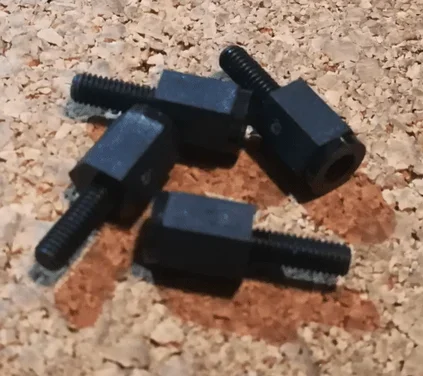
Socket is very, very weak and it's hard to make it seat properly. Up to now, no-one has engineered proper bolts and nuts to fix it tightly to the 600 motherboaard.
If you connect the usb-blaster to update a core, and you move it for 1mm...you're f'ed up. The damned board lifts up and you get nuts trying to make it seat again.
 
Vampire for A600: pleasure and pain.
Socket is very, very weak and it's hard to make it seat properly. Up to now, no-one has engineered proper bolts and nuts to fix it tightly to the 600 motherboaard.
If you connect the usb-blaster to update a core, and you move it for 1mm...you're f'ed up. The damned board lifts up and you get nuts trying to make it seat again.

Indeed, that's really annoying because the A600 case does crack and break more and more at each reopening. I have come to the conclusion that it is better to have it as basic as possible. I have a 8 MB expansion on top of the CPU which seats firmly though. I also seem to remember that an Apollo 630 that i had 20 years ago was sitting better than the Vampire V2 600.
 
Indeed, that's really annoying because the A600 case does crack and break more and more at each reopening. I have come to the conclusion that it is better to have it as basic as possible. I have a 8 MB expansion on top of the CPU which seats firmly though. I also seem to remember that an Apollo 630 that i had 20 years ago was sitting better than the Vampire V2 600.
It's almost impossibile nowadays to find a 11Mb RAM for A600.
I believed in Vampire project. I have one but it's so delicate.
I need to change the socket and find someone who can replace it with a AUGAT or AMP and make it sit firmly.
I mean...is it really impossible - almost CHALLENGING I'd say, to make something like the little screws in picture...
That makes me go nuts.
What expansion do you have? Are you able to read the brand of the socket?
 

Attachments

  • Screenshot_2.webp
    Screenshot_2.webp
    30.2 KB · Views: 3
Last edited:
That's the A608 mini from Archi-tech. Can't say about the socket. I also have the ACA630 which socket can pop out from time to time even though it is secured by screws (IComp design) and a PiStorm 600 which never worked ok but at least didn't pop out.
I would rank my past or present A600 CPU expansions, according to good socket connection, as :
A608mini >>> PiStorm = Apollo 630 > ACA 630 > Vampire 600 V2
However my Vampire 600 v2 was made in 2015 by Kipper2k. I seem to remember to have read he used lesser quality sockets compared to what @majsta has been using.
 
That's the A608 mini from Archi-tech. Can't say about the socket. I also have the ACA630 which socket can pop out from time to time even though it is secured by screws (IComp design) and a PiStorm 600 which never worked ok but at least didn't pop out.
I would rank my past or present A600 CPU expansions, according to good socket connection, as :
A608mini >>> PiStorm = Apollo 630 > ACA 630 > Vampire 600 V2
However my Vampire 600 v2 was made in 2015 by Kipper2k. I seem to remember to have read he used lesser quality sockets compared to what @majsta has been using.
I thought you were talking about the xT Accelerator or something else.
I think your raniking is right.
I had a ACA620 - shame on me I decided to sell to buy a Vampire. It fitted perfectly on the 68000 and it was stable and perfect.
My Vampire was made by majsta but socket is weak.
I had a piStorm too and it fitted almost tightly.
 
Back
Top Bottom