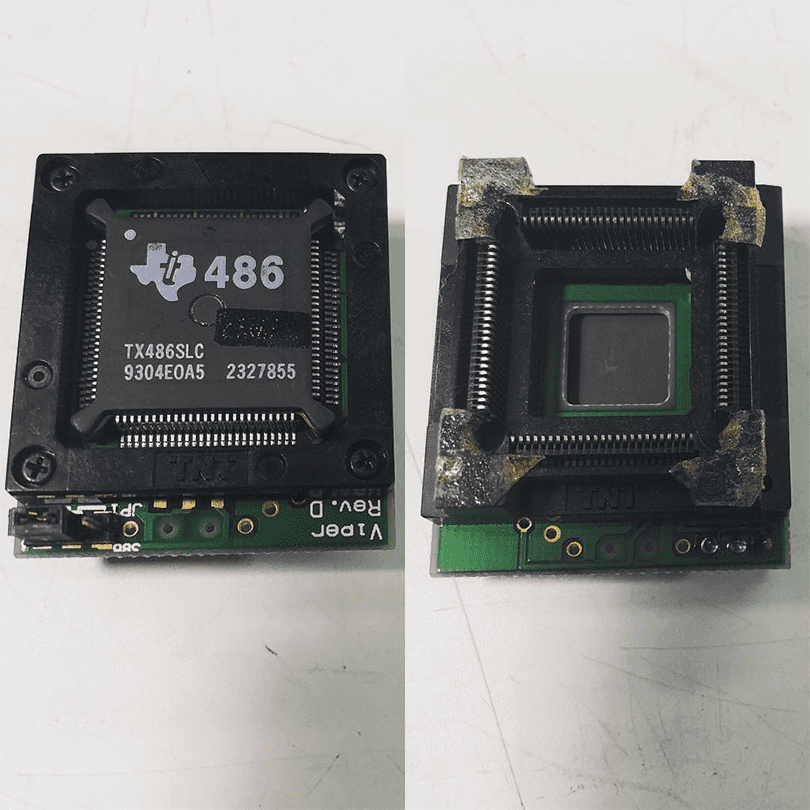

I've been looking to Japan for more snap-on accelerators. Note the topline part below is just a sort of demo of their dummy chips, and their chip carriers that snap on to the BQFP(winged) 386sx.
http://sandy.blue.coocan.jp/Interposer/386_upgrade.html
Of some humor, is this guy who soldered down an IBM 3.6v chip and bent all of the power pins up, to attach to a 3.6v regulator.
http://kenji.ram.ne.jp/pc/nse_ibm.html
I learned a few random things about the 386sx form factor - I had been wondering why it has those wings - this is a Bumpered Quad Flat Package. The "bumpers" are so the chip can be protected while inside the plastic carrier. The chips have a weird pitch that hardly anything else has - 0.635mm. This was done to be exactly 25 mils when placing pads on a PCB - to make it easier.
On the 286 side:
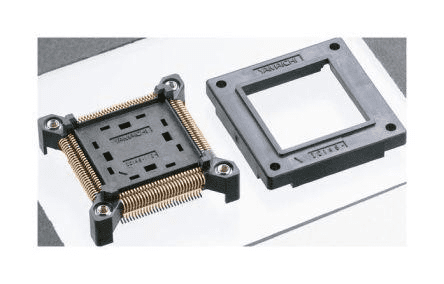
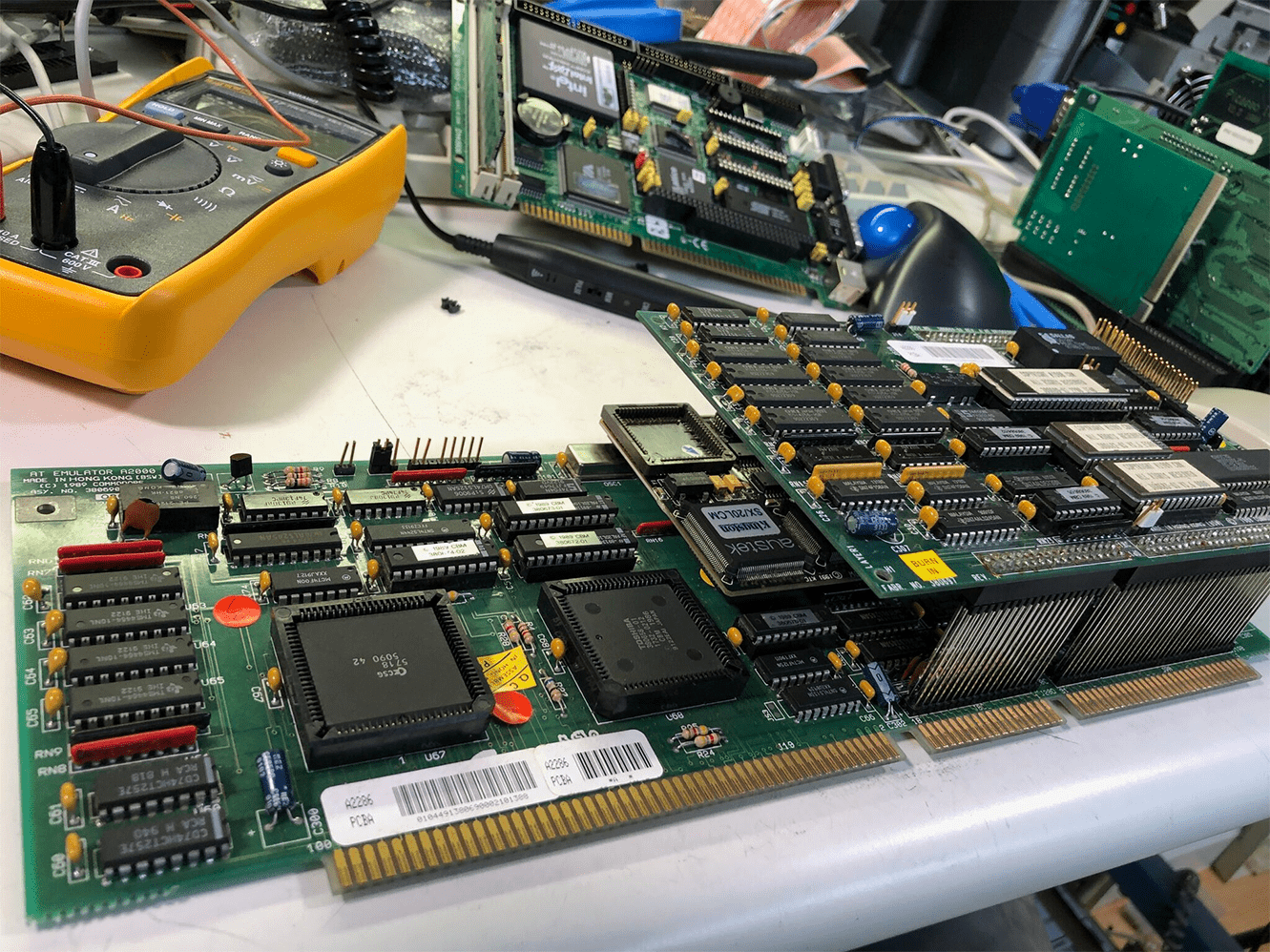
I now have 2 different kinds of 286 upgrades on the way that I got cheap (one from Yahoo Japan), for my a2286, as well as 2.54mm header risers so it will fit. One is the KINGSTON SX/20LCM upgrade - this includes onboard cache, but a slow cpu. I'm thinking about swapping the cpu out for a Yamaichi BQFP100 socket (also on the way), the other is the IO Data PK-VF486 / 87SW2. These both have slower chips but they have an onboard oscillator and cpu there, so upgrading them is not a big deal (may have to disassemble the software that comes with, though).
According to the service manual for the a2286, the ISA bus is fully exposed at the bottom and the amiga-side (where the translator chips are) is exposed at the top. It is conceivable that a different sort of daughterboard could be fitted that just puts the amiga translators on the ISA bus. The only drawback I know so far, from disassembling the rom payload that the software sends to the card, is that the memory map is checked out and custom I/O are used with the controller chip (which would need to be removed for this to work). This could allow a fully loaded PICMG SBC to take over (consuming an extra slot), assuming it holes out all the right I/O, and can run the amiga payload as a boot rom.
There's also the possibility of upgrading it from 1mb to ~16 as the controller supports it and enough I/O lines are wired through to the daughterboard - a sim saver/sim carrier could be wired in.
Another possibility is that, with the whole ISA bus being brought to the daughterboard, the jumper pins on the bottom of the board could be removed and replaced with pins with longer legs, so that a second daughterboard could be stacked on top, which converts things to PC/104 (where a CL VGA and ESS board could be stacked on top, leaving the ISA slots free).
Photos of the A2286AT for reference: http://amiga.resource.cx/exp/a2286at
Really I just want to make my own bridgeboard that can speak to the original software but support VGA on both sides over zorro III.
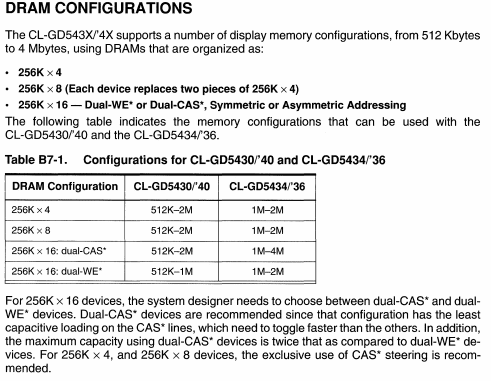
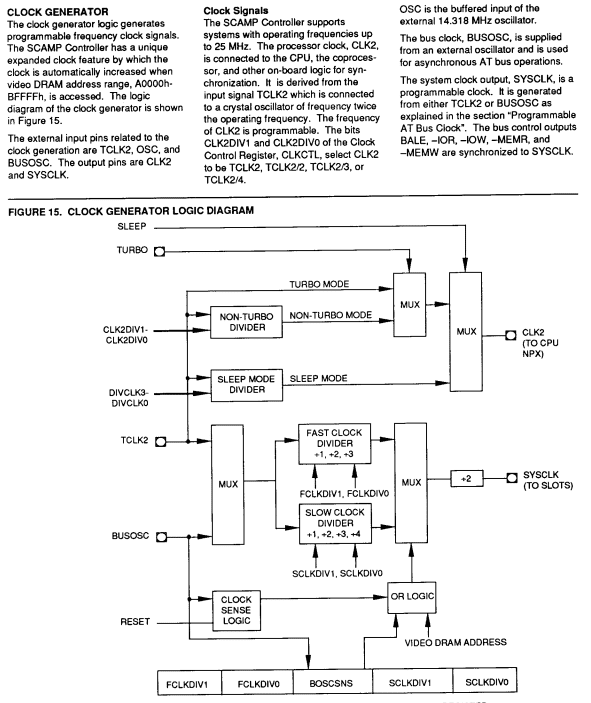
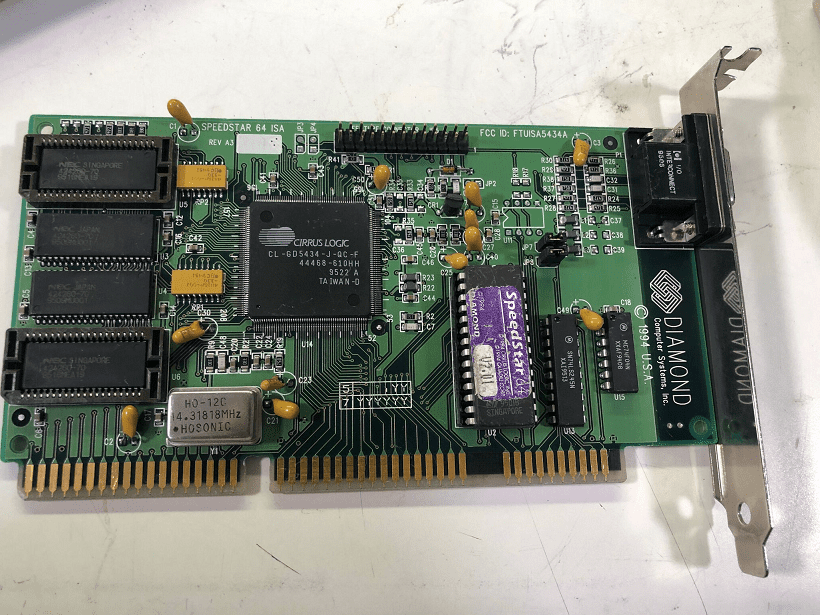
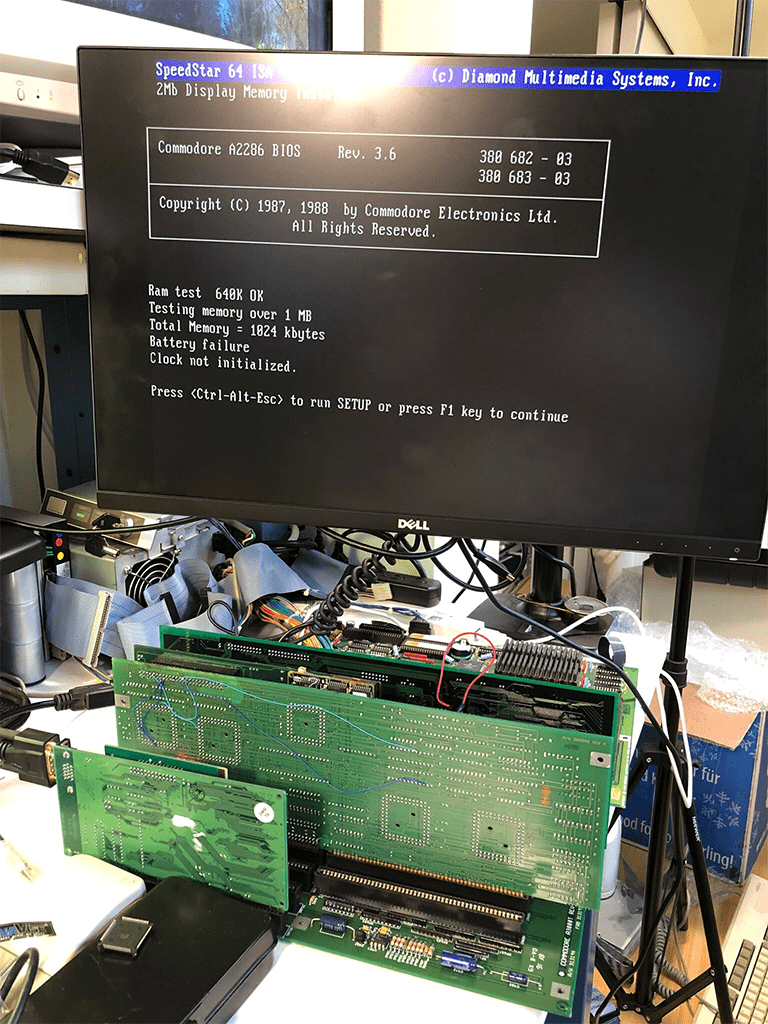
Also picked up a SpeedStar64 after reading up on it. Searching for FTUISA5434A brought me to cheaper prices.
http://sandy.blue.coocan.jp/Interposer/386_upgrade.html
Of some humor, is this guy who soldered down an IBM 3.6v chip and bent all of the power pins up, to attach to a 3.6v regulator.
http://kenji.ram.ne.jp/pc/nse_ibm.html
I learned a few random things about the 386sx form factor - I had been wondering why it has those wings - this is a Bumpered Quad Flat Package. The "bumpers" are so the chip can be protected while inside the plastic carrier. The chips have a weird pitch that hardly anything else has - 0.635mm. This was done to be exactly 25 mils when placing pads on a PCB - to make it easier.
On the 286 side:
I now have 2 different kinds of 286 upgrades on the way that I got cheap (one from Yahoo Japan), for my a2286, as well as 2.54mm header risers so it will fit. One is the KINGSTON SX/20LCM upgrade - this includes onboard cache, but a slow cpu. I'm thinking about swapping the cpu out for a Yamaichi BQFP100 socket (also on the way), the other is the IO Data PK-VF486 / 87SW2. These both have slower chips but they have an onboard oscillator and cpu there, so upgrading them is not a big deal (may have to disassemble the software that comes with, though).
According to the service manual for the a2286, the ISA bus is fully exposed at the bottom and the amiga-side (where the translator chips are) is exposed at the top. It is conceivable that a different sort of daughterboard could be fitted that just puts the amiga translators on the ISA bus. The only drawback I know so far, from disassembling the rom payload that the software sends to the card, is that the memory map is checked out and custom I/O are used with the controller chip (which would need to be removed for this to work). This could allow a fully loaded PICMG SBC to take over (consuming an extra slot), assuming it holes out all the right I/O, and can run the amiga payload as a boot rom.
There's also the possibility of upgrading it from 1mb to ~16 as the controller supports it and enough I/O lines are wired through to the daughterboard - a sim saver/sim carrier could be wired in.
Another possibility is that, with the whole ISA bus being brought to the daughterboard, the jumper pins on the bottom of the board could be removed and replaced with pins with longer legs, so that a second daughterboard could be stacked on top, which converts things to PC/104 (where a CL VGA and ESS board could be stacked on top, leaving the ISA slots free).
Photos of the A2286AT for reference: http://amiga.resource.cx/exp/a2286at
Really I just want to make my own bridgeboard that can speak to the original software but support VGA on both sides over zorro III.
Also picked up a SpeedStar64 after reading up on it. Searching for FTUISA5434A brought me to cheaper prices.
Last edited:

 I'm having a lot of trouble finding a snap on for the 386 - I know a few companies made them but I can't find them in single quantities for under $1000.... so I may just focus on the 286.
![Q8fKDGd.png]](/proxy.php?image=https%3A%2F%2Fi.imgur.com%2FQ8fKDGd.png%5D&hash=51f1ecc55eb6a8e9dbb8c6fbe4a93476)