A great example is how the known longevity of brake pads in EVs...
Of course the braking vs. coasting is a big argument in EV cars when efficiency comes up. It's funny you bring this up because I was taking a walk a few weeks back and saw a car with big rims that caught my attention, but behind the rims was a brake calliper seized like I've never seen, it looks like it housed double-size pads - twins. I'm not saying it's wasteful, but immediately wondered what this was, noticed e-tron and assumed this is for the heavier EV car weight. I think the bigger issues on EVs is the instant-torque power delivery of electric motors wearing out the tires and road. EVs often need special tires, because they would shred the standard type faster and they need stiffer sidewalls for the heavy weight. And there are already studies that EVs due to instant-torque, energy recovery braking and much higher average weight do indeed wear out the roads faster, to the tune of twice as fast. Crazy. What's the CO2 and environmental impact of replacing the roads more often? Again, this weight problem is not EV's alone, but I feel like the EV weights gave the manufacturers a carte blanche to also make petrol cars less competitive and equally heavy. Again...1500kg Honda Civic? Honestly Honda...you are not the Honda I knew. You've lost me.
The other thing is that many of the EVs try to push performance, and that comes at the cost of efficiency very quickly as well as wear and tear. As it does in petrol cars of course, but this instant torque is a whole new beast. Hummer EV is 10,000lbs weight and goes 0-60mph in 3.3 seconds. Think about that for a second. What is involved in moving that mass that fast? I think the best solution here for starters is, if one is committed to efficiency then buy a car that has no performance to ensure you stay committed.
Plus the 5 year old Volvo study was only for one model that wasn't even a bespoke EV (the XC40 is the EV version of a car designed on a combustion engine platform missing much of the efficiency gains of purpose-designed EVs).
I maybe misunderstood what you wrote, but the study compared 2 purpose built cars against each other of same size, weight, category. Cars with the parent company was manufacturing and thus had deep knowledge about. For 100% Petrol they chose their XC40, and for 100% EV they chose their Polestar 2. They make both. They were not comparing an XC40 EV version. I read it and I thought it was a very valid comparison, no one else was doing it and the fact that there was no hard EV sell with an EV company involved gave it credibility in my view. It's the best we have. Why aren't other companies doing this so we can compare, evaluate, see if they make sense?
I say again to you...weight and math. EVs are too heavy, and I told you about the battery-petrol-math...1 EV's worth of batteries can make 20-30 hybrids and that means 1 EV driver's elimination of dependance on petrol vs 10-15 driver's elimination of dependence on petrol for the same resources of current battery tech when deployed in hybrids. I think this is a no brainer, and anyone arguing for removal of petrol usage from society should push for hybrids ASAP. But the politicians are mostly ignoring it and stuffing the EVs down our throat with the obvious math objection here along with many environmental ones in this early stage of the tech with batteries. Thus this makes me think other motives are in place.
I am looking at a car and I won't go into branding here, but I looked and hybrid, I looked at EV, I looked at 100% petrol, and I simply cannot justify the up-front cost of hybrid and even less so EV vs. my petrol car choice. It's 27% cheaper than the cheapest hybrid/EV, and it's well appointed and has very good MPG from the 4cyl engine. Why should I pay a penalty up-front for a "green" choice?
There was a point where I saw plenty of data, and it just doesn't add up on EVs. At best it's a wash at 100,000km or so. At worse, it's worse. I stand by the fact that with current tech weight is the biggest problem, along with battery technology, cost. No one will convince me of the fact that you cannot make a heavier car like most EVs are and that weight/mass without an no up-front environmental cost. We're talking 500kg, 1000kg. That crazy Hummer EV is 10,000lbs! That's green rainbows and unicorns because it has batteries? I don't think so.
My solution, and everyone is different...is to drive less, bike more, make less wasteful choices, not replace my car for a long time. I've had petrol cars in the family for 18 years, 20 years, because they were well maintained and reliable. Not sure I'd get that longevity from an EV. As
@davideo noted, there is serious risk in EV. From battery technology innovation and low cost competition bringing price pressure. What will an EV be like in 3 years? 5? Today they seem very overpriced, like the companies are trying to take maximum unit cost from us. BYD Seagull at $10,000USD for 300km range is intriguing to me. I know there are all these economic things we could factor in. But at the end of the day why should we the consumers in the western countries have to pay 3x 4x 5x that BYD amount for relatively basic EVs, while our politicians block our access to them, forcing us to pay those high prices? Does this not already mean that our industry and product is not competitive worldwide anymore? Can't our brands make something like that BYD for us? Why not? Because they don't want to! They want to make us pay 3x 4x 5x more. Or more like VW/Audi and their premium EV strategy that fell flat on its face. Can't say I'm sad about it after Dieselgate they pulled on the world. Regardless, as they force these high priced EVs on us they will lose export market share because as I said, China will buy these BYDs for $10,000. India will buy these BYDs too. South America will buy these BYDs for $10,000USD. All of Africa will buy these BYDs too. They certainly will buy them before they buy our overpriced versions. Why should they pay the premium? Are we already priced out of the world market on EV? Likely. Are we being gouged? Hmmm...let us ponder that.
On average current battery tech will last you many hundreds of thousands of miles before becoming unusable, which is more than many combustion engine cars can do.
Also brother cannot park EVs in his building garage. Combustion is the problem. Their building can't get insurance with EVs in the underground garage so they ban them. Figure that one out. What about car insurance costs? I'm hearing it is much higher on EVs due to repair costs in case of accident. These things are not nothing
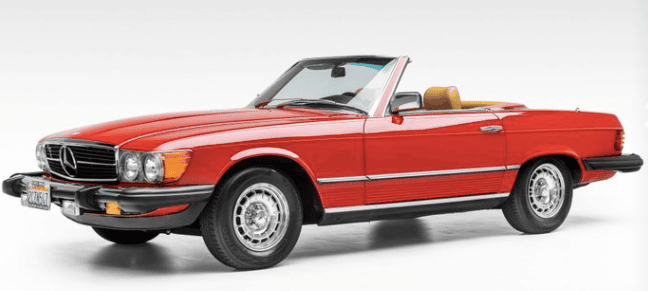
@amigean. I saw a nice red 1981 Mercedes SL over the weekend, and as I admired it I said to myself..."look at those beautiful functional bumpers you can bump into things with and not cost yourself $3000 repair. How have we gone so backward on basic car BUMPER functionality?"
Cars are heavy...too heavy. Have no useful bumpers. Aren't efficient because of weight. And more and more have no physical buttons, weird steering wheels, distract drivers with giant screens and force them to touch screens. The product overall is not getting better.
Someone needs to make an Amiga car!
Holden Commodore Amiga 2000, 2.0L engine, 200Kw, 2000 lbs curb weight. Useful bumpers. Real buttons.
We're onto something here!

Listen to Colin Chapman all automobile makers of the world..."Add more lightness!"






 Unless you are an Atari user and we need to start another thread to battle it out!