US tariffs

  • Thread starter Thread starter RetroNinja
  • Start date Start date
  • Replies Replies 41
  • Views Views 2495
Status
Not open for further replies.
my family wouldn't fit in that

would have to leave my 2 Labradors at home.

would have to buy 2 cars too be able to go on holiday or get a trailer and dog kennel my dogs.

or get a normal sized car for normal people.

yes the buzz is expensive but i got 5 of us + a weeks luggage + a large dog cage for 2 labs setup + 40" tv as the cottage we stay at still has like a 14" portable :) hdd + kodi for evenings ( no wifi )
 
anyway back on topic, tariffs


the point of the BYD is cheap import from china, we send our money to china, ( no regulations on labor / safety ?? ) UK looses.,

if there was a comparable UK car that could compete with the byd then , cheap car from uk, money goes to uk, safer and uk jobs and possibly export our cars ??
 
@amigean, forgive but I have to disagree. Not that EVs aren't the future, it's that current EVs are not what they claim.

First, note how not a single company out there dares tell us the up-front CO2/CO2e cost of manufacturing their EV. They dare not do it, because the gig would be up. It's the same like Formula 1 claiming it is green with these overly complex hybrid hoovers styled like a flip-flop. The cars are 100s of kilos heavier than in the past and the size of a Cadillac Escalade 7 passenger SUV. The engines ever more complex to make, with batteries and all. The cars forced to do more and more Grand Prix each year. The teams bigger, traveling with huge personal numbers to each Grand Prix by air along with huge amounts of cargo by jets, which deposit the emissions directly into the stratosphere. And somehow we're supposed to believe F1 is green? What greenwashing nonsense.

Few years back FINALLY Volvo compared a XC40 100% petrol to Polestar 100% EV and released the audited CO2/CO2e white paper for the world to see. Turns out it takes 112,000km driven by the EV to erase the up-front loaded deficit of manufacturing the EV on a standard grid. Now that EU is burning more LNG to generate energy, I wouldn't be surprised if this isn't more like 140,000km driven before the EV erases the deficit. Note, that's about the time where these batteries become a liability and potentially need replacement. Let us not forget the recycling complexity noted by others above already. Now what do you have to say about EVs? The Teslas and other EV makes don't want us to know this. They don't want us to think about it. They want us to think it is pixy dust and unicorns and puppies for everyone. Not that these EVs are so non-green to manufacture up front. That Hummer EV...10,000lbs...what a monster! All that mass is manufactured out of thin air and is fully sustainable, including the monster batteries to move that pig? Sure.


EVs are here to increase the average price of cars and push for replacement. The current generation of batteries are not good, don't last enough cycles, are too big and too heavy. For that matter, all cars are too heavy. Why is a Honda Civic 1500kg today? Seriously? This car needs to drop 500kg, along with every other car. They are too big, too heavy, too inefficient. Give me a sub 1000kg Honda Civic SI 6 speed coupe. Why are we not getting simplicity like that? No one wants to make this low cost car and pull customers down from more expensive options that are being forced upon them. Japan did it in the past. Then South Koreans. Now they are pushing up-market and charging high prices, so...here comes China.

@miggymad, it gets even better - BYD could deliver the Seagull with over 300km range at 10,000 Euro price tag and have before the tariffs in EU, but they are increasingly being restricted by them in Europe. VW with their EV strategy aimed at higher average price cars and premium cars are crapping the bed - and CEO already declared that they've lost the plot. We're being blocked from these Chinese EVs, which are of very decent quality. We have taught the Chinese very well how to make quality goods. We think we're going to win by blocking their cars and increasing prices through tariffs, but they are just going to turn around and sell these in China, India, all over Africa and South America- and one way or the other, this will eat market share of traditional car makers. China is in a no-lose position here with their EVs. They are good, they use the sodium ion batteries, deliver excellent build quality and price point that's impossible to turn away from. They already are #1 EV maker world wide, and will grow. There is no doubt. They will let Europe and North America block them and the consumers in that market will lose out from lack of competition as the legacy manufacturers fight to keep prices inflated. Meanwhile, the rest of the world will be buying up these affordable BYD Seagulls like crazy. Just look at their sales data.

@Sardine - re China. I understand their postal service is subsidized to allow this super cheap or free shipping. Honestly, clever. But is it fair? I don't know. By now every piece of hardware we buy, the manufacturer slouched these low cost components from China to make it for us. I can't say I haven't bought what I needed in China myself. Perhaps time to buy a few things ASAP? :)
 
Last edited:
@YouKnowWho I respectfully disagree too. :-) The Volvo study has been comprehensively debunked as understating the advantages of EVs (look for takedowns online in specialist, reputable outlets). Much better done and more comprehensive Life Cycle Assessment (LCA) analyses find much bigger and crucially, rapidly improving advantages in terms of emissions savings. New battery chemistries that depend less/not on cobalt and manganese, the scarce materials most associated with labour and environmental abuses (not lithium btw which is relatively abundant and is increasingly), are now manufactured to scale.

@Sardine: You have a point about Ownership costs for some types of owners, e.g. who'd like to drive the latest car and change every 3-5 years. However, ownership of an EV makes sense if you plan to keep it for the long haul and don't care about depreciation, which is always steep during times of rapid technical change. Buying second hand EVs makes even more sense, especially since the data is now out from hundreds of thousands of EVs with high mileage showing that most modern packs with thermal management (ie not first generation EVs) will outlast your will to drive them. In my case, fuel savings alone from charging at home at night rates (or with solar when sunny) over the past 3 years and 100k kms I have recouped about a fifth of my cars purchase price, without counting savings due to repair and maintenance. If I keep it as long as I hope to, it will end up costing me basically nothing.
 
@amigean - could you please point me to an article with details? I'm curious what motivation Polestar would have to do this. Polestar published this audit paper. Polestar want to sell their EVs. China owns it and China certainly wants to sell EVs. Just seems strange.

Is the argument that these usually heavier EVs with much more complexity do not have a CO2/CO2e footprint that is double that of just mostly metal casts? Gut feeling tells me that an EV is much more CO2/CO2e intensive up-front before it turns a single kilometre of driving than a petrol equivalent. Mass/weight alone confirms this. Even F1 cars added over 200kg just because of hybrid engines with a small and very compact (read: expensive and not road usable) battery pack. That weight of advanced components clearly had an up-front manufacturing CO2/CO2e cost.

As for battery lifespan, it is well documented now that even current model 2025 year EV batteries degrade. Data is also limited for obvious reasons. Some are better than others. For some there is no data. Replacement is complicated and costly.
 
Last edited:
@amigean - could you please point me to an article with details? I'm curious what motivation Polestar would have to do this. Polestar published this audit paper. Polestar want to sell their EVs. China owns it and China certainly wants to sell EVs. Just seems strange.

Is the argument that these usually heavier EVs with much more complexity do not have a CO2/CO2e footprint that is double that of just mostly metal casts? Gut feeling tells me that an EV is much more CO2/CO2e intensive up-front before it turns a single kilometre of driving than a petrol equivalent. Mass/weight alone confirms this. Even F1 cars added over 200kg just because of hybrid engines with a small and very compact (read: expensive and not road usable) battery pack. That weight of advanced components clearly had an up-front manufacturing CO2/CO2e cost.

As for battery lifespan, it is well documented now that even current model 2025 year EV batteries degrade. Data is also limited for obvious reasons. Some are better than others. For some there is no data. Replacement is complicated and costly.
Sure, some quick links to press articles:


A Review of academic literature on the topic of EV sustainability:


On the topic of battery life expectancy (links to actual studies therein):


(I'm on my phone ATM and about to doze off, but can send/PM you more academic articles with LCAs from many car models when I'm on a pc tomorrow).
 
@amigean - seems like Polestar refined the methodologies, but they have continued to publish this, appear to the be only company consistently doing this life cycle assessments and I have yet to see anything comparable on the other side other argument. Why would they continue to do this if it was false? Would it not open them to liability and brand damage?

Here is one that follows the Dec 3rd article you shared for 2021:

They did more for last few years. I understand that science and data can be used to prove a goal. But, I again stand by my basic assessment that car weight is a big issue and a lot of weight comes from very dirty places in EV. The reliance on rear earth minerals, or the nuclear plant decommissioning and waste storage...is that factored in? Things can be overlooked. I'd rather step back and look at a problem that can be addressed on both sides - Petrol and EV - weight. These cars are all too damn heavy. I don't need to be moving an extra 500kg or 700kg in my car to get to work, do I? Why is it there? This choice we're given, petrol or EV is flawed. The fact that companies make ever heavier cars is flawed. Again, why is a Honda Civic 1500kg today? Where is my 800kg Honda car?

Then there is an argument that I can never get over - that is the intensity of battery contribution, limited raw materials and environmental impact around batteries in general. How can it be more efficient?

Let us start with the assumption we both drive 100% petrol cars. Let us accept that according to statistics most people drive less than 50 miles each day.

If you or me buy a EV, you will remove our reliance on petrol. 1 person's worth of petrol use.

It has been proven that a decent range EV battery can be split to minimum of 20 maximum of 30 Toyota Prius hybrids. Each of those hybrids will remove 50% of the fuel consumption of a 100% petrol car driven the average daily distance. That means 10-15 person's worth of gasoline usage (50% of the number of drivers). If the goal is to minimize our usage of petrol, is that not a more efficient and quicker way to reach the goal vs. EVs?

EVs will be fine eventually. But first...small next generation batteries that can give us 400km+ of range and take a full charge in 10 minutes or less, last at last 10,000 recharge cycles without degradation (there are batteries, which take over 100,000 cycles.) They need to be standard shape, which will be easier due to size, it will allow for efficiency in manufacturing, swapping, easy replacement, easy recycling. And these new batteries need new electrolytes that already exist, which ensure they do not explode or burn. This all exists out there already, but they won't give it to us right now for obvious profit driven reasons. Of course these may also cost more right now. Interesting that BYD is using Sodium Ion batteries to give the world a $10,000 Honda Fit like EV with 300km range.

Once these smaller, lighter, faster, removable, standardized size, longer lasting non-explosive/ flammable batteries are here, EVs are full go. Until then, hybrid is our fastest path to remove huge amounts of petrol use by masses.

By the way, what happened to the air car? Concept was proven...why was it killed?
 
Last edited:
I see a lot of disinformation about EVs, and it almost always can be traced to those that have an interest in selling you something else. Critical thinking goes out the window at these times because it's a story that will sell clicks and copies and some people will always eagerly believe that they don't have to change. A great example is how the known longevity of brake pads in EVs is somehow forgotten when there are claims that they generate far more brake dust because they are so much heavier, stands to reason innit? But somehow the brake pads get thinner much more slowly than on petrol cars.

As for how long it takes to recover the cost of the inputs to an EV, well of course it takes a while today. Coal- or gas-generated power means the electricity used does not save carbon. But that is changing very quickly and the rate of change is also increasing, because solar and wind power are the cheapest form of power generation and they are also the quickest to build. I found this interesting: https://en.wikipedia.org/wiki/Solar_power_in_Pakistan
 
I'm at the age that I won't touch an EV because of the cost and depreciation.

I know normal cars, i.e. petrol and diesel depreciate but at a lower scale.
 
@YouKnowWho Polestar continues to publish LCA studies that show exactly what I'm saying: that EVs are massively more climate friendly than combustion and that the difference grows all the time. The only argument of the anti-EV lobby is from a 5 year old study of Volvo that still found that EVs were more sustainable overall, but *could be* less sustainable under unrealistic and unrealised scenarios. 5 years later and that's the best they have to throw at EVs! Plus the 5 year old Volvo study was only for one model that wasn't even a bespoke EV (the XC40 is the EV version of a car designed on a combustion engine platform missing much of the efficiency gains of purpose-designed EVs). Simply reading the reports debunking these claims is all it takes, please have a read. The anti EV lobbies count on sensationalist "what about-isms" because evidence is wholly stacked against their arguments. Pack and parcel the techniques used by the tobacco industry in the 70s and 80s to spread FUD (Fear Uncertainty and Doubt) on the science of the time pointing to the negative health consequences of smoking. And the parallels with smoking are many, but I'll just leave that there.

On the EVs are overweight argument, this of course is taken into account in LCAs and EVs still come out on top and by a longshot. The real reason EVs come out on top is basically physics: they convert almost 80% of energy used to charge batteries into movement (accounting for charge-discharge losses) whereas even the most efficient combustion engines can barely do 30% (most of the energy in gasoline is converted into heat). Carrying a bit more weight (typically 15-20% more than a comparable combustion model) doesn't change the outcome, and no, the Hummer is not your typical EV, it is pure Hubris.

About battery life, did you see the link I posted with studies on actual battery longevity? They draw data from many thousands of cars, so not anecdotal. On average current battery tech will last you many hundreds of thousands of miles before becoming unusable, which is more than many combustion engine cars can do. Of course batteries are getting better all the time and future batteries will be even better, so if you need a battery replacement in the far off future for your antique EV it'll be cheaper, and likely with better performance (e.g. energy density so lower weight or more range).

All the above apply to hybrids that are a lose-lose outcome for the majority of use cases, as they are just as expensive as pure EVs (so if you can afford them, you usually can afford an EV), more difficult and expensive to repair, still need maintenance (oil changes, filters, timing belts etc etc) and have neither the efficiency, nor the safety (virtually all the top spots in safety tests are bespoke EVs), not the performance/horsepowe bang per buck of pure EVs. The only good thing I have to say about petrol cars is that they suck less than hybrids.

Please have a look at e.g. The Guardian link above. The review of academic literature I linked also please: it looks at many peer reviewed studies and is published in a top journal, effectively reporting current scientific consensus on the topic (albeit from a relatively small number of studies still).

If after all this fails to convince you then perhaps, we can agree to disagree :-)

We can agree Amigas are great and getting better all the time! 👍 😃 Unless you are an Atari user and we need to start another thread to battle it out! 😂
 
I see a lot of disinformation about EVs, and it almost always can be traced to those that have an interest in selling you something else. Critical thinking goes out the window at these times because it's a story that will sell clicks and copies and some people will always eagerly believe that they don't have to change. A great example is how the known longevity of brake pads in EVs is somehow forgotten when there are claims that they generate far more brake dust because they are so much heavier, stands to reason innit? But somehow the brake pads get thinner much more slowly than on petrol cars.

As for how long it takes to recover the cost of the inputs to an EV, well of course it takes a while today. Coal- or gas-generated power means the electricity used does not save carbon. But that is changing very quickly and the rate of change is also increasing, because solar and wind power are the cheapest form of power generation and they are also the quickest to build. I found this interesting: https://en.wikipedia.org/wiki/Solar_power_in_Pakistan
Exactly, renewables are basically the most economical energy investment in most of the world now and the Pakistan example is very telling! Thanks for that link, I didn't know 👍
 
A great example is how the known longevity of brake pads in EVs...
Of course the braking vs. coasting is a big argument in EV cars when efficiency comes up. It's funny you bring this up because I was taking a walk a few weeks back and saw a car with big rims that caught my attention, but behind the rims was a brake calliper seized like I've never seen, it looks like it housed double-size pads - twins. I'm not saying it's wasteful, but immediately wondered what this was, noticed e-tron and assumed this is for the heavier EV car weight. I think the bigger issues on EVs is the instant-torque power delivery of electric motors wearing out the tires and road. EVs often need special tires, because they would shred the standard type faster and they need stiffer sidewalls for the heavy weight. And there are already studies that EVs due to instant-torque, energy recovery braking and much higher average weight do indeed wear out the roads faster, to the tune of twice as fast. Crazy. What's the CO2 and environmental impact of replacing the roads more often? Again, this weight problem is not EV's alone, but I feel like the EV weights gave the manufacturers a carte blanche to also make petrol cars less competitive and equally heavy. Again...1500kg Honda Civic? Honestly Honda...you are not the Honda I knew. You've lost me.

The other thing is that many of the EVs try to push performance, and that comes at the cost of efficiency very quickly as well as wear and tear. As it does in petrol cars of course, but this instant torque is a whole new beast. Hummer EV is 10,000lbs weight and goes 0-60mph in 3.3 seconds. Think about that for a second. What is involved in moving that mass that fast? I think the best solution here for starters is, if one is committed to efficiency then buy a car that has no performance to ensure you stay committed.

Plus the 5 year old Volvo study was only for one model that wasn't even a bespoke EV (the XC40 is the EV version of a car designed on a combustion engine platform missing much of the efficiency gains of purpose-designed EVs).
I maybe misunderstood what you wrote, but the study compared 2 purpose built cars against each other of same size, weight, category. Cars with the parent company was manufacturing and thus had deep knowledge about. For 100% Petrol they chose their XC40, and for 100% EV they chose their Polestar 2. They make both. They were not comparing an XC40 EV version. I read it and I thought it was a very valid comparison, no one else was doing it and the fact that there was no hard EV sell with an EV company involved gave it credibility in my view. It's the best we have. Why aren't other companies doing this so we can compare, evaluate, see if they make sense?

I say again to you...weight and math. EVs are too heavy, and I told you about the battery-petrol-math...1 EV's worth of batteries can make 20-30 hybrids and that means 1 EV driver's elimination of dependance on petrol vs 10-15 driver's elimination of dependence on petrol for the same resources of current battery tech when deployed in hybrids. I think this is a no brainer, and anyone arguing for removal of petrol usage from society should push for hybrids ASAP. But the politicians are mostly ignoring it and stuffing the EVs down our throat with the obvious math objection here along with many environmental ones in this early stage of the tech with batteries. Thus this makes me think other motives are in place.

I am looking at a car and I won't go into branding here, but I looked and hybrid, I looked at EV, I looked at 100% petrol, and I simply cannot justify the up-front cost of hybrid and even less so EV vs. my petrol car choice. It's 27% cheaper than the cheapest hybrid/EV, and it's well appointed and has very good MPG from the 4cyl engine. Why should I pay a penalty up-front for a "green" choice?

There was a point where I saw plenty of data, and it just doesn't add up on EVs. At best it's a wash at 100,000km or so. At worse, it's worse. I stand by the fact that with current tech weight is the biggest problem, along with battery technology, cost. No one will convince me of the fact that you cannot make a heavier car like most EVs are and that weight/mass without an no up-front environmental cost. We're talking 500kg, 1000kg. That crazy Hummer EV is 10,000lbs! That's green rainbows and unicorns because it has batteries? I don't think so.

My solution, and everyone is different...is to drive less, bike more, make less wasteful choices, not replace my car for a long time. I've had petrol cars in the family for 18 years, 20 years, because they were well maintained and reliable. Not sure I'd get that longevity from an EV. As @davideo noted, there is serious risk in EV. From battery technology innovation and low cost competition bringing price pressure. What will an EV be like in 3 years? 5? Today they seem very overpriced, like the companies are trying to take maximum unit cost from us. BYD Seagull at $10,000USD for 300km range is intriguing to me. I know there are all these economic things we could factor in. But at the end of the day why should we the consumers in the western countries have to pay 3x 4x 5x that BYD amount for relatively basic EVs, while our politicians block our access to them, forcing us to pay those high prices? Does this not already mean that our industry and product is not competitive worldwide anymore? Can't our brands make something like that BYD for us? Why not? Because they don't want to! They want to make us pay 3x 4x 5x more. Or more like VW/Audi and their premium EV strategy that fell flat on its face. Can't say I'm sad about it after Dieselgate they pulled on the world. Regardless, as they force these high priced EVs on us they will lose export market share because as I said, China will buy these BYDs for $10,000. India will buy these BYDs too. South America will buy these BYDs for $10,000USD. All of Africa will buy these BYDs too. They certainly will buy them before they buy our overpriced versions. Why should they pay the premium? Are we already priced out of the world market on EV? Likely. Are we being gouged? Hmmm...let us ponder that.

On average current battery tech will last you many hundreds of thousands of miles before becoming unusable, which is more than many combustion engine cars can do.
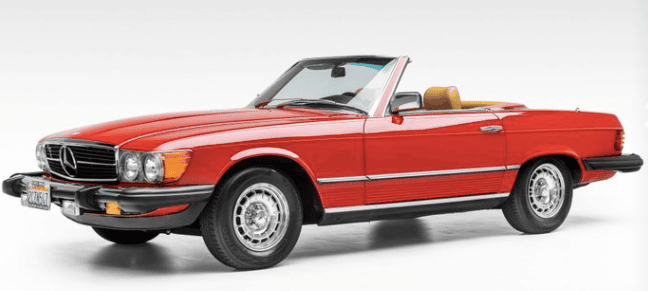
Also brother cannot park EVs in his building garage. Combustion is the problem. Their building can't get insurance with EVs in the underground garage so they ban them. Figure that one out. What about car insurance costs? I'm hearing it is much higher on EVs due to repair costs in case of accident. These things are not nothing @amigean. I saw a nice red 1981 Mercedes SL over the weekend, and as I admired it I said to myself..."look at those beautiful functional bumpers you can bump into things with and not cost yourself $3000 repair. How have we gone so backward on basic car BUMPER functionality?"

Cars are heavy...too heavy. Have no useful bumpers. Aren't efficient because of weight. And more and more have no physical buttons, weird steering wheels, distract drivers with giant screens and force them to touch screens. The product overall is not getting better.

Someone needs to make an Amiga car!
Holden Commodore Amiga 2000, 2.0L engine, 200Kw, 2000 lbs curb weight. Useful bumpers. Real buttons.
We're onto something here! :)

Listen to Colin Chapman all automobile makers of the world..."Add more lightness!"

 

Attachments

  • Screen Shot 2025-04-07 at 9.05.25 PM.png
    Screen Shot 2025-04-07 at 9.05.25 PM.png
    44.9 KB · Views: 5
Last edited:

How you drive affects how much you pollute far, far more than what powers your vehicle. Hoon around in a Miata and you'll leave more rubber and brake dust than my mum would if she had a Ranger Super Duty. More weight in an EV means bigger calipers and discs, but that's for emergencies! Most of the time the regenerative braking is getting the most out of battery, applying friction is a waste. Not to mention the current trend of making calipers big and prominent because it makes the car looks like it has performance no matter the reality.

You conflate all EVs as the same thing, a Nissan Leaf is very different to the Hummer EV. My Honda Jazz (and that's where the Civic you're looking for went - the 5-door lightweight Honda is the Jazz aka Fit, not the Civic) was nothing like a pickup. But compare a F-150 Lightning to a F-150 - greener. It's the same across the board.
 
You conflate all EVs as the same thing, a Nissan Leaf is very different to the Hummer EV. My Honda Jazz (and that's where the Civic you're looking for went - the 5-door lightweight Honda is the Jazz aka Fit, not the Civic) was nothing like a pickup. But compare a F-150 Lightning to a F-150 - greener. It's the same across the board.
Of course. But each of those cars has a lighter and lower cost alternative in 100% petrol. Leaf has the Fit that you mention for example. The fact that each of these EVs is way heavier than a petrol option (Leaf curb weight @ 3500 lbs?!) means inefficiency. That 1000 extra pounds in the Leaf over Honda Fit had an up-front environmental cost to manufacture. 1000 lbs didn't just come from thin air and unicorn's butt. And every day you need to move that 1000 lbs with energy in the car. That's daily inefficiency. Honda Fit driver doesn't have this 1000 lbs. 1000 lbs! Think about how a Fit feels with just driver and then with 4 passengers added in for say 500 lbs. Meanwhile, the Leaf deals with double that all the time. It's crazy inefficiency. Can't get rid of that weight, ever.

Re. Fit being the Civic, I hear your point, but it's just not. It's not connecting to young people, it's too tall, too boxy, too practical to be sexy like Civics could be. I feel like they made it this way so that we wouldn't buy it and they could say "See! SUVs is where it's at! Let us give the market the HR-V instead on the 1000lbs heavier Civic platform. Higher average price too. GENIUS!" Anyhow, along with all the points I've mentioned about how cars are getting enshittified, this is yet another point: Car companies have given up on young people because they can no longer afford a car due to pricing, insurance, gas costs. Therefore, they feel no need to cater to that entry market, since it's been all but eliminated. They'd rather sell pseudo-SUVs at much higher margin with more weight and inefficiency built in. Cars have gotten so silly that people now take out 8 year loans to buy them.
 
Of course. But each of those cars has a lighter and lower cost alternative in 100% petrol. Leaf has the Fit that you mention for example. The fact that each of these EVs is way heavier than a petrol option (Leaf curb weight @ 3500 lbs?!) means inefficiency. That 1000 extra pounds in the Leaf over Honda Fit had an up-front environmental cost to manufacture. 1000 lbs didn't just come from thin air and unicorn's butt. And every day you need to move that 1000 lbs with energy in the car. That's daily inefficiency. Honda Fit driver doesn't have this 1000 lbs. 1000 lbs! Think about how a Fit feels with just driver and then with 4 passengers added in for say 500 lbs. Meanwhile, the Leaf deals with double that all the time. It's crazy inefficiency. Can't get rid of that weight, ever.

Re. Fit being the Civic, I hear your point, but it's just not. It's not connecting to young people, it's too tall, too boxy, too practical to be sexy like Civics could be. I feel like they made it this way so that we wouldn't buy it and they could say "See! SUVs is where it's at! Let us give the market the HR-V instead on the 1000lbs heavier Civic platform. Higher average price too. GENIUS!" Anyhow, along with all the points I've mentioned about how cars are getting enshittified, this is yet another point: Car companies have given up on young people because they can no longer afford a car due to pricing, insurance, gas costs. Therefore, they feel no need to cater to that entry market, since it's been all but eliminated. They'd rather sell pseudo-SUVs at much higher margin with more weight and inefficiency built in. Cars have gotten so silly that people now take out 8 year loans to buy them.
You seem to think that you know better than all the specialists doing LCAs that *already take into account weight* and still find that like for like EVs are more sustainable all the time. Whatever. You seem to only accept an LCA if done by Volvo/Polestar and you still don't even read what the reports you claim to accept (and argue all other manufacturers have to emulate) have to say. You ask for links but don't read them and go on and on. I give up.
 
I think the following video presents a great (non-partisan, non-ideological) summary of the situation, full of historical notes. The folks who are advising Trump on this are not idiots, and they understand that US has a very strong hand to play here. The strong-arming mafia-boss approach may not be to everyone's liking, but the fact remains that globalisation is now dead and pretty much every trading partner of the US including the UK, EU and Canada can not fight this and will ultimately bend the knee. Taiwan and EU have already waved the white flag by offering zero-for-zero concessions. You also need to take into account the geopolitics: US is positioning for a major conflict with China in the future, that could turn into a war. Everybody else will need to pick a side.

Do you really think that the EU which is fully dependent on the US for defense will go that way?

China can and will fight but they're not in a good spot either: they hold so much US debt that it won't be easy.

 
Last edited:
I think the following video presents a great (non-partisan, non-ideological) summary of the situation, full of historical notes. The folks who are advising Trump on this are not idiots, and they understand that US has a very strong hand to play here. The strong-arming mafia-boss approach may not be to everyone's liking, but the fact remains that globalisation is now dead and pretty much every trading partner of the US including the UK, EU and Canada can not fight this and will ultimately bend the knee. Taiwan and EU have already waved the white flag by offering zero-for-zero concessions. You also need to take into account the geopolitics: US is positioning for a major conflict with China in the future, that could turn into a war. Everybody else will need to pick a side.

Do you really think that the EU which is fully dependent on the US for defense will go that way?

China can and will fight but they're not in a good spot either: they hold so much US debt that it won't be easy.


Well researched and informative thanks!

I don't have enough info to assess how this may play out. Good luck to us all!
 
You seem to think that you know better than all the specialists doing LCAs that *already take into account weight* and still find that like for like EVs are more sustainable all the time. Whatever. You seem to only accept an LCA if done by Volvo/Polestar and you still don't even read what the reports you claim to accept (and argue all other manufacturers have to emulate) have to say. You ask for links but don't read them and go on and on. I give up.
@amigean, I have an issue with low-on-details opinion pieces to a degree, and also I look for motive now because I've seen how the world works. The Polestar 2 vs XC40 paper is very detailed, and honestly doesn't paint either car option in great light. It doesn't seem like marketing fluff trying to sell me one or the other, for that reason I give it higher weight of validity. I have seen attempts by others like Tesla, and there is plenty of missing info in there on up-front footprint, especially around the battery. I have seen some of the articles you posted already, and they just don't seem as detailed as the Polestar piece, which as I noted continues to be published to this day, refined. The initial one got so much attention, since it was first time something that detailed was published by a car manufacturer - I feel there was a pushback to try to discredit it.

None of these pieces linked really address the weight correctly/fully in my view. I noted above the Nissan Leaf 1000 lbs heavier weight vs. Honda Fit. That's a lot of weight in a small car like that, and all the EV pieces dismiss it and don't deep-dive into analysis that this weight truly means. What is this weight made of? Answer: mostly CO2/CO2e intensive batteries. The impact on roads, tires, wear&tear, recycling difficulty is significant. Even your own link notes that battery replacement rates on 9 year old EVs is 13% - that's a huge environmental impact and cost to owners after just 9 years on the road. Also, all of these pieces on EVs always take the rosiest power grid type assumptions. What about those wind turbines? What is their environmental impact? If it is EV it is always rainbows and unicorns? I don't think so.


I told you about nuclear energy, no one talking about EVs is factoring in the environmental costs of 50 years it takes to decommission a nuclear reactor into their EV environmental impact calculations...conveniently. Or the 100s of years of nuclear waste storage environmental costs. And EU now is USA LNG dependent, and generates their energy this way. LNG comes from oil extraction, and needs to be shipped to you with similar infrastructure like oil.

Look, this is a complex issue, and it's hard to reduce it to nothing. Bottom line is EVs are not efficient up front. 112,000km break even point makes sense to me. Gut tells me it is likely worse...probably 150,000km range. A lot of assumptions are being made to get us to buy something new at a higher price with more mass. Marketing, sell. Petrol cars are getting bigger and heavier. Hybrid is being added for performance more and less for efficiency. Hybrid is also heavier and more complex - again, I don't like that. I have the luxury to say no to all of it and not need to buy it. That is actually quite efficient. I have learned that bike is an option, a good one and enjoyable one. Really makes a difference too. Even there, I didn't buy a carbon throw-away non-recyclable bike. I bought an aluminum one that's easy to recycle when I'm done with it. I have looked to public transit more, because that is the real solution if you ask me.

Car are not getting better. They are heavier, bigger, more inefficient, more electronic, less enjoyable to drive with all the alerts and touch screens and automation. I strongly believe that no small compact car should come in at 3500lbs like the Leaf does for example. I will not buy it on that basis alone. I am done with crazy heavy cars. If car makers don't want to make what I want, NO PROBLEM! Just makes my decision to not buy their wares that much easier.

FYI - some time ago I recall looking into car usage data and it was a stunning eye opening story of inefficiency. Forgive me, I'm going from memory, but according to that data set cars on average spend slightly over 22 hours a day parked and not in motion/use and close to 90% of cars on the road have just 1 occupant. That is the definition of crazy inefficiency. OR perhaps it's an illustration how good car marketing has been selling us these devices that we don't even use much. Ever since reading that, I look at car commercials in a whole new way.

This all feels like Mac vs. PC, doesn't it? That marking strategy always works. Divide and conquer. Poor Amiga (read: hybrid) could use the batteries of 1 EV car that removes just 1 driver's petrol use to remove 10-15 driver's worth of petrol use as I noted above. Or if you could just jump on the public transit then you really make a difference. Public Transit....the MISTer FPGA "Have-It-All" solution! :)
 
Last edited:
You have an issue with low-on-details pieces (btw the academic LCAs are the opposite of low on details) but don't read any of the details on the Volvo/Polestar report you love so much. Did you actually read it? It says the opposite of what you claim it does! You are suspicious of everyone, have a unique privilege to ascertain ulterior motives, and speak about 'they' and 'them' doing things conspiratorially, because you know how it all works and we don't, we are all fools it seems that take time to read stuff and are too gullible to believe it all without asking you first. There's no point continuing this conversation, please don't address me again, I won't respond.
 
Status
Not open for further replies.
Back
Top Bottom